Express Impact Ncert To Restore Nude Dancing Girl Image In Class 9 Arts Textbook
Indian Express
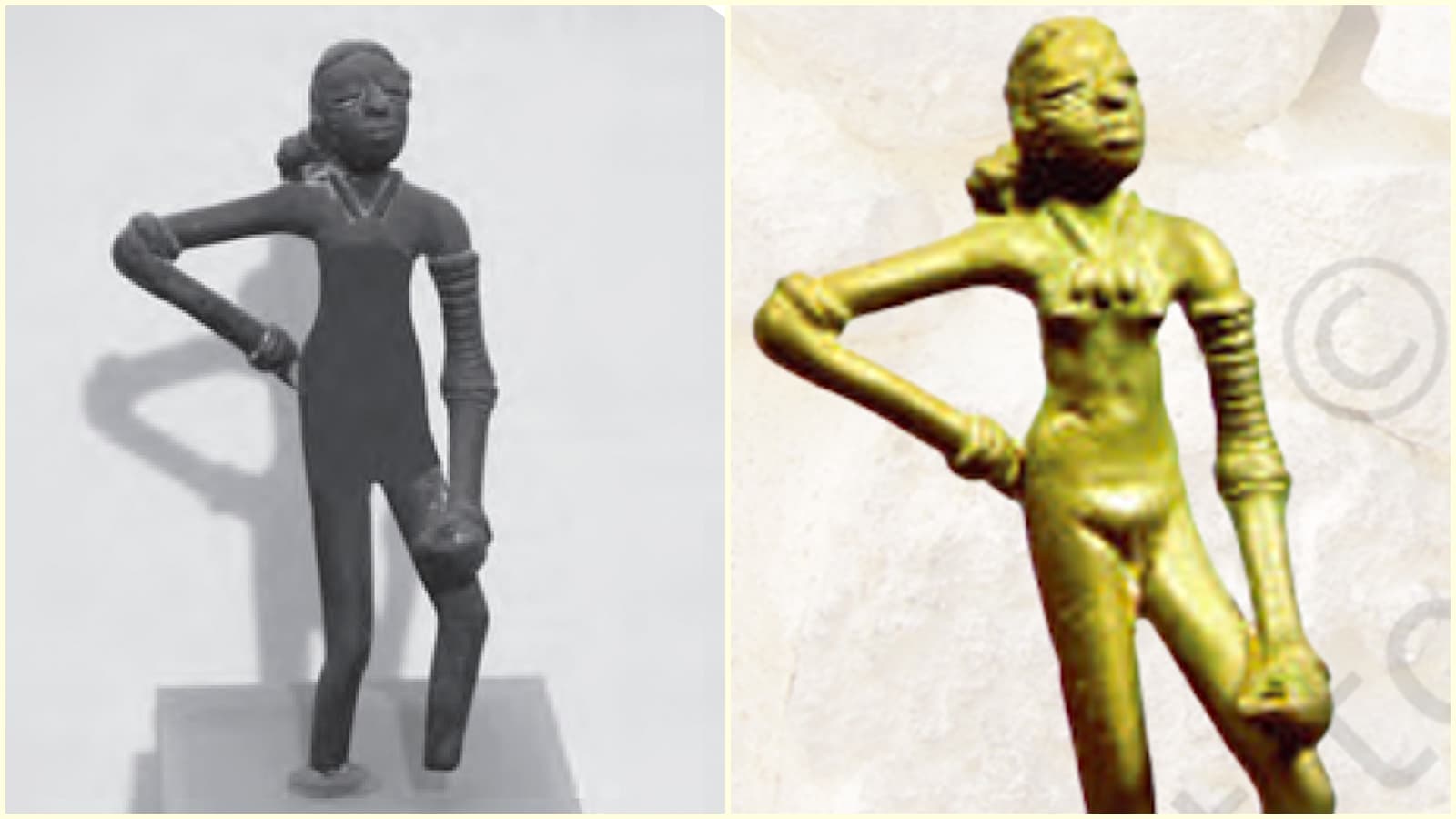
A day after The Indian Express reported that the iconic Dancing Girl of Mohenjo-daro had been covered up in new Arts Education textbook for Class 9, the National Council of Educational Research and Training (NCERT) has decided to restore the original image of
A day after The Indian Express reported that the iconic “Dancing Girl” of Mohenjo-daro had been covered up in new Arts Education textbook for Class 9, the National Council of Educational Research and Training (NCERT) has decided to restore the original image of the Harappan-era bronze figurine.
It is learnt that changes will be carried out immediately in the digital version of the textbook available on the NCERT website. Any copies yet to be printed will also carry the revised image. “From next year, it will be reflected in the hard copy too,” a source told this newspaper.
The Education Ministry is learnt to have sought an explanation from NCERT on Monday following The Indian Express report, after which the autonomous body was nudged to reverse the decision. “If the photo is already there in a Class 6 Social Science textbook, it doesn’t make any sense why the image was retouched for the Class 9 textbook,” a source familiar with the discussions said.
The question had surfaced earlier as well. In an interview with The Indian Express published on May 27, historian Michel Danino, who headed the textbook development committee for NCERT’s new Class 6 Social Science books, disclosed that NCERT had objected to placing the “Dancing Girl” on the opening page of a chapter on the Indus Valley Civilisation because the figurine was nude and could become “controversial”.
Danino had resisted the move, arguing that the figurine was displayed in the National Museum and routinely taught in schools. While he eventually agreed to shift the image from the chapter opener to an inside page and reduce its size, he succeeded in ensuring that it remained in the textbook.
It is learnt that in its explanation to the government on the Class 9 Arts textbook, NCERT defended the shading of the figurine’s torso in the Class 9 textbook on the grounds that it wanted students to use their “imagination”. NCERT Director Dinesh Prasad Saklani did not respond to requests for comment.
As first reported by The Indian Express on Monday, a retouched photograph of the “Dancing Girl” appeared in the opening chapter, “History of Arts”, of Madhurima, the new Arts Education textbook for Class 9. In the image, the figurine’s torso had been shaded over from the shoulders down, obscuring anatomical details visible in photographs of the original and giving the impression that she was clothed.
The retouched depiction was also significant because the “Dancing Girl” has appeared in NCERT textbooks for at least 25 years, including during the NDA government when Murli Manohar Joshi headed the then Human Resource Development Ministry. A review by The Indian Express of earlier editions found that while the figurine had long featured in school textbooks, its torso had never previously been covered.
The image appeared in a textbook that is part of NCERT’s first-ever Arts Education series, introduced from Classes 1 to 10 under the National Education Policy (NEP) and the National Curriculum Framework (NCF) to integrate arts into mainstream education. Textbooks from Classes 1 to 9 have been released so far.
The approximately four-inch-high bronze figurine, discovered at Mohenjo-daro, depicts a young girl with her hair tied in a bun and adorned with bangles, a bracelet and a necklace. Her confident posture and sophisticated craftsmanship have made her one of the defining symbols of the Harappan civilisation.
Archaeologists have long viewed the figurine as evidence of the civilisation’s advanced metallurgical knowledge. The original artefact is housed in the National Museum in New Delhi.
An award-winning journalist with 19 years of experience reporting on politics, governance, and public policy, Ritika Chopra is currently Resident Editor of The Indian Express, Mumbai. She oversees the edition’s editorial coverage and reporting on the city and the wider region. Previously, she has served as Chief of the National Bureau (Government) and National Education Editor in New Delhi, leading coverage of government policy and education. Ritika has closely tracked the Union Government, with a focus on politically sensitive institutions such as the Election Commission of India and the Education Ministry, and has authored investigative reports that have prompted official responses. Ritika joined The Indian Express in 2015. Previously, she was part of the political bureau at The Economic Times, India’s largest financial daily. Her journalism career began in Kolkata, her birthplace, with the Hindustan Times in 2006 as an intern, before moving to Delhi in 2007. Since then, she has been reporting from the capital on politics, education, social sectors, and the Election Commission of India. ... Read More