How Gurgaon Is Planning To Tackle Its Perennial Waterlogging Issue This Monsoon
Indian Express
As rain routinely triggers flash floods at several critical points in Gurgaon every monsoon, crippling the city s mobility, the Municipal Corporation of Gurugram (MCG) and the Gurugram Metropolitan Development Authority (GMDA) this year have rolled out extensi
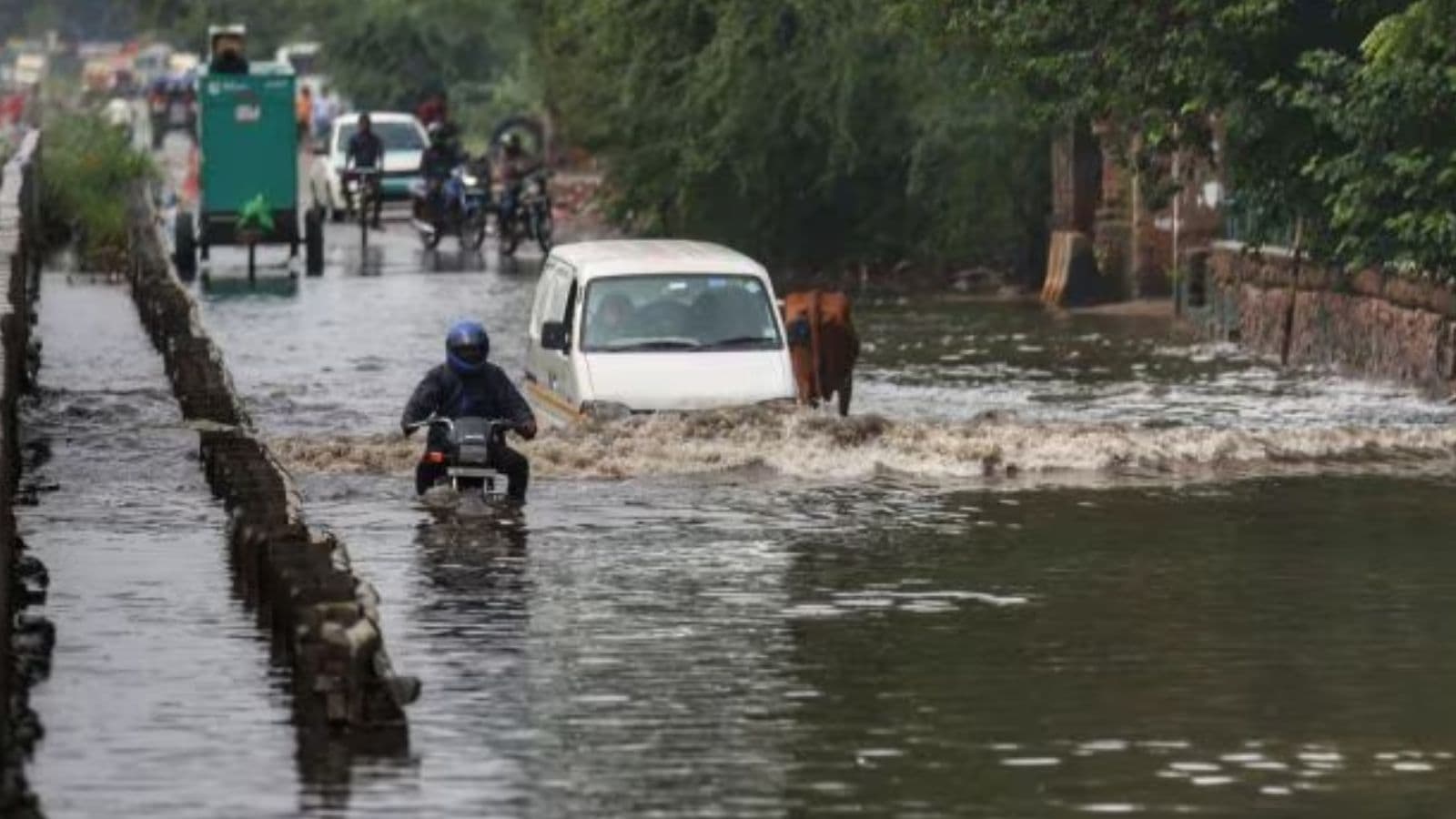
As rain routinely triggers flash floods at several critical points in Gurgaon every monsoon, crippling the city’s mobility, the Municipal Corporation of Gurugram (MCG) and the Gurugram Metropolitan Development Authority (GMDA) this year have rolled out extensive infrastructure and sanitation drives ahead of the rainy season.
The twin-agency effort aims at mitigating chronic waterlogging across critical transit corridors and residential sectors that paralyse the city during heavy rainfall.
While the MCG announced a citywide deep cleaning and desilting campaign, the GMDA has planned special repair works for key arterial roads, including a major drainage and transit upgrade along the Sector 51/52 master dividing road, officials said.
Stretches like Narsinghpur along the Delhi-Jaipur Expressway (NH-48), Hero Honda Chowk, Rajiv Chowk, Subhash Chowk, and the Golf Course Extension Road are perennial hotspots.
At Narsinghpur and Hero Honda Chowk, natural topography forms a structural depression. When heavy rain occurs, massive surface run-off from the Aravalli foothills create additional burden on the main arterial drainage network, particularly the Badshahpur drain. This causes stormwater to flood service lanes and main carriageways, submerging the highway and stranding thousands of inter-city commuters for hours.
Similarly, junctions like Rajiv Chowk and Subhash Chowk experience severe inundation due to clogged micro-drains and inadequate localised pumping capacity. On the Golf Course Extension Road and the Sector 51/52 corridor, rapid urban expansion has outpaced the internal stormwater network. Broken footpaths and accumulated silt block institutional run-offs, turning busy service roads into waterlogged traps that choke internal sectoral traffic.
The GMDA has allotted special repair works along a 2.1-km stretch of the Sector 51/52 dividing master road, officials said. Targeted for completion within six months, the project focuses heavily on integrated engineering.
The service road will be strengthened to divert local traffic away from the main carriageway, directly reducing peak-hour congestion.
Additionally, the project includes reconstructing broken footpaths, installing protective hedges and grills for pedestrian safety, and adding standard road markings or signage.
The GMDA has also planned annual road maintenance from Sectors 1 to 23 and contracts have been awarded. This will ensure routine repairs, pothole filling, and drainage clearing remain active throughout the fiscal year to maintain vehicular comfort and safety.
Further, with Delhi on a red alert, the MCG Monday held a high-level review meeting chaired by Mayor Rajrani Malhotra to deploy its newly enacted administrative structure, which divides the city into two administrative clusters and eight distinct zones.
The MCG has ordered an immediate deep-cleaning drive targeting primary markets, public squares, and waterlogging-prone residential sectors. Field officials have been instructed to monitor the desilting of major sewer lines and open drains daily in their jurisdiction in internal sector roads, ensuring that waste is cleared before the first monsoon showers block the channels.
The Mayor emphasised that the new decentralised cluster system is designed specifically to enforce accountability. Municipal Commissioner Pradeep Dahiya reinforced this directive, warning executive and joint commissioners against any laxity in monsoon preparations and public grievance redressal, stipulating that all sanitation targets must be met within the designated timelines.