Jnpa Draft Proposal To Convert Over 100 Ha Across Uran Into Industrial Zone Triggers Opposition
Hindustan Times
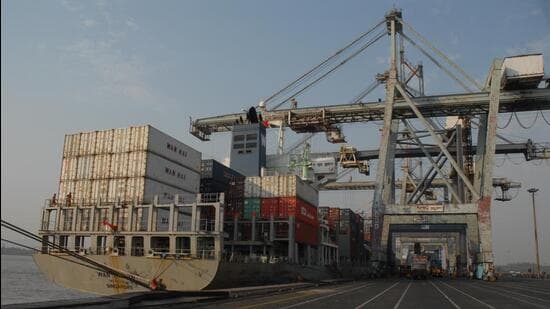
URAN: A draft proposal by the Jawaharlal Nehru Port Authority (JNPA) to convert more than 100 hectares of residential and commercial land across four Uran villages into industrial use has triggered strong opposition from villagers and environmentalists, who fe
ar it will worsen the fragile coastal ecology while limiting future housing and employment opportunities.
The draft notification, issued on June 6, covers 122.1 hectares in Funde, Jaskhar, Jasai and Savarkhar villages. It seeks to rezone 105.85 hectares, 54.24 hectares at Funde-Jaskhar (commercial to industrial-commercial), 20.94 hectares at Jasai (residential to industrial), 15.58 hectares at Savarkhar (commercial to industrial), 12.16 hectares at Jaskhar (commercial to industrial), and 2.93 hectares at Funde-Jaskhar (residential to public and semi-public use). JNPA has invited objections and suggestions until June 20.
Explaining the rationale, JNPA deputy chairman Ravish Kumar Singh said, “The proposal has two objectives: to release encroached and unauthorised land for productive use and support the emerging port-airport ecosystem around Navi Mumbai International Airport. We also want planned, contiguous land use instead of fragmented development.”
However, residents and environmental groups argue the proposal prioritises industrial expansion over environmental protection, housing needs and the welfare of project-affected communities.
“The land was acquired for port development, not non-port activities. If it is meant for genuine port-related activities that generate employment, we have no objection. Otherwise, it amounts to misuse of the acquired land,” said Bhushan Patil, former JNPA trustee and executive president of Uran Samajik Sanstha (USS).
Patil also questioned the employment promise. “When the JNPA SEZ was launched in 2014, 125,000 jobs were promised. More than a decade later, that promise remains largely unfulfilled. We want secure employment for local youth, not low-paid contractual jobs,” he said.
Residents say the proposal will surround villages with warehouses, logistics parks and industries, increasing pollution, truck traffic and pressure on civic infrastructure. They add that project-affected villages such as Jaskhar, Sonari, Karal and Savarkhar still lack basic roads, playgrounds and public amenities despite nearly 37 years of JNPA operations.
“Instead of earmarking the remaining land for housing and public infrastructure, JNPA is now proposing to convert even residential areas into industrial use,” said Sudhakar Patil, president of USS.
The proposed conversion of 20.94 hectares of residential land in Jasai has emerged as the biggest flashpoint, with residents arguing it will aggravate future housing shortages as the airport region grows.
“Reducing residential land at this stage will only create future housing shortages and put additional pressure on civic infrastructure,” Sudhakar Patil said. Environmentalists also warn the proposal could harm Uran’s mangroves, wetlands and creeks, threatening biodiversity and flood protection. “Any further conversion of residential land must be backed by transparent environmental studies. Development cannot come at the cost of mangroves, biodiversity and the ecological balance of the region,” said Nandakumar Pawar, president of the Maharashtra Small Scale Traditional Fish Workers Union and an environmental activist.
USS, along with several residents, has submitted objections and suggestions to JNPA, while many villagers have also filed individual representations before the June 20 deadline.
Responding to the objections, Singh rejected allegations that JNPA was diverting land for non-port activities. “Not a single piece of land has been given for non-port activities. We are guided by the Ministry’s Sagarmala policy, which focuses on port-led industrialisation, connectivity, trade, logistics and employment,” he said.
On Jasai, Singh said the proposal sought to regularise encroachments and unplanned development through the master plan while leaving the existing Jasai village untouched. He said adjoining CIDCO areas had already been earmarked for future residential growth. “Planned development requires contiguous land use, not mixed land use,” he said.
On rehabilitation, Singh said JNPA remained committed to project-affected communities, was pursuing Koliwada rehabilitation and continued CSR initiatives in surrounding villages.
Responding to environmental concerns, Singh said JNPA, as a government authority, had always complied with statutory environmental regulations. He said environmental safeguards formed part of the master plan and stakeholder feedback would be considered before the proposal was finalised. Singh added that JNPA had increased green cover by around 40% and adopted cleaner technologies, including electric vehicles, to reduce emissions.
On employment, Singh said the proposed development would strengthen the port-led economy and create jobs. He added that concession agreements with terminal operators mandate preference in recruitment for project-affected persons (PAPs) and local residents. “There is no preconceived decision. This is the stage for statutory public consultation. All suggestions and objections will be examined, and modifications, if required, will be made before the proposal is finalised,” Singh said.