80 Year Old Rs 5000 Post Office Rs 1000 Money Order Widowed Sister
Indian Express
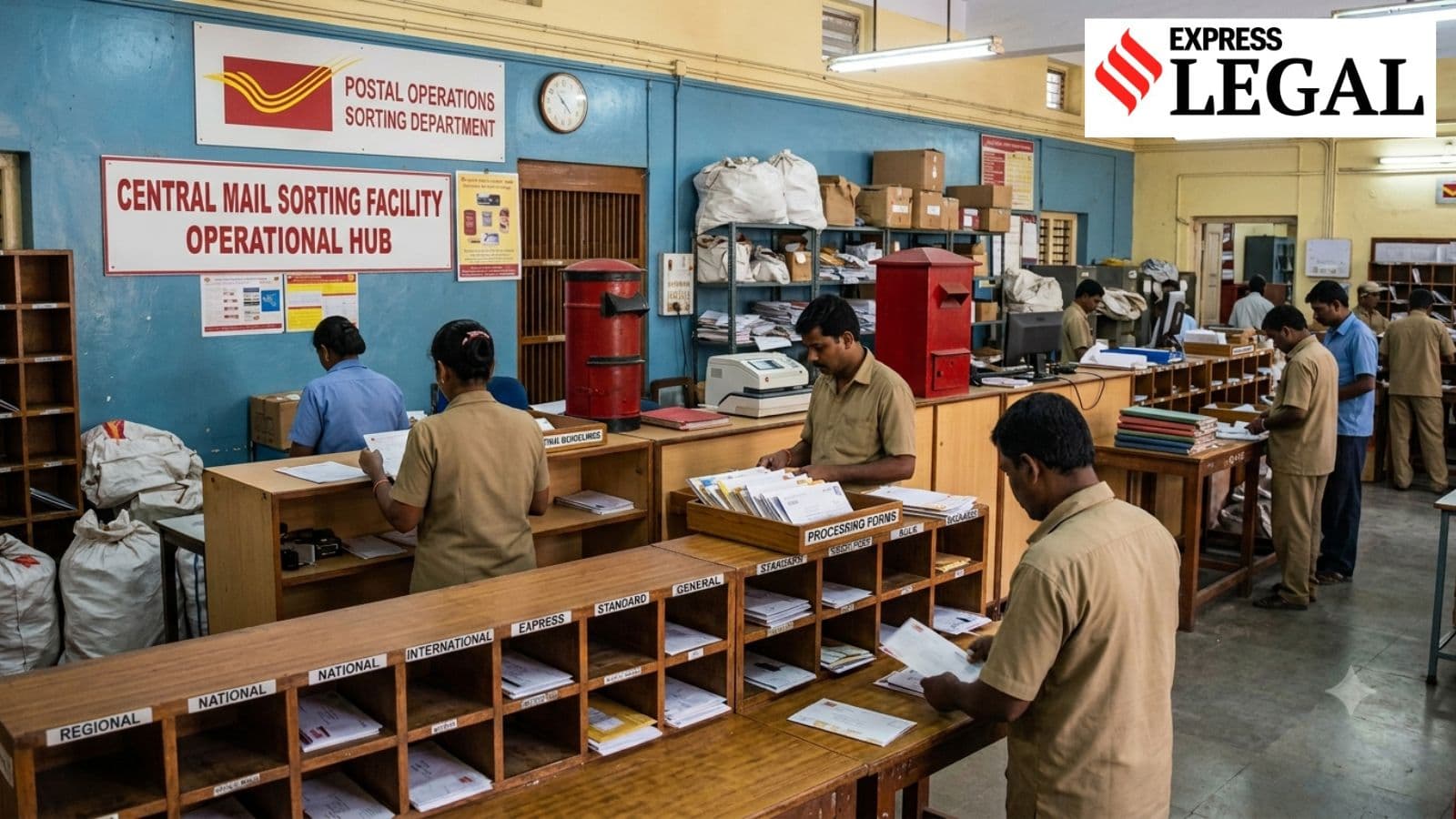
Money news: An 80-year-old retired man who sent Rs 1,000 to support his widowed sister in October 2022 was forced to wait nearly two months for the money to reach her, prompting the District Consumer Disputes Redressal Commission, Chhatrapati Sambhajinagar, in
Maharashtra, to hold the postal department liable for deficient service and award Rs 3,000 in compensation.
Commission president Pragya Devendra Hendre and members Ganeshkumar R Selukar and Janhavi A Bhide were hearing a complaint filed by one Sudhakar Mohaniraj Divate against the head postmasters of the City and Industrial Development Corporation of Maharashtra Limited (CIDCO) and Pachora postal divisions, and a project manager associated with India Post‘s technology services.
“Just because the PIN code was not mentioned, a delay of nearly two months in delivering a money order cannot be justified when the address was otherwise correct,” the commission said on June 4, holding the postal authorities accountable for the prolonged delay.
According to the complaint, Divate, a retired resident of Aurangabad, regularly sent financial assistance to his widowed sister, Pramila Mahajan, who lived in Jalgaon district and depended on the money for groceries and other daily necessities.
On October 14, 2022, he booked an electronic money order for Rs 1,000 through the CIDCO Post Office and paid Rs 50 as service charges. The amount was expected to reach the beneficiary within a few days.
However, when his sister did not receive the money, Divate repeatedly contacted postal officials and made several visits to the post office.
He alleged that officials failed to provide clear information about the status of the money order and that he was shuffled between different officers without receiving any meaningful assistance.
The complainant further claimed that the delay left his sister without timely financial support and caused both of them considerable stress and hardship.
In its defence, the postal department admitted that the money order had been booked on October 14, 2022, but argued that the sender had not mentioned the PIN code on the address.
Officials said the omission created confusion because two locations with similar names existed within the postal network and were serviced through different PIN codes.
The department stated that the money order was initially routed to the wrong branch and later redirected after officials realised the intended destination.
According to the department, technical issues and the absence of a PIN code contributed to the delay, but the money order was ultimately delivered on December 15, 2022.
Postal authorities also relied on protections available under Section 48 of the Indian Post Office Act, 1898, arguing that postal officials enjoy immunity in cases involving accidental mistakes or delays not caused by fraud or wilful misconduct.
While rejecting the postal department’s reliance on statutory immunity, the commission referred to a 2019 ruling of the National Consumer Disputes Redressal Commission in Superintendent of Post Office vs Sasadhar Panda.
That judgment held that the Indian Post Office Act does not provide blanket immunity to postal authorities and that officials must demonstrate the precise reasons for any delay and the measures taken to address it.
The commission found that no such evidence had been produced in the present case and concluded that the delay stemmed from negligence and an inefficient administrative response.
Holding the Head Post Masters of the CIDCO and Pachora postal divisions jointly and severally liable for deficiency in service, the commission partly allowed the complaint and directed them to pay Rs 3,000 as compensation and Rs 2,000 towards litigation costs.
The complaint against the project manager associated with India Post‘s technology services was dismissed, with the commission finding no consumer relationship between the complainant and the third-party opposite.
The commission further directed that the order be complied with within 45 days, failing which the postal authorities would be liable to pay an additional Rs 2,000 to the complainant.
The case, filed on December 20, 2022, remained pending for more than three years before the commission delivered its final verdict on June 4, bringing relief to a complainant who argued that a delayed money order had deprived his widowed sister of much-needed financial support when she needed it most.
Vineet Upadhyay is an Assistant Editor with The Indian Express, where he leads specialized coverage of the Indian judicial system. Expertise Specialized Legal Authority: Vineet has spent the better part of his career analyzing the intricacies of the law. His expertise lies in "demystifying" judgments from the Supreme Court of India, various High Courts, and District Courts. His reporting covers a vast spectrum of legal issues, including: Constitutional & Civil Rights: Reporting on landmark rulings regarding privacy, equality, and state accountability. Criminal Justice & Enforcement: Detailed coverage of high-profile cases involving the Enforcement Directorate (ED), NIA, and POCSO matters. Consumer Rights & Environmental Law: Authoritative pieces on medical negligence compensation, environmental protection (such as the "living person" status of rivers), and labor rights. Over a Decade of Professional Experience: Prior to joining The Indian Express, he served as a Principal Correspondent/Legal Reporter for The Times of India and held significant roles at The New Indian Express. His tenure has seen him report from critical legal hubs, including Delhi and Uttarakhand. ... Read More