Idbi Bank Loses Rs 1 3 Crore Property Paper Fire Pay Rs 10 Lakh
Indian Express
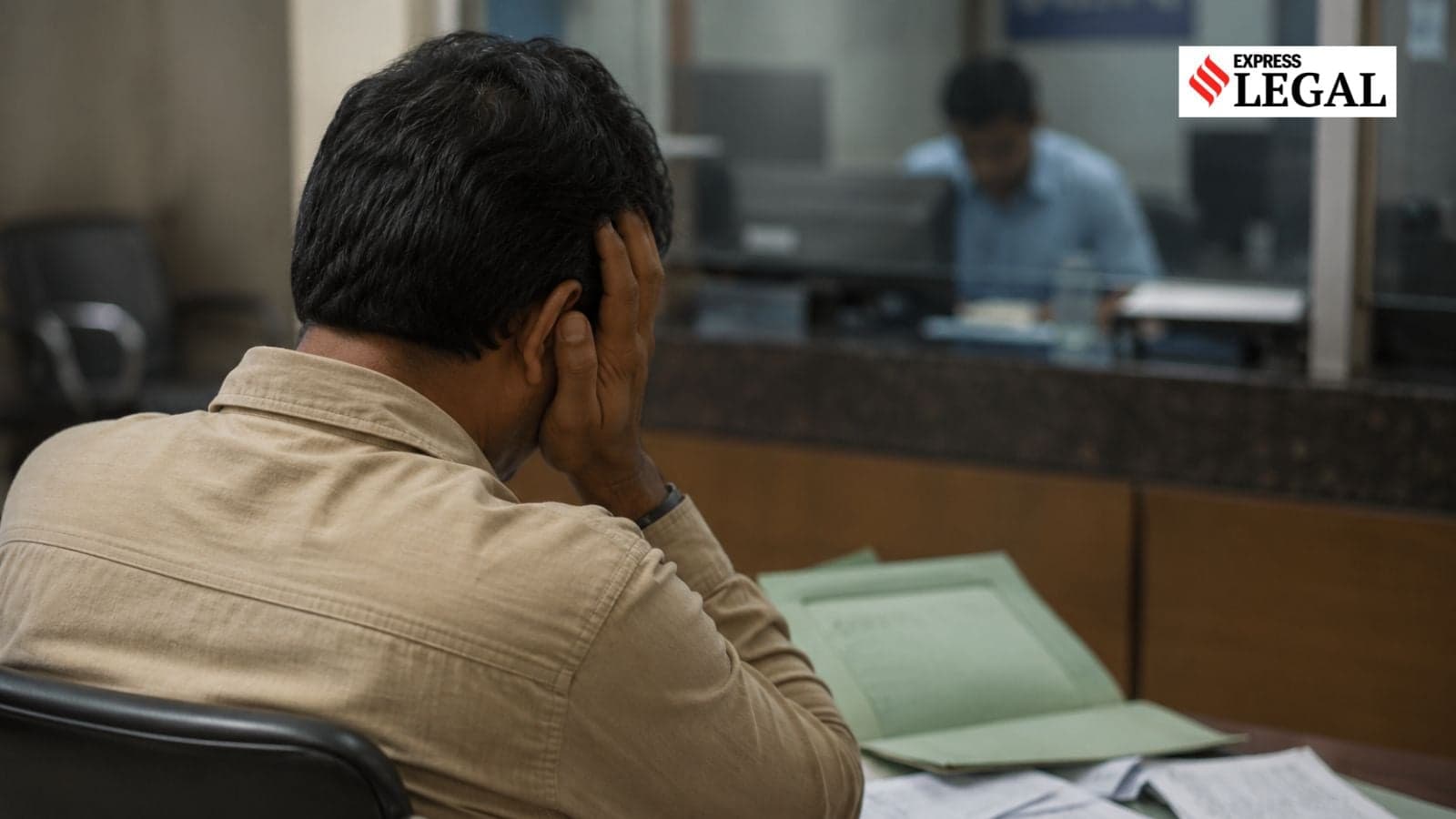
The District Consumer Commission in Kerala s Kozhikode has ordered IDBI Bank to pay Rs 10 lakh in compensation to a man after it failed to return his original property papers which were destroyed in a 2017 fire at a document storage facility, noting that the l
The District Consumer Commission in Kerala’s Kozhikode has ordered IDBI Bank to pay Rs 10 lakh in compensation to a man after it failed to return his original property papers which were destroyed in a 2017 fire at a document storage facility, noting that the loss diminished the property’s value and caused hardship to the borrower.
A bench of president Priya S and member V Balakrishnan was hearing a plea of a teacher and an entrepreneur, who availed a housing loan of Rs 33 lakh in 2016 from IDBI Bank by depositing his original property deeds, including land and villa worth Rs 1.3 crore.
“We are of the view that there is unfair trade practice and deficiency of service on the part of the opposite parties. Also, the non-performing action of the opposite parties belongs to the deficiency in service and unfair trade practice of the opposite parties. So the opposite parties are directed to pay Rs 10 lakh to the complainant,” the court said on May 30.
The complainant stated that this concealment, negligence and irresponsible conduct caused him heavy financial loss.
He claimed that he lost a lucrative sale deal, had to return the buyer’s advance by borrowing and pawning ornaments, and claimed that without original title deeds, the property’s market value (estimated at over Rs 1.3 crore including land and villa) is significantly eroded.
He further alleged that the bank failed to take basic steps, like filing a First Information Report (FIR) or publishing timely notices of loss, and only acted when forced by the banking ombudsman.
The ombudsman, in 2021, directed the bank to provide certified copies, issue a public notice, and pay Rs 60,000 compensation (Rs 50,0000 for deficiency, Rs 10,000 for delay).
The complainant accepted this amount under protest, calling it grossly inadequate, and approached the consumer commission seeking Rs 35 lakh in compensation for negligence, deficiency in service and unfair trade practice.
Appearing for the bank, advocate A M Bhaskaran denied all allegations of negligence and argued that the complainant and his wife had executed a 20-year housing loan agreement, and there is no proof of any “short-term interim loan” arrangement.
He admitted the title deeds were lost in the 2017 fire at Stock Holding Document Management Services Ltd, where many banks and government institutions store vital records, but claim this was an unforeseen accident beyond their control.
The bank claimed that the banking ombudsman already adjudicated the matter and awarded Rs 60,000, which the complainant accepted without filing an appeal. According to them, the award was final and binding, making the present complaint unsustainable.
Jagriti Rai works with The Indian Express, where she writes from the vital intersection of law, gender, and society. Working on a dedicated legal desk, she focuses on translating complex legal frameworks into relatable narratives, exploring how the judiciary and legislative shifts empower and shape the consciousness of citizens in their daily lives. Expertise Socio-Legal Specialization: Jagriti brings a critical, human-centric perspective to modern social debates. Her work focuses on how legal developments impact gender rights, marginalized communities, and individual liberties. Diverse Editorial Background: With over 4 years of experience in digital and mainstream media, she has developed a versatile reporting style. Her previous tenures at high-traffic platforms like The Lallantop and Dainik Bhaskar provided her with deep insights into the information needs of a diverse Indian audience. Academic Foundations: Post-Graduate in Journalism from the Indian Institute of Mass Communication (IIMC), India’s premier media training institute. Master of Arts in Ancient History from Banaras Hindu University (BHU), providing her with the historical and cultural context necessary to analyze long-standing social structures and legal evolutions. ... Read More