Trump Tries To Outrun Courts By Building Ballroom Fast
Hindustan Times
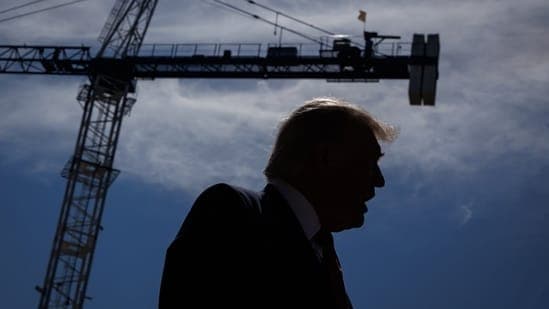
WASHINGTON President Trump is blitzing through construction projects in the nation s capital faster than the courts can keep up. His signature White House ballroom project has run into legal problems but has continued largely unabated
WASHINGTON—President Trump is blitzing through construction projects in the nation’s capital faster than the courts can keep up.
His signature White House ballroom project has run into legal problems but has continued largely unabated. A government lawyer told an appeals court earlier this month that it is too late for the courts to halt the president’s construction of the 90,000-square-foot building where the East Wing once stood.
“It’s above ground,” Justice Department lawyer Yaakov Roth said during a hearing on whether to allow work to continue. “They’ve installed like three million pounds of steel rebar, which is a lot apparently, and it’s well on its way.”
Construction crews and vehicles have been streaming in and out of the White House complex for months. One recent evening, patrons at a nearby rooftop bar could see two high-rise cranes still at work until sunset.
Nearly every project the president has undertaken—from his renovation of the Kennedy Center, to the repainting of the Lincoln Memorial Reflecting Pool and his plans to build a 250-foot arch near Arlington National Cemetery—is facing litigation claiming he sidestepped the public review process or that he failed to obtain congressional approval before beginning work.
Even when litigants file cases quickly, the deliberative speed of the legal system is little match for Trump’s alacrity.
“There’s no question that the government’s strategy has been to move so fast that no one can catch them,” said Alexander Kristofcak, counsel at Washington Litigation Group, which filed a lawsuit May 11 after Trump in mid-April started work painting the bottom of the Lincoln Memorial Reflecting Pool blue.
In the case of the ballroom, a federal district judge blocked aboveground work on the project on March 31 after finding historic preservationists were likely to prevail in their argument that Congress must sign off on the project. The judge made an exception for a bunker and other national security facilities that are being built underground to keep the president safe in the event of an emergency.
Trump quickly turned to a Washington appeals court, which allowed the work to continue while it considered the case. That gave the administration more than two months to work on the project before the court held a hearing. And the appeals panel could still be days or weeks more away from issuing a decision about whether the project can proceed.
The interim period has given the administration a reprieve it was able to drive an army of flatbed trucks through.
Now the same judges who gave the administration that breathing room are fretting over whether they effectively tied their own hands.
The Trump administration told the appeals panel that only Congress can decide whether to stop construction at this point because the project is too far along and there are national security interests in getting it built. To protect the below-ground bunker, the government will need to build a structure on top of it to replace the one it razed, it said.
“So if this were complete lawlessness by the government, it couldn’t be stopped?” pressed Judge Patricia Millett, an Obama appointee. She asked when the ballroom project had become “a fait accompli.”
Several bills have been proposed in Congress to ensure the ballroom gets built, but none have progressed to a vote. Congress tried to add $1 billion for the ballroom to a package to fund U.S. Immigration and Customs Enforcement, but it was blocked by Senate budget rules.
Andrea Katz, a professor at Washington University School of Law in St. Louis, said it is still within the power of the courts to stop the ballroom construction, even at this relatively late stage.
“That of course would have the ridiculous effect of leaving a hole in the ground, as the government’s lawyers have said, but I don’t think it’s beyond the powers of the court to do that,” she said.
Courts have faced similar challenges with Trump’s overhaul of the reflecting pool. The administration said the National Park Service approved plans to repair and paint the pool in late March.
Last month, a judge held a hearing on whether to temporarily block the project. But two weeks later—before he could issue a ruling—the administration notified the court that it had finished the job.
Within a few days, the basin was already filling with water. Even though the project is done, the plaintiffs aren’t dropping their lawsuit.
“It’s useful to proceed and have cases on the books that say, ‘You’re not allowed to do this,’ so when the next project comes around there’s hopefully more clarity,” said Kristofcak, the lawyer leading the challenge.
The Trump administration is also planning to crank through construction of Trump’s 250-foot triumphal arch with crews working 20 hours a day year-round to get the project done in three years or less, according to plans released last week by the National Park Service. Three veterans and an architectural historian sued in February to stop construction, but a federal judge has allowed work to continue for now.
One recent case did require the Trump administration to backtrack. Last month a judge ruled the Kennedy Center’s board didn’t have the authority to rename the performing arts center after Trump, saying only Congress could do so.
The judge ordered that Trump’s name be removed by Friday and rejected the administration’s plans to close the facility entirely while it undergoes renovations. He noted the speed with which Trump’s name had been affixed above John F. Kennedy’s on the front of the building, saying the signage went up the next day after the board approved the change.
The Kennedy Center said it removed Trump’s name from the building Saturday after it was delayed by storms on Friday evening.
Write to Lydia Wheeler at lydia.wheeler@wsj.com