Rethinking Sustainable Design
Hindustan Times
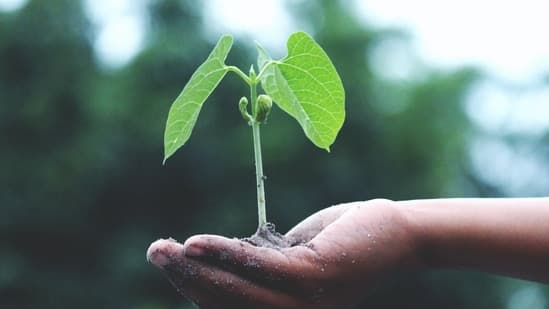
Over the last decade, I have had the opportunity to engage with design students, emerging brands, manufacturers, craftspeople, and entrepreneurs across India. Across these conversations, one question surfaces repeatedly: How can we design more sustainably?Not
too long ago, the answer often revolved around materials. Designers sought alternatives to plastic, experimented with reclaimed wood, explored agricultural waste, or looked at natural fibres as substitutes for resource-intensive materials. These efforts remain important and continue to drive meaningful innovation. Yet what I find most encouraging today is that the conversation has evolved.Increasingly, designers are recognising that sustainability is not something that can be added to a product at the end of the process. Instead, it is becoming a lens through which every decision is made. The focus is shifting from creating sustainable products to designing sustainably.This may sound like a subtle distinction, but it fundamentally changes how design is approached. Rather than asking whether a material is sustainable, designers are beginning to ask broader questions. Where does the material come from? How much energy and processing are required before it reaches the final product? Can the product be repaired, adapted, or upgraded over time? What happens when it reaches the end of its useful life? Most importantly, will people continue to value and use it years from now?These questions are shaping some of the most interesting work emerging from India's design ecosystem today. Many young designers and design-led enterprises are experimenting with materials such as banana fibre, water hyacinth, cane, agricultural waste, and reclaimed resources. What makes these initiatives compelling is not simply the choice of material. The real innovation lies in how these materials are integrated into larger systems that reduce waste, support local communities, create economic value, and ultimately result in products people want to live with for a long time.One example that stayed with me came through conversations with the team at Murubi, a furniture brand that explored the potential of invasive water hyacinth (a perennial, free-floating aquatic plant) as a material through the Godrej Design Lab Fellowship. What stood out was not just the material itself, but the thinking behind it. The team approached the challenge with a broader view of sustainability, considering everything from how the material could be sourced and crafted, to how products could be designed for longevity, maintenance, and continued use. Ultimately, the goal was not simply to create a product from a sustainable material, but to create something people would value, care for, and live with for years.To me, this captures what designing sustainably looks like in practice. It is not about a single material or intervention, but about considering the broader system that shapes how products are made, used, maintained, and appreciated throughout their lifecycle.At the same time, there is a growing recognition that sustainability cannot be solved by designers alone. The challenges are simply too complex and interconnected. Material scientists, engineers, manufacturers, logistics partners, craftspeople, and consumers all play a role in shaping outcomes.What I find encouraging is that today's generation of designers seems increasingly comfortable with this reality. There is less emphasis on the designer as the sole problem-solver and more appreciation for collaboration across disciplines.This shift is also visible in design education. Across campuses, students are spending more time engaging with communities, understanding systems, and learning from experts outside traditional design disciplines. They are being encouraged to think not only about what they are creating, but also about the environmental and social consequences of those creations. As a result, sustainability is becoming less of a standalone subject and more of an integral part of the design process itself.For consumers, this evolution offers an opportunity to think differently about the products they bring into their lives. Sustainability is not always visible in a label, a certification, or a marketing claim. Often, it is reflected in quieter qualities.When evaluating a product, it is worth asking: Was it built to last? Can it be repaired instead of replaced? Are the materials responsibly sourced? Does it support local craftsmanship? Has it been designed to remain useful and relevant over time?These questions encourage a shift away from disposable consumption and towards conscious ownership. In many cases, buying fewer but better-designed products can have a greater impact than simply choosing the latest product marketed as sustainable.Ultimately, the future of sustainability will not be defined by a handful of eco-friendly products or breakthrough materials alone. It will be shaped by thousands of decisions made throughout the design process, from sourcing and manufacturing to use and end-of-life considerations.The designers who inspire me most today are not simply trying to make sustainable products. They are working to embed sustainability into every stage of creation.That is where the real opportunity lies. Not in designing products that appear sustainable, but in building systems, processes, and experiences that make sustainability a natural outcome of good design.(The views expressed are personal)This article is authored by Henry Skupniewicz, head, Godrej Design Lab, Godrej Enterprises Group.