Why Asaduddin Owaisi Is Addressing A Rally In Bahraich The Politics Behind Maharaja Suheldev Ghazi Debate
Indian Express
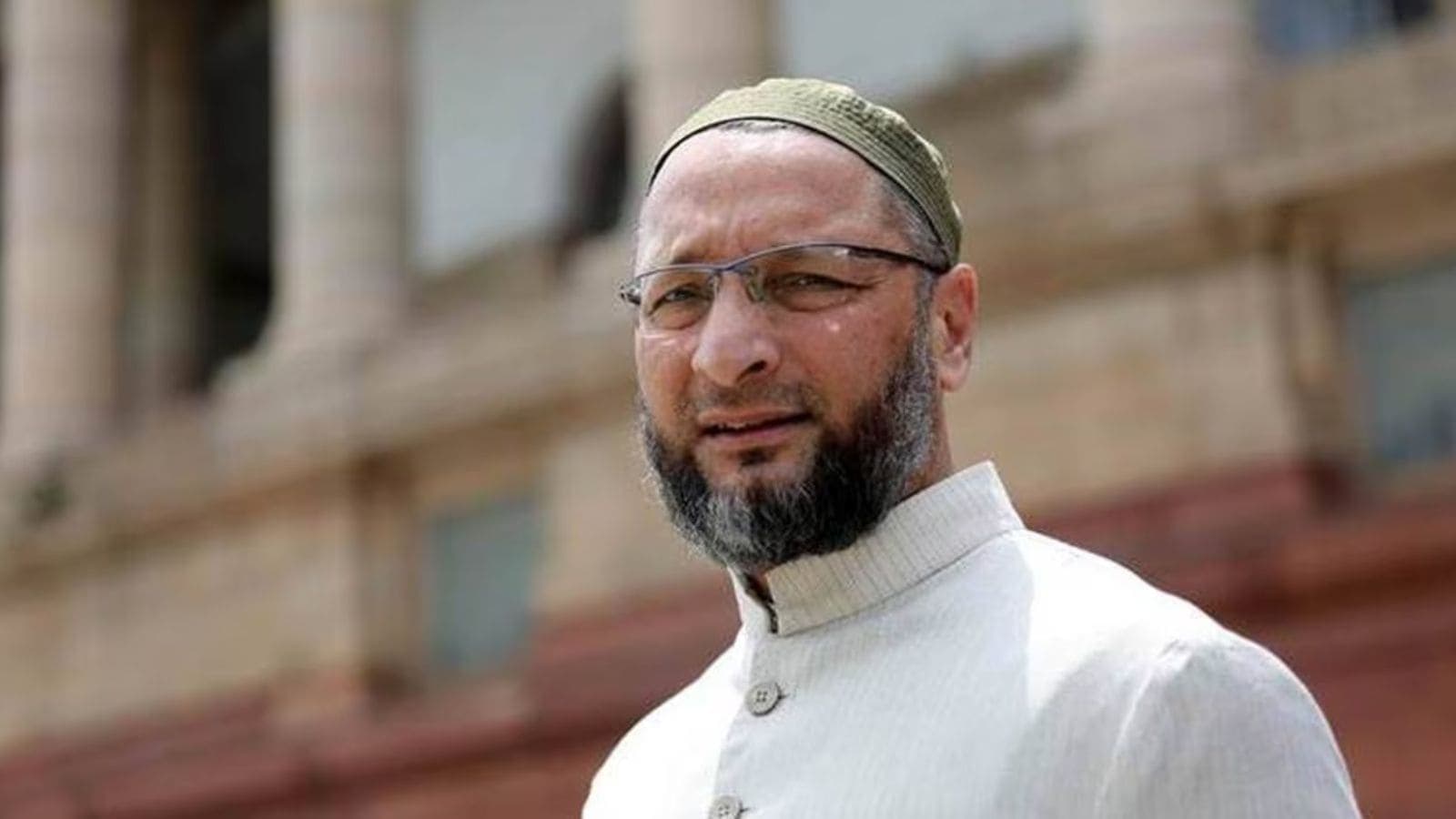
Bahraich s long-running political and historical contest over the legacy of Maharaja Suheldev and warrior-saint Syed Salar Masood Ghazi has acquired a new dimension, with AIMIM chief Asaduddin Owaisi choosing the district for a public meeting on Sunday. The mo
Bahraich’s long-running political and historical contest over the legacy of Maharaja Suheldev and warrior-saint Syed Salar Masood Ghazi has acquired a new dimension, with AIMIM chief Asaduddin Owaisi choosing the district for a public meeting on Sunday.
The move places AIMIM at the centre of a debate that has increasingly become part of Uttar Pradesh’s political discourse under the BJP government.
Owaisi’s rally is being held in the Matera Assembly constituency, a Samajwadi Party (SP) stronghold that has remained with the party since the seat was created following the 2008 delimitation exercise. The choice of venue is politically significant as the AIMIM seeks to expand its presence in eastern Uttar Pradesh while positioning itself as a challenger to both the BJP and SP in Muslim-dominated pockets.
Owaisi’s rally also comes amid renewed controversy surrounding the Bahraich dargah of Ghazi. During a recent visit to the district, Uttar Pradesh minister Anil Rajbhar claimed that the site was originally a Surya Kund and said he would write to Chief Minister Yogi Adityanath and Prime Minister Narendra Modi seeking an Archaeological Survey of India (ASI) survey.
Anil Rajbhar also accused previous governments of glorifying “invaders” such as Ghazi while neglecting Maharaja Suheldev, who is celebrated among Rajbhars and several other OBC communities as the ruler who defeated Ghazi.
The issue has become central to the BJP-led government’s cultural and political narrative in eastern UP. In recent years, the centuries-old annual fair associated with the dargah has been discontinued, while official emphasis has shifted towards commemorating Maharaja Suheldev. Adityanath has repeatedly accused previous governments of honouring invaders instead of indigenous heroes, often citing Suheldev as an example.
Against this backdrop, AIMIM leaders have adopted a confrontational stance. A day before Owaisi’s rally, AIMIM’s Uttar Pradesh president Shaukat Ali accused the BJP government of targeting Muslim religious sites.
“You have taken many religious structures. You have taken peer, dargah and masjid. Every other day our religious structures are being demolished,” he said.
Ali also targeted Anil Rajbhar over his demand for an ASI survey, remarking that a person “who cannot properly list his own five generations is speaking about one thousand-year-old history”.
The sharpest response came from Om Prakash Rajbhar, chief of the BJP ally Suheldev Bharatiya Samaj Party (SBSP), whose party is named after Maharaja Suheldev. Rajbhar recently described Ghazi as a “foreign invader who had come to loot temples and wealth”.
The exchange escalated after Om Prakash Rajbhar publicly responded to Owaisi on social media. “Now that you’re coming to Uttar Pradesh, please do share a bit of your Hyderabadi barrister wisdom with your commander-in-chief as well. Before expressing your devotion at the shrine of Ghazi in Bahraich, do remind him that this is the very land where Maharaja Suhaildev Rajbharji fought against foreign invaders to protect India’s identity and pride. Please explain to your commander-in-chief that he should use language befitting his stature and personality. Displaying unnecessary aggression and arrogance never earns respect in the pages of history,” he said in a post on Saturday.
Adding another layer to the controversy, AIMIM leaders have questioned Suheldev’s historical status. Ali said he did not consider Suheldev a king and argued that if he had been a ruler, there should be physical evidence such as a fort in Bahraich. He described the prevailing narrative around Suheldev as “imaginary”, a remark likely to draw a strong response from communities that identify with the Rajbhar icon.
For the BJP and its ally SBSP, the Suheldev narrative has become a key instrument for consolidating non-Yadav OBC communities, particularly Rajbhars, while reinforcing a broader Hindutva discourse centred on historical memory and civilisational pride. For the AIMIM, entering the debate allows it to position itself as a defender of Muslim religious heritage while challenging the BJP’s interpretation of medieval history.
With the 2027 Assembly elections approaching, eastern Uttar Pradesh is expected to witness intense competition for OBC and Muslim votes. By choosing Bahraich and stepping into a controversy already dominating local politics, Owaisi has signalled that AIMIM intends to be part of that contest.
Whether the intervention translates into electoral gains remains uncertain. However, Owaisi’s entry has seemingly transformed what was largely a BJP versus SP narrative into a three-cornered political contest.
Maulshree Seth is an Assistant Editor with Read More