Scientifically Speaking Microplastics Are Inside Us But We Can Reduce Exposure
Hindustan Times
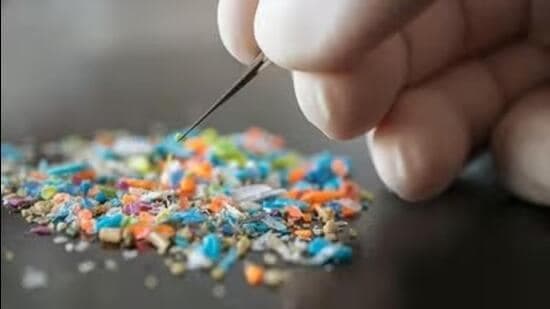
In December 2024, University of New Mexico neuropathologist Elaine Bearer was examining brain tissue when she noticed what she later called strange brown lumpy things. They were not blood vessels, clots, or familiar debris. They turned out to be plastic
In December 2024, University of New Mexico neuropathologist Elaine Bearer was examining brain tissue when she noticed what she later called “strange brown lumpy things.” They were not blood vessels, clots, or familiar debris. They turned out to be plastic.
A study later published in Nature Medicine measured microplastics and nanoplastics in human brain tissue collected after death. The concentrations were higher in the brain than in the liver or kidney, and samples from people with documented dementia contained more.
For years, we pictured plastic pollution as something outside ourselves: bags in drains, bottles in rivers, nets in the ocean, pieces inside fish and seabirds. But plastic is no longer only an environmental problem. It is found inside us.
In 2024, a study in the New England Journal of Medicine examined people undergoing surgery to remove plaque from the carotid arteries, the vessels that supply blood to the brain. When researchers analyzed the excised plaques, they found microplastics and nanoplastics in many of them. Over about three years of follow-up, patients whose plaques contained these particles had a much higher risk of heart attack, stroke, or death than those whose plaques did not.
Plastic reaches us mainly through two routes: we eat it and we breathe it. There is plastic in food and water, but it is also in the air. Plastic particles can be breathed in from synthetic clothes, furniture, household dust, construction materials, smoke, and tires. Every time tires meet the road, they shed tiny fragments. Every time synthetic textiles rub, are washed, dried, or age, they release fibres. We are living inside a plastic atmosphere.
When we eat food, the body digests it. Carbohydrates, fats, and proteins are broken down into smaller molecules that can be absorbed, used, stored, or excreted. Plastic does not act the same way. It fragments physically into smaller and smaller pieces. The smallest particles can cross biological barriers, enter cells, lodge in tissues, and carry additives or other pollutants with them. And there is much we still do not know. Scientists are still working out which sizes and doses matter, and how long different particles remain in the body.
A recent study by researchers at the University of Western Australia, also published in Nature Medicine, asked a different question: can we reduce how many plastic-associated chemicals enter the body? The study measured chemicals associated with plastics, especially phthalates and bisphenols, which can leach from food packaging, processing equipment, kitchenware, and personal-care products.
We cannot escape plastics entirely. Across 211 healthy adults, every participant in the study had detectable levels of several plastic-associated chemicals. The likely sources were highly processed foods, plastic-packaged foods, canned goods and drinks, plastic appliances, and personal-care products.
But we may be able to reduce some of the plastic-associated chemicals entering our bodies. For 60 participants over seven days, the researchers tried to remove plastic from the food chain. The team worked with more than a hundred farmers and food producers to reduce plastic contact “from paddock to plate.” Some participants ate low-plastic food, used stainless steel and wooden kitchenware, and switched to low-plastic personal-care products.
It worked. After a week, several chemical markers in urine fell sharply. In the strongest intervention, phthalates decreased by more than 40%, and bisphenols by about half compared with the control group. BPA also dropped in the groups receiving low-plastic food.
The study shows that everyday plastic exposure is measurable, modifiable, and deeply entangled with the production, storage, and consumption of food.
But this is not a seven-day plastic detox story. The trial did not show that a week of low-plastic living improves health. It did not show that particles already embedded in tissue can be flushed out. Indeed, there is little we know about how much exposure is safe.
Plastic is everywhere because it is cheap and convenient. Households cannot solve a global problem on their own. But there are still sensible steps people can take, such as not heating food in plastic, avoiding scratched and old plastic containers, using glass or steel for hot food and drinks, and avoiding single-use plastic bottles and packaging where practical.
(Anirban Mahapatra is a scientist and author, most recently of the popular science book, When The Drugs Don’t Work: The Hidden Pandemic That Could End Medicine. The views expressed are personal.)