Brahim Diaz Assist Morocco Vs Brazil Redemption Panenka Miss
Indian Express
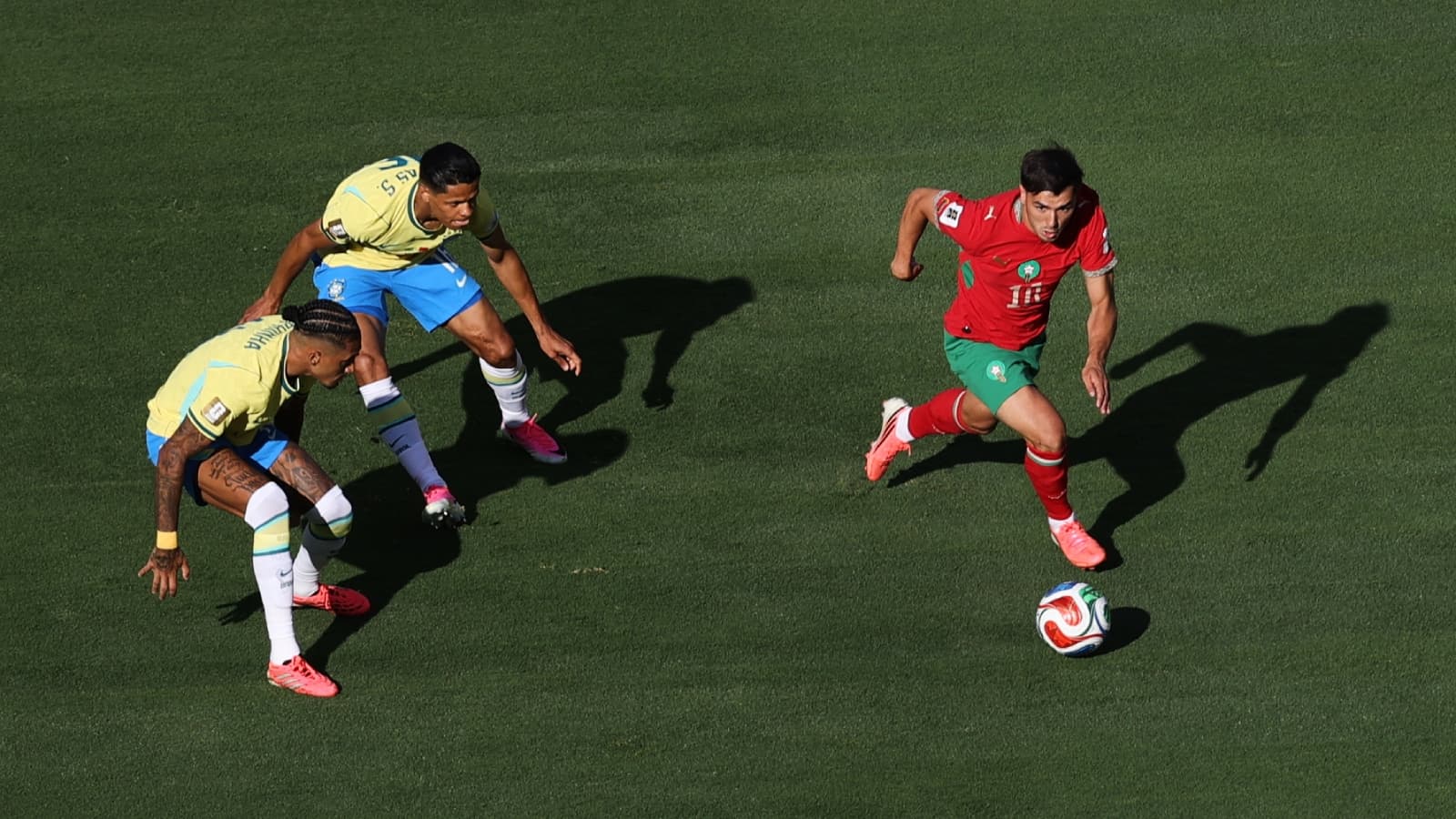
Between receiving Noussair Mazraoui s pass and laying the ball for Ismael Saibari, Brahim Diaz had little more than two seconds. It was still enough for a precise three-part act
Between receiving Noussair Mazraoui’s pass and laying the ball for Ismael Saibari, Brahim Diaz had little more than two seconds. It was still enough for a precise three-part act. First came the cushioned touch with his right foot. Then two sharp adjustments with his left, taken before Lucas Paqueta and Douglas Santos could close him down. Finally, the pass, threaded between Gabriel Magalhaes and Marquinhos, with just enough pace to send Saibari through on Alisson Becker’s goal. The pass sent Saibari through and Morocco had their goal in the 21st minute.
Six months earlier, he had been afforded far more time to make an even bigger impact. Too much time, perhaps. From when he was brought down inside the box at the 2025 Africa Cup of Nations final against Senegal to eventually taking the resultant penalty kick, Diaz had fifteen minutes. In those fifteen minutes, he saw the opposition coach, Pape Thiaw, taking his players off the field in a symbolic gesture of protest, before Sadio Mane somehow persuaded his teammates to return.
Until then, penalties had hardly been a concern. He had converted five of his previous six. The solitary miss was inconsequential: his team won that match 3-0. Yet when confronted with the biggest kick of his career, Diaz chose not to play the percentages. He chose not to play it safe. He chose a Panenka.
One minute from ending Morocco’s 40-year wait for the AFCON title, he tried to be audacious. And missed. Edouard Mendy barely had to move. Rooted to the spot, the Senegal goalkeeper gathered the ball with ease, making a mockery of the attempt.
The trophy would eventually be awarded to Morocco after an appeal, but before victory, Diaz experienced vitriol of the worst kind.
The criticism spread far beyond Morocco. Hoffenheim shared a clip of their forward Tim Lemperle scoring from a Panenka, calling it the “Failed Brahimka.” Even Antonin Panenka, the former Czech footballer on whom the dink penalty is named, voiced his disapproval: “It took me two years, training every day, to take that penalty. I watched the AFCON final, and I am convinced that the player, Brahim, had not trained as hard as he should have to take it like that.”
The consequences were not minimal. Regragui, the only coach to lead an African nation to a World Cup semi-final, had to resign. Diaz had to issue a public apology, acknowledging that the wounds of the miss would not heal easily. What made it more complicated was that Diaz had spent years at Real Madrid before committing his international future to Morocco. The choice had been a statement of belonging. The miss threatened to make it a punchline.
A Panenka oscillates between genius and idiocy depending on outcome. When it comes off in a big match, as it did for Alexis Sanchez at the 2015 Copa America, it is called one of the coldest penalties ever taken. When it doesn’t, a new word gets coined.
What players of Diaz’s temperament always cling to is their panache. The innate inclination for the imaginative over the simple. Imaginative, like attempting to thread a pass between a Premier League winner and a Champions League winner. Imaginative, like opting for the difficult passes and yet being the only player among the 22 starters to have a 100% pass completion rate. Imaginative football produces assists like Diaz’s.
After the AFCON debacle, Diaz had written: “I will keep going forward until one day I can give you all this love back and become a source of pride for my Moroccan people.” A World Cup draw cannot be equated to a major title. Yet against the most successful nation in World Cup history, Diaz’s assist may have instilled some sense of pride among Moroccans.
For him, it is about righting the wrongs one daring pass at a time.