Wildbuzz Confusion Of The Two Sukhnas
Hindustan Times
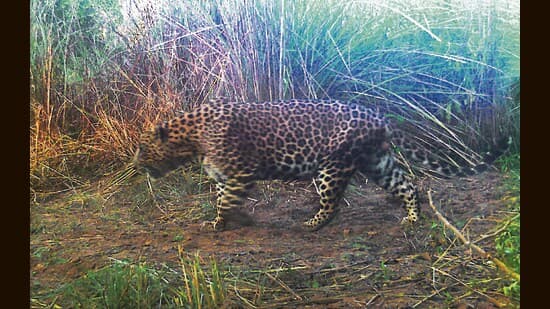
Fact is, the sanctuary and the lake forest are two distinct geographic areas with no contiguity. The sanctuary lies on the north-eastern boundary of Chandigarh, occupying 25.98 sq km, whereas the forest on the lake s northern banks is a thin, limited width, hi
Fact is, the sanctuary and the lake forest are two distinct geographic areas with no contiguity. The sanctuary lies on the north-eastern boundary of Chandigarh, occupying 25.98 sq km, whereas the forest on the lake’s northern banks is a thin, limited width, hillock-less, varying strip with a maximum of 1,000 metres in its north-to-south length. The sanctuary is separated from the lake to its south by the buffer comprising the villages of Saketri, Kaimbwala, Kansal and Khuda Ali Sher. The sanctuary forms the catchment area for the lake as it is from its hillocks that water collects and drains through four rivulets into the Sukhna lake.
The most important fact is that where the leopards were camera-trapped in the sanctuary is more than 10 km from the lake forest. Entry to the lake forest is without permits and is frequented by hundreds of people daily. But there is no reported sign of a leopard in the lake forest by way of pug marks, scat, claw marks on trees, etc.
Leopards live peacefully with the human population of Chandigarh. There has been no attack on humans or any basis for projecting a leopard-human conflict. In their report on Chandigarh’s wildlife, scientists of the Wildlife Institute of India, Dehradun, documented that leopards “showed predominantly nocturnal activity of peak movement between 9 pm to 2 am” in the sanctuary, which minimises the chances of negative encounters with tourists and wildlife guards. It is in the sanctuary area (not lake forest) where humans can encounter leopards but here the forests and wildlife department has put in place safeguards.
“We allow people into the sanctuary on the basis of permits, and not more than 200 people visit daily. The sanctuary is closed to tourists in the monsoons. Only four-wheeled vehicles are allowed into the sanctuary and permitted tourists drive from the gate to the tourist facility without being allowed to stop midway. Warning signages have been put up to guard against misadventures. Under the supervision and surveillance of our staff, tourists are allowed to traverse a limited number and mileage of nature trails in the sanctuary,” chief wildlife warden Saurabh Kumar told this writer.