Karisma Kapoor Led Brown Faced 3 Year Delay Was Re Edited Says Writer Mayukh Ghosh Abhinay Deo
Hindustan Times
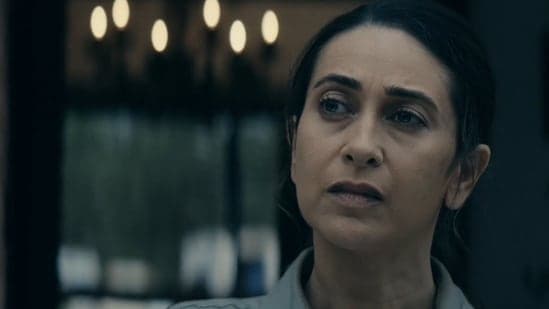
Crime thrillers traditionally revolve around one question: Who did it? But for writer Mayukh Ghosh, that was never the most important mystery at the heart of Brown
. The psychological crime thriller, starring Karisma Kapoor as detective Rita Brown, began as a conventional whodunit before evolving into something far more layered. Speaking to Hindustan Times, Mayukh revealed that the show's defining creative choice was shifting the focus away from identifying the killer and toward understanding their motive.Brown was originally a straightforward whodunitAccording to Mayukh, the version of Brown he first encountered was quite different from what audiences eventually saw. “Zee Studios wanted to revive an old project based on the novel City of Death and they were looking for someone to pick it up,” he says. “At that time it was a pure whodunit.”But the team soon felt that a simple killer-identity mystery wouldn’t hold up for today’s viewers. “Once I came on board, we realised audiences today are cinema-literate. A pure whodunit might not always work.”This shift pushed Mayukh and fellow writers Diggi Sisodia and Sunayana Kumari to rethink the core idea of the story. “That’s when we started working on the angle of the why. The core of any murder mystery is the motive. The search for that answer became the centre of the story.” Guessing the killer was never the real mysteryOne of the common criticisms surrounding Brown since its release is that some viewers feel they can identify the killer before the final reveal. For writer Mayukh Ghosh, that was never a concern. “It doesn't bother me at all,” he says. “Otherwise we would have cast an unknown face so nobody could guess who the killer was.”For him, the series was never meant to function as a pure puzzle built around a final reveal. He adds, “It was never just the point of finding out who the killer is. The story is also Rita's journey. She's trying to understand what she will choose while investigating this case and trying to find herself.”He also points out that the nature of the crimes itself signals early on that the story is driven by something deeper than a typical investigation. He says, “We clearly see it's not a normal criminal who's killing for money or sexual advantage. There is some belief system driving him. Almost like a ritual.”That thread, he explains, ties directly into the protagonist’s emotional arc: “It culminates in Rita's own journey of exploration where she finally has to face herself.”Years of waiting created a new challengeBrown may have arrived on streaming platforms only recently, but its journey to release stretched over several years. Written during the pandemic, the series went through a long phase of production and delays before finally reaching audiences. It was also selected for Berlin Market Selects in 2023 along the way. “Brown went to Berlin,” Mayukh says. “But it took a long time before it finally released.”The long gap naturally raised concerns about whether the material would still feel relevant by the time it premiered. “This was written in 2020 and 2021. Then it got made. Then it went to Berlin. Then there was a hiatus of a couple of years.”Before the release, the makers went back to the edit and reshaped the format quite significantly. “Originally it was planned as an eight-episode, thirty-minute series. We re-edited it into seven episodes of around forty minutes each.”Mayukh admits there was also a practical consideration behind the change. He adds, “We thought maybe if it's seven episodes, more people will click on it than eight,” he laughs. The creative choice that helped Brown surviveLooking back now, Mayukh believes the shift from a simple whodunit to a story driven by motive is what helped Brown stay relevant despite its long delay. He says, “Had that shift toward purpose and motivation not happened, I don't think the series would have worked after four or five years.”The writer is also honest about how difficult it can be when projects remain stuck in limbo for years. “It's dark. That's the real dark part,” he says. “You’re in a limbo. Until the project releases, nobody really sees the work.”Comparing it to publishing, he adds: “Only when your book is published do you become a writer. It's similar for screenwriters. Only when the film or series comes out do people actually see what you've done.”For Mayukh, the response to Brown shows that audiences connected with the central idea the writers built the show around. In a genre usually driven by the question of who did it, Brown deliberately shifts the focus. “Even if you've guessed the killer,” he says, “you still can't guess the why.” And that, he adds, is where the real mystery truly lies.