Hormuz Service Fee To Nuclear Programme Likely Areas Covered In The Us Iran Deal
Indian Express
Iranian Foreign Minister Abbas Araghchi on Saturday offered fresh clues about the shape of a potential agreement between Tehran and Washington, saying Iran would continue to maintain leverage over
the strategically vital Strait of Hormuz even as negotiations move closer to a breakthrough. However, conflicting claims have the world on edge.
While Iran’s state news agency IRNA reported nuclear armament is excluded from the talks, US has maintained that disarming Tehran of its nuclear capabilities is Washington’s primary objective in the war. The US is owever open to a civilian nuclear energy programme in Iran, according to a White House official quoted by ANI.
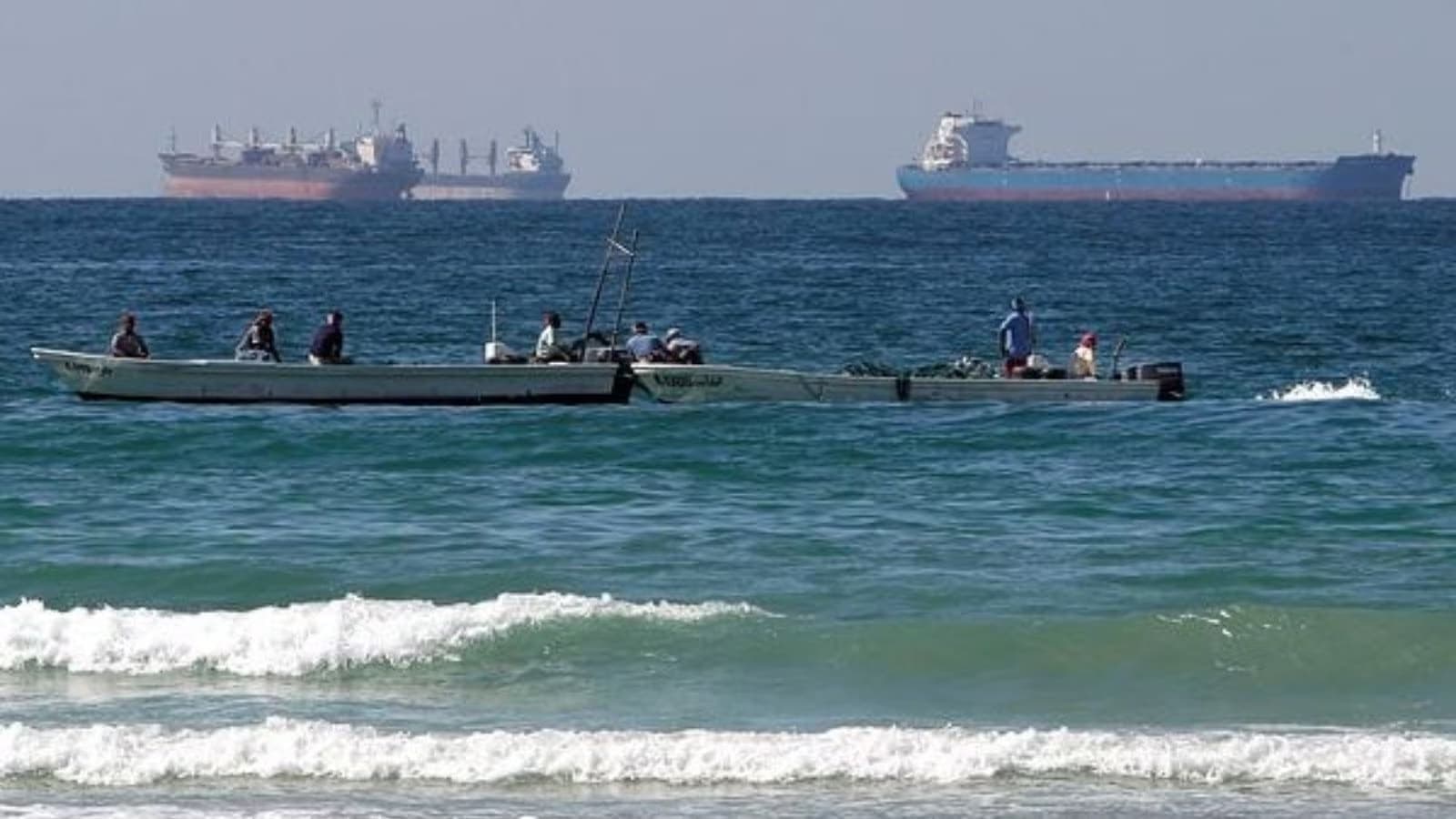
One of the most important issues, which has had global ramifications, is the closure of the Strait of Hormuz. While international laws forbid the collection of toll from ships passing through the natural waterway, Iran intends to collect a “service fee”. This will be part of its agreement with the US, its Foreign Minister Abbas Araghchi said.
“Our sword will always remain poised above the Strait of Hormuz, and whenever necessary, Iran’s armed forces will intervene,” Araghchi said. While acknowledging that international law does not permit Iran to levy tolls on vessels using the waterway, he said Tehran was seeking to establish a framework for collecting “service fees” through negotiations.
His remarks come as US and Iranian negotiators appear to be closing in on an agreement aimed at ending months of conflict and addressing long-standing disputes over Iran’s nuclear programme.
According to Araghchi, both sides are working towards an initial agreement that would formally end the ongoing conflict. The first phase is expected to focus on securing a broader ceasefire and reducing tensions across the region.
One of the central elements of the proposed deal involves Iran’s stockpile of highly enriched uranium.
A senior US administration official told reporters that the agreement would begin a process to destroy, remove or otherwise neutralise Iran’s enriched uranium reserves. Technical negotiations on how that would be carried out are expected to continue for around 60 days after the initial agreement is signed.
Iran has maintained that its nuclear programme is intended for peaceful purposes, while the US and its allies have long argued that the programme could potentially be used to develop nuclear weapons.
The agreement is also expected to address navigation through the Strait of Hormuz, one of the world’s most important energy corridors.
US officials say provisions are being discussed to ensure the uninterrupted movement of commercial shipping through the strait. Araghchi’s comments suggest Iran wants formal recognition of its role in maintaining maritime security and may seek compensation for services provided to vessels transiting the waterway.
Regional officials familiar with the negotiations say the deal could include a phased easing of economic sanctions imposed on Iran. Such a move would provide significant relief to Tehran’s economy, which has been under pressure from years of US-led sanctions.
Another reported component of the agreement is the release of Iranian assets frozen abroad worth $24 billion, alongside fresh nuclear negotiations and the reopening of the Strait of Hormuz. Access to these funds has been a long-standing demand of Tehran and could form part of the incentives offered in exchange for nuclear concessions.
Several key issues still appear to be under discussion, including the exact mechanism for handling Iran’s enriched uranium, the timeline for sanctions relief and Tehran’s proposed fee structure for ships passing through the Strait of Hormuz.
Israel, which is not a party to the negotiations, has also indicated that it expects any agreement to address concerns over Iran’s missile capabilities and regional proxy groups.
Despite these unresolved questions, officials on both sides have signalled that an agreement may be closer than at any point in recent months.
The Express Global Desk at indianexpress.com which delivers authoritative, verified, and context-driven coverage of key international developments shaping global politics, policy, and migration trends. The desk focuses on stories with direct relevance for Indian and global audiences, combining breaking news with in-depth explainers and analysis. A major focus area of the desk is US immigration and visa policy, including developments related to student visas, work permits, permanent residency pathways, executive actions, and court rulings. The Global Desk also closely tracks Canada’s immigration, visa, and study policies, covering changes to study permits, post-study work options, permanent residence programmes, and regulatory updates affecting migrants and international students. All reporting from the Global Desk adheres to The Indian Express’ editorial standards, relying on official data, government notifications, court documents, and on-record sources. The desk prioritises clarity, accuracy, and accountability, ensuring readers can navigate complex global systems with confidence. Core Team The Express Global Desk is led by a team of experienced journalists and editors with deep expertise in international affairs and migration policy: Aniruddha Dhar – Senior Assistant Editor with extensive experience in global affairs, international politics, and editorial leadership. Nischai Vats – Deputy Copy Editor specialising in US politics, US visa and immigration policy, and policy-driven international coverage. Mashkoora Khan – Sub-editor focusing on global developments, with a strong emphasis on Canada visa, immigration, and study-related policy coverage. ... Read More