Deadpool Cinematographer George Richmond Paragliding Accident Rescue
Indian Express
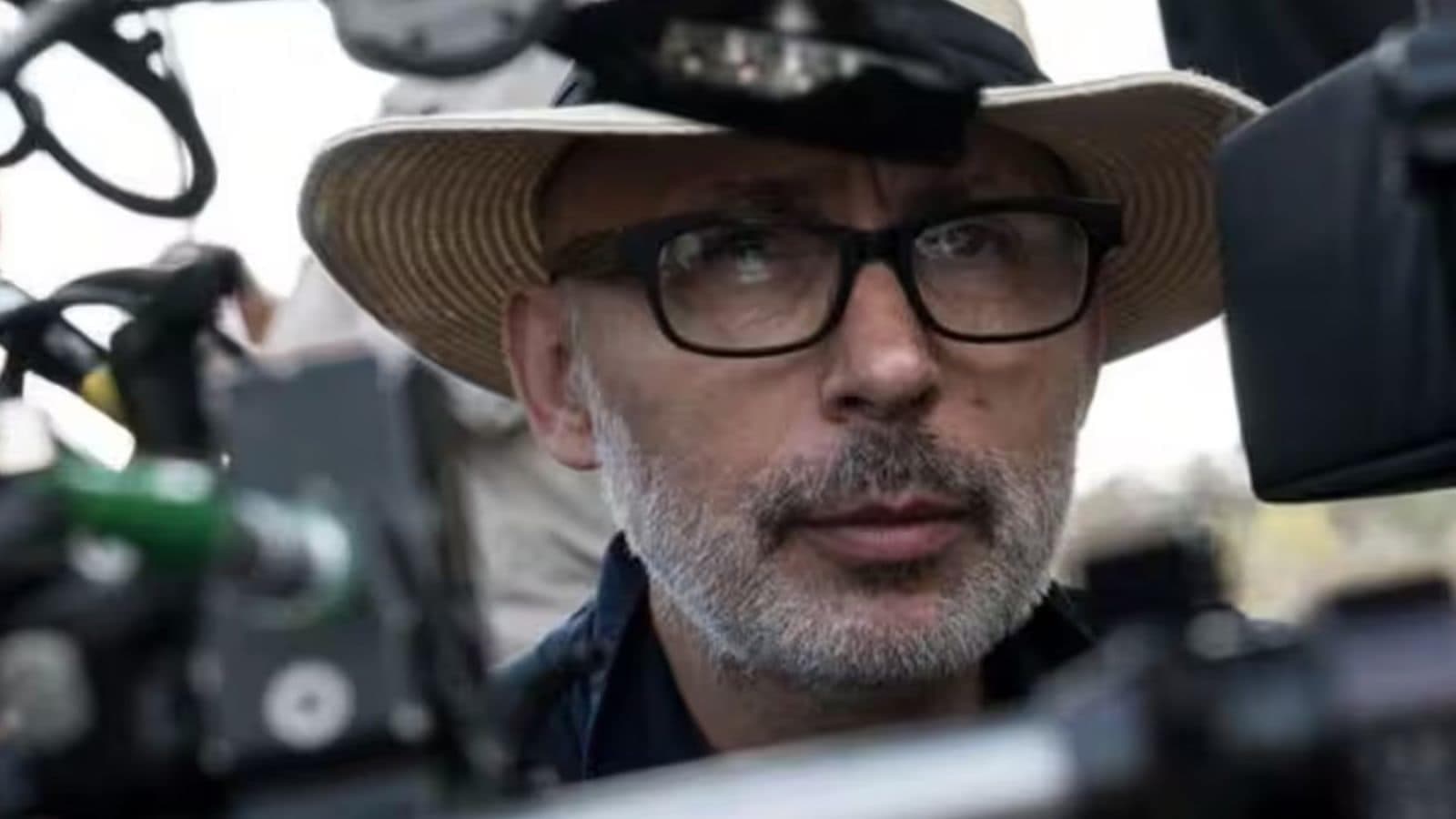
When doctors at PGIMER, Chandigarh, prepared to operate on a foreign national with severe spinal injuries on June 9, he was registered simply as an unknown patient . Few at the hospital knew that
When doctors at PGIMER, Chandigarh, prepared to operate on a foreign national with severe spinal injuries on June 9, he was registered simply as an “unknown patient”.
Few at the hospital knew that the man lying on the stretcher was George Richmond, an acclaimed British cinematographer whose credits include the Hollywood blockbuster Deadpool and Wolverine. Fewer still knew that just a day before a near-fatal paragliding accident in the high Himalayas, he had been a guest at the Patiala residence of former Punjab Chief Minister Captain Amarinder Singh.
What began as the rescue of an unidentified foreign tourist injured in a remote mountainous region near Manali soon evolved into a multi-agency operation involving the Himachal Pradesh government, district administrations, the Indian Air Force, senior political leaders and doctors across two states.
Richmond, 54, had arrived in India as part of a six-member foreign expedition group. According to former MP Preneet Kaur, Richmond was known to her son, Raninder Singh, through college friends abroad and had stayed with the family in Patiala before leaving for Himachal Pradesh on June 3.
“My son knew them from his college days. We met George for the first time when he stayed with us for a night before heading to Himachal the next morning. A common friend had brought the group and they also had a guide with them. After they left, we had no idea what had happened until we learnt about the accident. It is very unfortunate,” Kaur said.
She said Raninder Singh had remained in touch with Richmond and some of his companions over the years and had helped host the group during their visit to India.
The following day, Richmond and his companions left for an expedition in the Kullu-Manali region that included trekking and paragliding. During the outing, Richmond suffered a serious accident, sustaining severe injuries to his cervical spine.
According to sources, Richmond crashed in rugged mountainous terrain near Deo Tibba while participating in a long-distance cross-country flying excursion from Bir Billing in Kangra district. Fellow paragliders alerted local authorities, triggering an extensive search-and-rescue operation in difficult terrain.
As information about the accident reached Punjab on the afternoon of June 8, Captain Amarinder Singh and Raninder Singh contacted authorities and sought assistance from the Himachal Pradesh government.
Kaur said she also reached out to her relative Himachal Pradesh Public Works Minister Vikramaditya Singh, who helped coordinate the response.
“The Himachal Pradesh government extended full cooperation and worked closely to facilitate the rescue and transfer. Permissions for helicopter movement have to be coordinated through the local administration, including the Deputy Commissioners and SDMs. Everyone worked together and did a fantastic job,” she said.
Given the difficult terrain and the urgency of Richmond’s condition, assistance from the Indian Air Force was sought. In a late-evening operation, an IAF helicopter evacuated him from the remote location and flew him to Bhuntar at around 7.10 pm.
From there, the Kullu district administration coordinated his transfer to the Civil Hospital in Kullu before arranging his onward movement to PGIMER, Chandigarh, where specialised treatment was available.
A senior Himachal Pradesh government official said multiple district administrations were involved in the operation because of the location and circumstances of the accident.
“What we were told was that they had been trekking before paragliding and then the incident took place. Multiple district administrations were roped in,” the official said.
At PGIMER, doctors carried out a detailed assessment and subsequently operated on Richmond. Medical experts said he had suffered a cervical spine injury that resulted in quadriparesis.
Hospital authorities said he remains conscious, oriented and is recovering under close medical supervision.
Sources at PGIMER said Richmond’s identity was initially unknown when he was admitted and he was registered as an unidentified patient before officials established who he was.
Authorities also facilitated an emergency visa for Richmond’s wife, enabling her to travel to Chandigarh. She arrived a night before his surgery and has since been by his side.
Hospital sources said his condition continues to be monitored by a multidisciplinary team of specialists.
According to Dr Vijay G. Goni, Professor and Head, Department of Orthopaedics, PGIMER, Chandigarh, George Richmond was brought to the institute after suffering a fall during a paragliding accident in Manali, Himachal Pradesh.
He sustained a fracture of the first cervical vertebra (C1) along with a severe fracture-dislocation injury at the C5-C6 level of the neck. The injury also involved a fracture of the spinous process of the C5 vertebra. Doctors assessed his neurological condition as ASIA-C, indicating an incomplete spinal cord injury in which some motor function remains below the level of injury.
Richmond reached PGIMER at around 4.45 am on June 9 and was immediately evaluated by a trauma team comprising general surgeons and orthopaedic surgeons. Initial resuscitation measures were carried out and a hard cervical collar was applied to stabilise his neck.
Dr Goni said doctors subsequently applied cervical Crutchfield traction, a procedure used to realign cervical spine injuries. However, the fracture-dislocation could not be reduced because the facet joints had become locked. As a result, surgery was planned to stabilise the spine and relieve pressure on the spinal cord.