Need To Break The Cycle Of Unhappiness
Hindustan Times
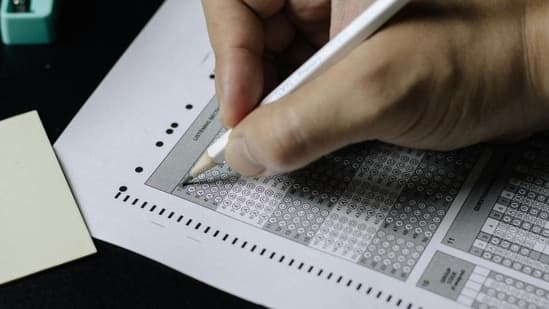
In May this year, students who had appeared for the NEET 2026 exam in India learned that their papers had been cancelled due to a leak. Of the almost 25 lakh men and women who sat for the exam this
year, several died by suicide, and others were outraged and upset. The exam has been rescheduled for June 21, according to the NEET website.
The National Eligibility cum Entrance Test (NEET) is the nationwide entrance examination conducted by the National Testing Agency (NTA) for admission to undergraduate medical programmes. It is the largest exam in India by the number of applicants.
Education, especially higher education, is seen as essential to securing jobs and stability. Young people and their families, mostly from modest homes, spend a lot of money and energy preparing for these qualifying exams, often under great mental and physical strain for all involved. As an aspiration, a desirable outcome in the qualifying exams brings stress to entire families, affecting their mental health.
What exactly falls under the definition of mental health? It is the ability to manage one's thoughts, emotions, behaviours, and interactions with others. In this, social, cultural, economic, political, and environmental factors play a role, as do psychological, personality, and genetic factors. It is the foundation for the well-being and effective functioning of individuals. It includes mental well-being, prevention of mental disorders, and treatment and rehabilitation.
The mental health of Indians is not good. According to the World Health Organization (WHO), the economic loss due to mental health conditions from 2012 to 2030 is estimated at $ 1.03 trillion.
India’s National Mental Health Survey (NMHS), 2015-2016, estimated that one in 10 people (approximately 10.6 per cent of the population) experiences a mental health condition. About 7.3% of young people (18–29 years) face overall mental morbidity, which is influenced by socioeconomic and demographic factors. Those who are unemployed or economically inactive are twice as likely to experience common mental health conditions as those in employment (40% vs 18.3%). Structural inequalities, limited access to care, and social stressors contribute to these disparities.
The National Council of Educational Research and Training (NCERT) Survey 2022 found that 11% of students reported anxiety, 14% experienced extreme emotions, and 43% had mood swings. NEET aspirants face heightened risks due to stigma and economic hardships and have limited access to mental health care and support.
Who suffers more, women or men? Both suffer, though in similar and distinct ways. These differences are linked to gender and to how men and women are raised in Indian society. For example, over two-thirds of married women in India experience domestic abuse, with prevalence rates of physical (28.5%), emotional (13.1%), and sexual violence (5.7%).
A 2025 survey conducted by Chung’s institute at King’s College, London, in partnership with Ipsos, a global market research company, across 29 countries, included 23,268 Indians aged 18 and above. It found that many people support gender equality in general terms, yet feel more uneasy when it affects concrete areas such as marriage, family authority, and domestic responsibilities.
“What stands out in the India data is the coexistence of strong support for gender equality and strong concern that equality may have 'gone too far’,” says Chung. For instance, 52% of respondents said they agreed—somewhat or strongly—that a wife should always obey her husband. But when asked about others’ views in the country, about 30% each said more people agree, more people disagree, or that equal numbers agree and disagree with the statement.
“This is relevant to domestic violence because violence against women is shaped not only by law or policing but also by broader norms about authority, obedience, and control, and by whether women’s independence is seen as legitimate,” Chung said. “If people support equality in principle while still accepting male authority within the household, the social conditions that enable domestic abuse may persist, even where formal legal protections exist.”
And these attitudes are not improving among younger groups. Globally, Gen-Z men—born between 1996 and 2012—tend to hold more traditional views on both women’s and men’s roles in society, the survey found.
Indian women experience a higher prevalence and greater burden of mental health disorders than men, due to socio-cultural, economic, and structural factors. Research consistently shows that common mental disorders (CMDs), such as depression and anxiety, are more prevalent among women in India than among men.
According to the Global Burden of Diseases Study 2021, the prevalence of depressive disorders was 4.82% among women and 3.18% among men, while that of anxiety disorders was 5.53% among women and 3.30% among men.
Women’s constraints in health care decision-making, education, and employment exacerbate stress and mental health vulnerability. Financial insecurity heightens psychological stress and limits access to mental health services. Mental health issues are often stigmatised, discouraging women from seeking help.
But men aren’t spared either. The National Crime Records Bureau’s 2021 Accidental Deaths & Suicides in India report shows that men account for 72.5% of suicide victims, a stark contrast to women. In 2021 alone, more than 73,900 more men than women died by suicide, with particularly high rates among men aged 18–59. The rise in suicides among daily wage earners has been especially stark, with a 170.7% increase between 2014 and 2021.
Men’s suicide rates may be higher, but women are more prone to anxiety and depression. Studies suggest that women internalise mental health issues, leading to depression, while men externalise their struggles, which may manifest as aggression, substance abuse or even suicide. Women may share their problems with other women; it is rare for men to admit to or share their issues. More women, for instance, seek therapy than men.
The cycle of unhappiness and poor mental health is repeated. How do we break this?
This article is authored by Anita Anand, development and communications consultant, Goa.