The aspirations and contradictions in our society and polity, as well as the confusion of our governing and political classes on political accountability, were revealed in three separate and
unrelated reports carried in this newspaper last week. They seemingly gained no traction. That only indicated how much the country has become inured to the tawdriness that surrounds it in Amrit Kaal. This, despite all the rhetoric that it is moving towards “viksit” status.
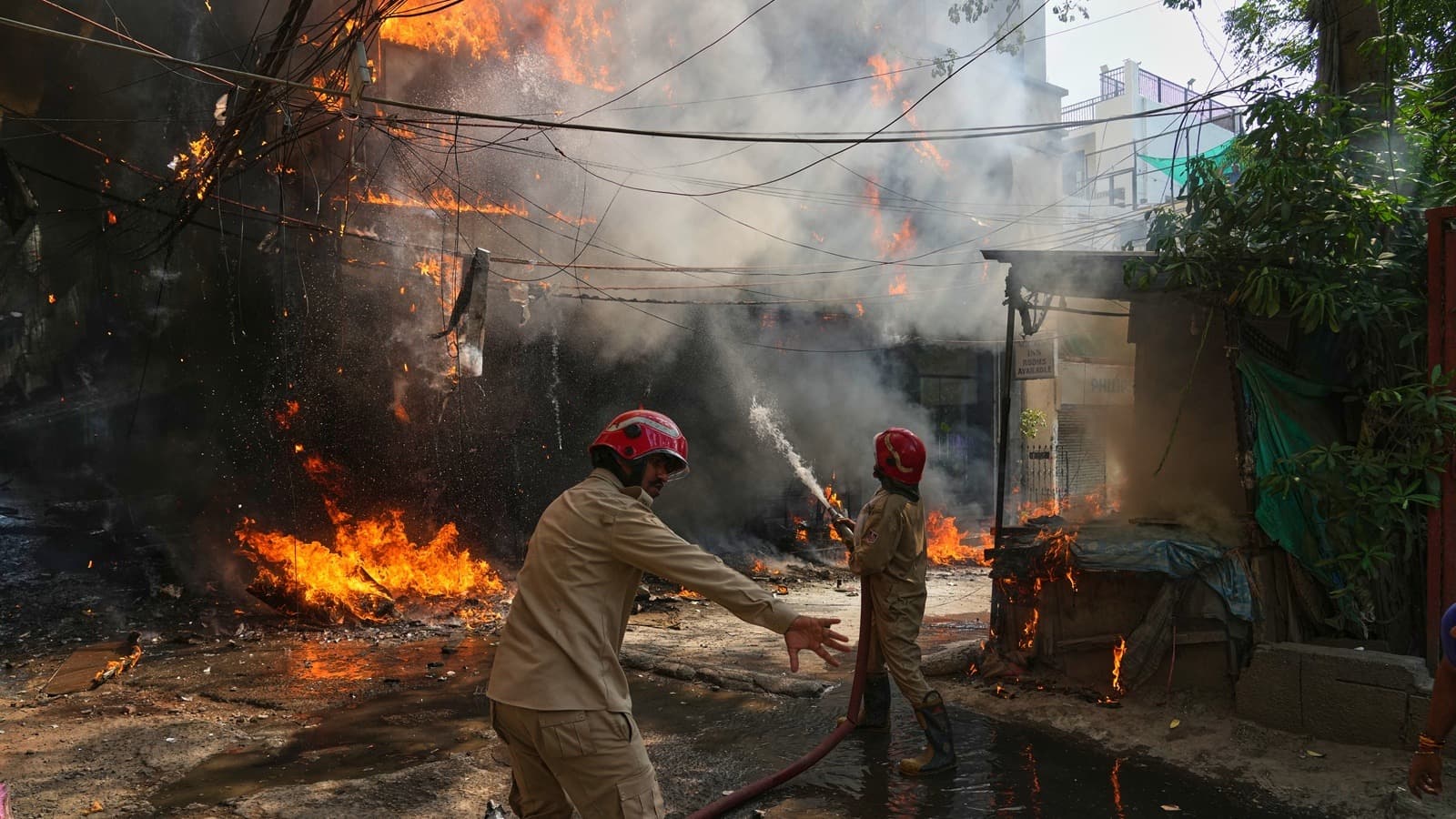
This newspaper reported on June 4 that the bed and breakfast in Delhi, where a fire, a day earlier, had led to the death of 21 persons, including foreigners, was authorised to have only six rooms. Instead, the owner, Lavkesh Bajaj, had constructed 26. When the police asked him why he did so, he said that the business was “generating good profits” and “because Delhi mein sab chalta hai”. Unauthorised construction for profit and deaths because of fires are not unique to India.
Can there be a more damning indictment of the administration in this country’s capital city than an owner of an establishment where 21 persons had perished in a fire, many in illegally constructed rooms, asserting that he had not undertaken any extraordinary act? Yet, such has been the nature of governance presided over by all political parties in Delhi at different times that no political leader seriously thought of contesting the validity of Bajaj’s assertion. That is because no one really can. And, if this is true about Delhi, what would be the position in many, if not most, parts of our vast country?
On June 4, Kumar Mangamalam Birla, the head of a leading conglomerate that has been a household name in India for over a century, and Mohan Bhagwat, Sarsangchalak of the Rashtriya Swayamsevak Sangh (RSS), participated in a function organised by the organisation. Birla said, “Even though these are challenging times, this is India’s era”. He went on to define the challenge thus: “And the challenge for India is that this flux exists at the time when India is set to begin its Amrit Kaal. But the biggest lesson that history teaches us is the importance of building national capability and national resilience”. No one can quarrel with these sentiments, which are in keeping with Prime Minister Narendra Modi’s vision of Amrit Kaal and Viksit Bharat. However, while expressing these ambitions, can anyone deny that as long as the ground reality of “yahan sab kuch chalta hai” remains, the ambition of Viksit Bharat will be almost impossible to achieve? To be fair, Modi, both as Chief Minister and Prime Minister, has attempted to improve ground-level administration, but Bajaj’s remark and the virtual silence in its wake show how much more needs to be done.
Bhagwat agreed with Birla that India’s moment had arrived, but he was candid enough to say, “We have been saying for a long time that India is Vishwaguru, India has to become Vishwaguru, we have to make India Vishwaguru. So what is stopping us? Our preparation; it is still incomplete”. This writer would venture to suggest that so long as the attitude “yahan sab kuch chalta hai” continues to be the ground reality, India’s “preparation” cannot even begin. Mohan Bhagwat also said that the world says that only India can show the “new path” of development. The RSS may well believe this, but is there overwhelming global evidence to back this view when India is lagging in the AI race?
In the wake of demands for Education Minister Dharmendra Pradhan to resign for the enormous problems which have surfaced in a series of examinations, including NEET, conducted by the National Testing Agency (NTA), Parliamentary Affairs Minister Kiren Rijiju told this newspaper “If a fraud is committed by the Minister or the Minister’s staff, then the Minister is responsible… if some trouble happens in [an] autonomous body, then the body is answerable for that”. A fraud committed by a minister, which involves the public, can be a violation of the criminal statute or a serious breach of the conduct expected of someone holding such a high political office. If it is the former, it would obviously be a matter for the police or other concerned agencies to handle. If it is the latter, it would impinge on the issue of political accountability. That is what is being demanded of Pradhan by a considerable section of public opinion.
Rijiju’s comment is carefully limited to autonomous organisations such as the NTA. It is an autonomous body, but it has a direct nexus with the Education Ministry, which has to exercise an oversight function. That means the minister has to keep an eye that it is functioning well. This does not mean that he directly intervenes in its operations, but he has to follow at least two of the three “rights” enunciated by Bagehot for British monarchs. These would be to “encourage” and “warn”. The third right of ‘consultation’ he could perhaps forego lest it be considered unwarranted intervention.
The larger point in all this is the need for a thorough public debate on the nature of political accountability. Surely, electoral success cannot be its only measure. Otherwise, it will also become a victim of the “yahan sab chalta hai” attitude.