The decision was taken at a high-level meeting helmed by Sood, and attended by the Municipal Corporation of Delhi (MCD), Delhi Fire Service (DFS), directorate of higher education, Delhi Police
, labour department, health department and urban development department, among others.
The director of higher education was designated the nodal officer for drafting the policy.
Sood said, “We had received the report of the justice RK Gauba Committee and deliberated on its recommendations to address infrastructure and safety concerns, as well as issues related to faculty qualifications, curriculum standards, and fee transparency. A committee headed by the director of higher education will now consult all stakeholders and draft a regulatory framework for the coaching industry within the next three months.”
Officials said that the committee will cover key aspects of coaching centres, including fee structure, student safety and welfare, mental health support and counselling mechanisms. The policy will also focus on infrastructure standards and building safety compliance, fire and emergency preparedness, and teacher and staff welfare by standardising working conditions. The committee will also set up grievance redressal mechanisms for staff and students, besides conducting periodic inspections and ensuring compliance.
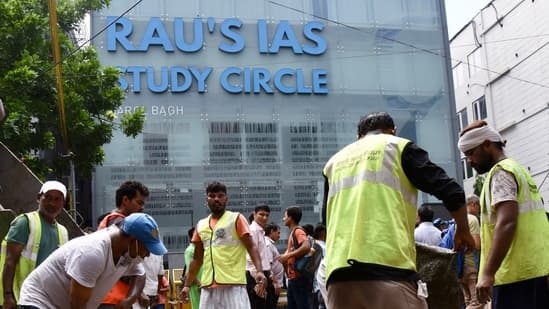
On July 27, 2024, three public service aspirants, Nevin Delvin, Shreya Yadav and Tanya Soni, drowned in a flooded basement of Rau IAS Study Circle, after it was flooded due to a heavy spell of rainfall. The incident caused public outrage, with students of several institutes of Old Rajendra Nagar and Karol Bagh staging a protest for nearly 20 days, demanding regulation and checks in the area.
Subsequently, the Delhi High Court constituted a high-level committee headed by retired justice RK Gauba to examine shortcomings in coaching hubs and recommend measures to prevent such incidents. The committee submitted a 5,000-page report identifying key issues and recommendations
Saloni Bhatia is a journalist with over 15 years of experience in reporting and storytelling, with a strong focus on the Delhi government and political developments in the Capital. Over the years, she has closely tracked policy decisions, governance issues, and political shifts. She started off as an entertainment journalist but then moved to covering beats like crime and education. Her experience on the crime beat helped her develop an eye for detail and accuracy, while education reporting allowed her to explore policy impact on students, teachers and institutions. Outside the newsroom, she enjoys reading both fiction and non-fiction. She also has a keen interest in watching Bollywood films.Read More