2026 Fifa World Cup Three Red Cards Mexico South Africa
Indian Express
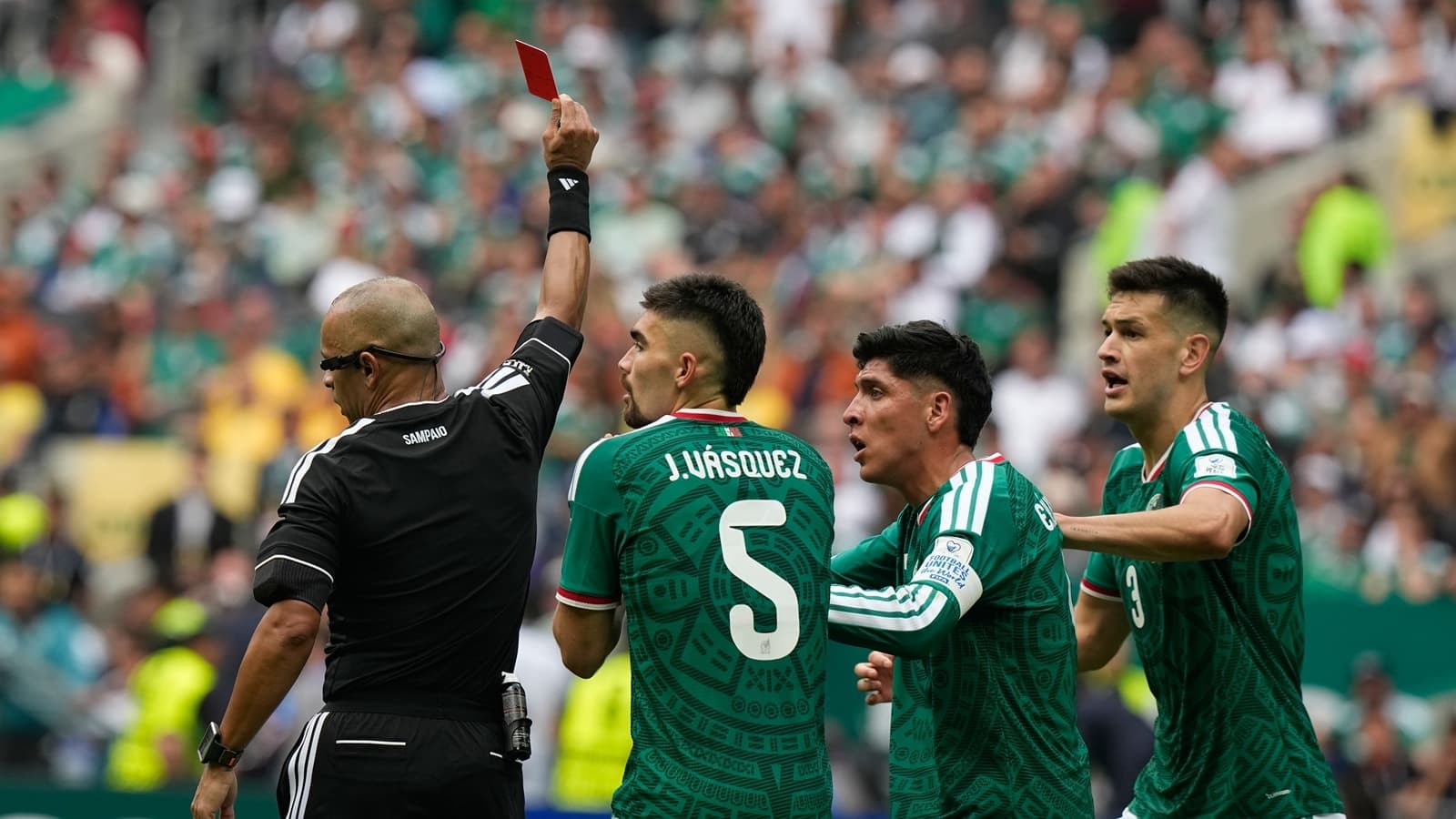
The 2018 World Cup had four red cards. So did 2022
. On Thursday night in Mexico City, the 2026 tournament nearly matched both in a single game. Three players were dismissed as Mexico beat South Africa 2-0 at the Azteca. Two for South Africa, one for Mexico. The most in any opening match in World Cup history. Pierluigi Collina, who has run FIFA's refereeing operation since 2017, is widely regarded as the greatest referee of all time. In 105 matches as an official, he averaged fewer than 0.15 red cards per game. He was famously reluctant to reach for his pocket. The man who barely showed reds as a referee is now presiding over a system that showed three in one night. That is either coincidence or the consequence of something deliberate. AS IT HAPPENED | Mexico vs South Africa, FIFA World Cup 2026 opening match The new rules matter here. The 2026 World Cup is the first major tournament to use IFAB's landmark new laws, which Collina helped design. They include red cards for players covering their mouths during confrontations, five-second countdowns for throw-ins and goal-kicks, and broadened VAR powers. Collina's stated aim: "We are trying to clean the game as much as possible.” VAR can now intervene if a player receives a red card that resulted from an incorrect yellow card decision, and in cases of mistaken identity. It can also step in during cases of incorrectly awarded corner kicks. The scope is significantly wider than before. Look at Thursday's three dismissals through that lens and they become less random. South Africa's Sphephelo Sithole went first, for denying Brian Gutierrez a clear goalscoring opportunity. Gutierrez was through on goal, Sithole brought him down. Referee Wilton Sampaio produced the red without hesitation. No argument here, old rules or new. The second was different. Substitute Themba Zwane was dismissed after a VAR review for what was ruled violent conduct — an arm raised near the face of Mexico's Roberto Alvarado in an off-the-ball tussle. Sampaio was sent to the pitchside monitor. What he saw there was ambiguous: an open hand, not a closed fist, contact difficult to confirm. Zwane looked bewildered. But under Collina's new framework — which specifically targets off-the-ball behaviour and confrontational conduct — this is precisely the kind of intervention the new VAR powers were designed to enable. Whether it was the right call is debatable. Whether it was deliberate policy is less so. Referee Wilton Sampaio, of Brazil, show the red card to South Africa's Themba Zwane. (AP Photo) Mexico's Cesar Montes followed in stoppage time, dismissed for a foul on Khuliso Mudau on the edge of the box. A yellow seemed likely given Mudau's wide position. Sampaio produced the red. VAR reviewed and did not intervene — suggesting Mudau would probably have had a clear run on goal. On reflection, supportable. So: one clear decision, one contentious one that fits the new framework, one that VAR left standing. The comparison that looms is 2006. That tournament produced 28 red cards across 64 games — a record that still stands — and its signature moment was the Battle of Nuremberg, where Portugal beat the Netherlands in a last-16 tie that referee Valentin Ivanov turned into a card exhibition: four reds, 16 yellows, a match remembered more for its bookings than its football. But 2006's chaos was atmospheric, a product of physical play and permissive refereeing slowly corrected across the tournament. What Thursday suggested is something structurally different: not referees losing control, but a framework designed to find more red cards, finding them. Whether Thursday was an outlier or a signal, coaches and players will be watching the next set of games very carefully. So, presumably, will Collina — the man who spent a career putting the red card away, now waiting to see what he has built.