Chill Relax Infantino Defends Fifa World Cup Travel Ticket Row
Indian Express
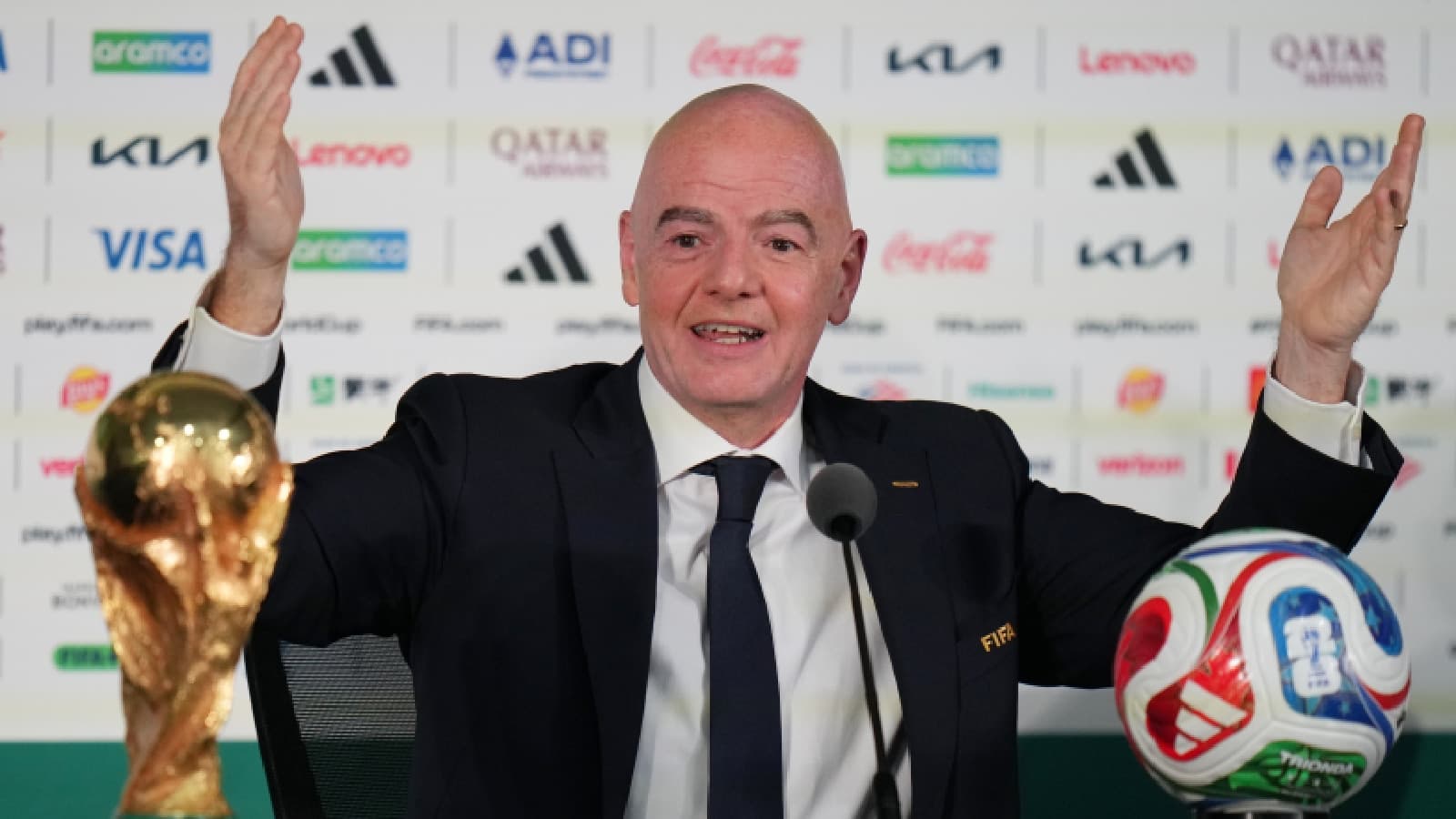
FIFA President Gianni Infantino told football fans and critics to chill and relax as the governing body came under fresh pressure over immigration problems, travel restrictions and ticket prices
FIFA President Gianni Infantino told football fans and critics to “chill and relax” as the governing body came under fresh pressure over immigration problems, travel restrictions and ticket prices ahead of the start of the World Cup. Infantino defended the organisation’s handling of several controversies that have dominated the buildup, from visa issues affecting teams and officials to complaints about expensive tickets. He insisted FIFA was doing everything possible to find solutions.
“It’s important sometimes to chill, relax,” he said. “We work on everything. Sometimes, screaming and shouting does not find a solution.”
His comments came as FIFA faced criticism over entry restrictions affecting some participants and supporters. The issue gained attention after Somali referee Omar Artan was denied entry to the United States, prompting criticism from the United Nations over immigration issues. Infantino acknowledged the frustration but argued that FIFA cannot control decisions made by governments.
“We don’t live on the moon, we live on planet Earth,” he said. “We have to respect that we are not kings of the world, who can rule over governments and police forces.”
The FIFA chief said people should not interpret his call to “chill and relax” as a request to ignore problems.
“When I say chill, I don’t mean sit and do nothing,” he said. “I mean trust us that we are trying to find solutions. Sometimes we are successful, sometimes we are not. We are a sports organisation that does as much as we can,” he added.
Much of Infantino’s address focused on defending the United States, which will host the majority of matches during the tournament. Despite concerns over travel bans and visa restrictions affecting people from some participating countries, he said every nation has the right to protect its borders.
“Unfortunately, we live in an aggressive world and security goes above everything,” he said.
To underline his point, Infantino used a future example involving Britain.
“In 2035, we hope the Women’s World Cup will be in the United Kingdom,” he said. “Would you find it normal that FIFA would dictate to the British government who to let into the country?”
Ticket prices were another major target of criticism, but Infantino argued that demand for the tournament justified the cost. He revealed that more than six million tickets had already been sold and described interest in the competition as extraordinary. According to Infantino, lowering prices would not necessarily help genuine supporters because many tickets would simply be resold for profit. “The demand has been unprecedented, not by a little bit, but by a factor of 10 or more,” he said.
“When we put tickets on sale on the secondary market, they are sold at a much higher price, which shows the original price was accurate,” he added.
He also defended FIFA’s financial model, saying money generated from the World Cup is reinvested into football around the world. “What’s most important in all of this is that every dollar we generate goes back into football,” he said.
Infantino pointed to investment in smaller and developing football nations as evidence of that commitment. “We invest in countries where no one else does – South Sudan, Bhutan. No one else is doing this,” Infantino added.
The FIFA president was equally determined to highlight Iran’s participation in the tournament despite the political difficulties surrounding the team’s presence.
“I went to see the Iran team in Turkey in March when people were saying it would be impossible for them to come,” he said. “I told them they would come, and if I had to take a bus to Iran and drive them here, I would. I don’t know who else in these circumstances would have made sure that Iran would come and play,” he added: