Collection
Up Bareilly School Teachers Fodder Collection Controversy Beo Removed
Indian Express
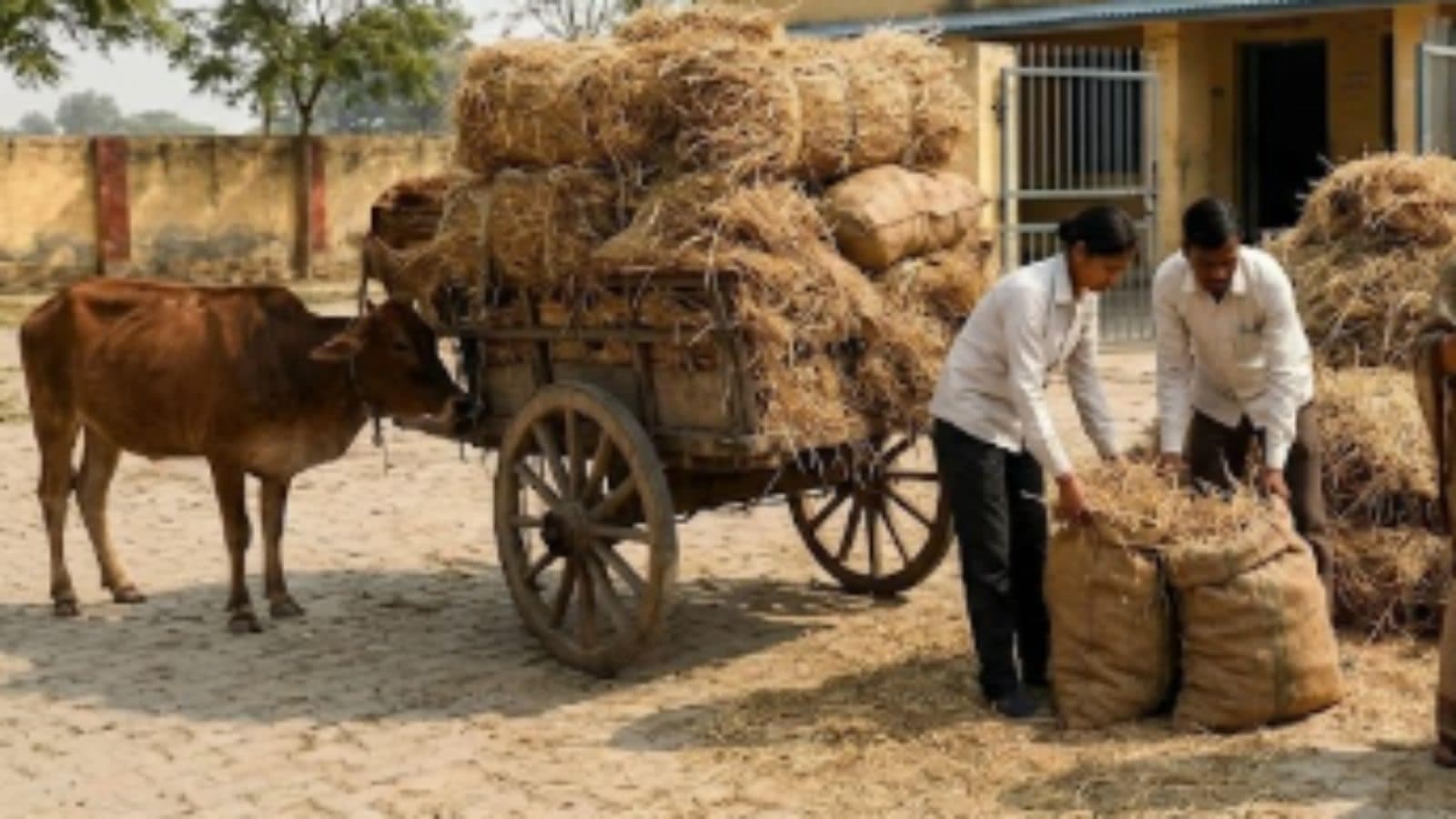
The Nawabganj Block Education Officer (BEO) in Uttar Pradesh s Bareilly district triggered a controversy after he issued an order to government primary school principals and teachers for fodder...
The Nawabganj Block Education Officer (BEO) in Uttar Pradesh’s Bareilly district triggered a controversy after he issued an order to government primary school principals and teachers for fodder collection as part of an initiative for destitute cattle.
In a letter issued on May 22, two days after summer vacations started in schools, BEO Satyadev said it was mandatory for every school to contribute 1 quintal fodder and warned of departmental action in case of non-compliance.
But when teachers reacted sharply to the move, a clarification letter dated May 25 stated the fodder donation drive was voluntary and that there would be “no pressure of any kind” on teachers or school staff.
Basic Shiksha Adhikari (BSA) Vineeta on Friday said Satyadev was relieved of the Nawabganj BEO’s charge and had been attached with the district headquarters and asked officials to use a “restrained language” in their communications.
The teachers’ associations said the issue was not about the initiative itself, but about them being assigned responsibilities beyond academic work.
Desh Bandhu Gangwar, the head teacher of a primary school in Bhuta block, questioned why teachers were being roped in for the exercise. “Schools are already functioning with limited staff. Teachers are engaged in census work and several other duties. Now they are being asked to arrange fodder collection as well,” he said.
Gangwar also raised practical concerns regarding the arrangement and transportation of fodder. “One quintal means several sacks. Who will buy it, transport it and deposit it?” he said. Schools had been told to make their own arrangements for transport and collection, he said. Referring to the May 22 letter, Gangwar said schools in the block had initially been instructed to deposit the fodder at the veterinary officer’s office.
However, Deepmala Pandey, a government school principal in Bhuta block and founder of One Teacher One Call, described the initiative as a “positive effort” aimed at helping stray cattle during the summer months when fodder availability declines. “A teacher is a reflection of society. If teachers participate in a social initiative, it sends a message to the community as well,” she said.
At the same time, she acknowledged that many teachers could also see it as an added workload. “Teachers are already engaged in several duties, including survey and administrative work. So it depends on how one looks at it — either as community help or as extra work,” she said, adding that the initiative was voluntary and not a direct state-level order.
Meanwhile, Bareilly District Magistrate Avinash Singh said the initiative was part of the statewide “Bhusa Bank” campaign aimed at supporting cattle shelters and stray cattle, especially during periods of fodder shortage.
“It is totally voluntary. No one is being forced. People who wish to donate fodder according to their capacity can do so. This is a social welfare initiative in which different departments are also participating,” Singh said.
He added that the administration has been monitoring gaushalas through CCTV cameras and making efforts to ensure availability of water and fodder for stray cattle during the summer months. “It is a commonly undertaken, coordinated effort involving multiple departments, including the Animal Husbandry Department, and not any specific state-wide directive,” Singh said. The departments and officials also contribute voluntarily towards such welfare activities, he added.
BSA Vineeta said the district administration had assigned fodder collection targets to various departments, including the Education Department. “In the district, a fodder bank is being created for stray and destitute cattle. All departments were given collection targets, and our department was also assigned one,” she said.
Vineeta said officials were instructed to identify volunteers, farmers and others willing to contribute voluntarily. In a press statement issued on May 28, she said the initiative should not be viewed as an “order or pressure”, but as a “voluntary public welfare campaign” linked to cattle protection and community participation. She said the administration was encouraging support from social workers, farmers, gram pradhans and local organisations for the “Bhusa Bank” initiative aimed at supporting stray cattle .
While officials have defended the initiative as a voluntary welfare campaign, the episode has reopened questions over the extent to which teachers should be involved in responsibilities beyond education and school administration.
(Gupta is an intern with The Indian Express)
Stay updated with the latest - Click here to follow us on Instagram