Tomato Soy Juice Reduces Chronic Inflammation
Indian Express
Inflammation, if not looked into, can lead to a variety of diseases. While there are numerous supplements and diet regimens that claim to offer an easy fix, researchers from The Ohio State
University claim that there is a simpler antidote.
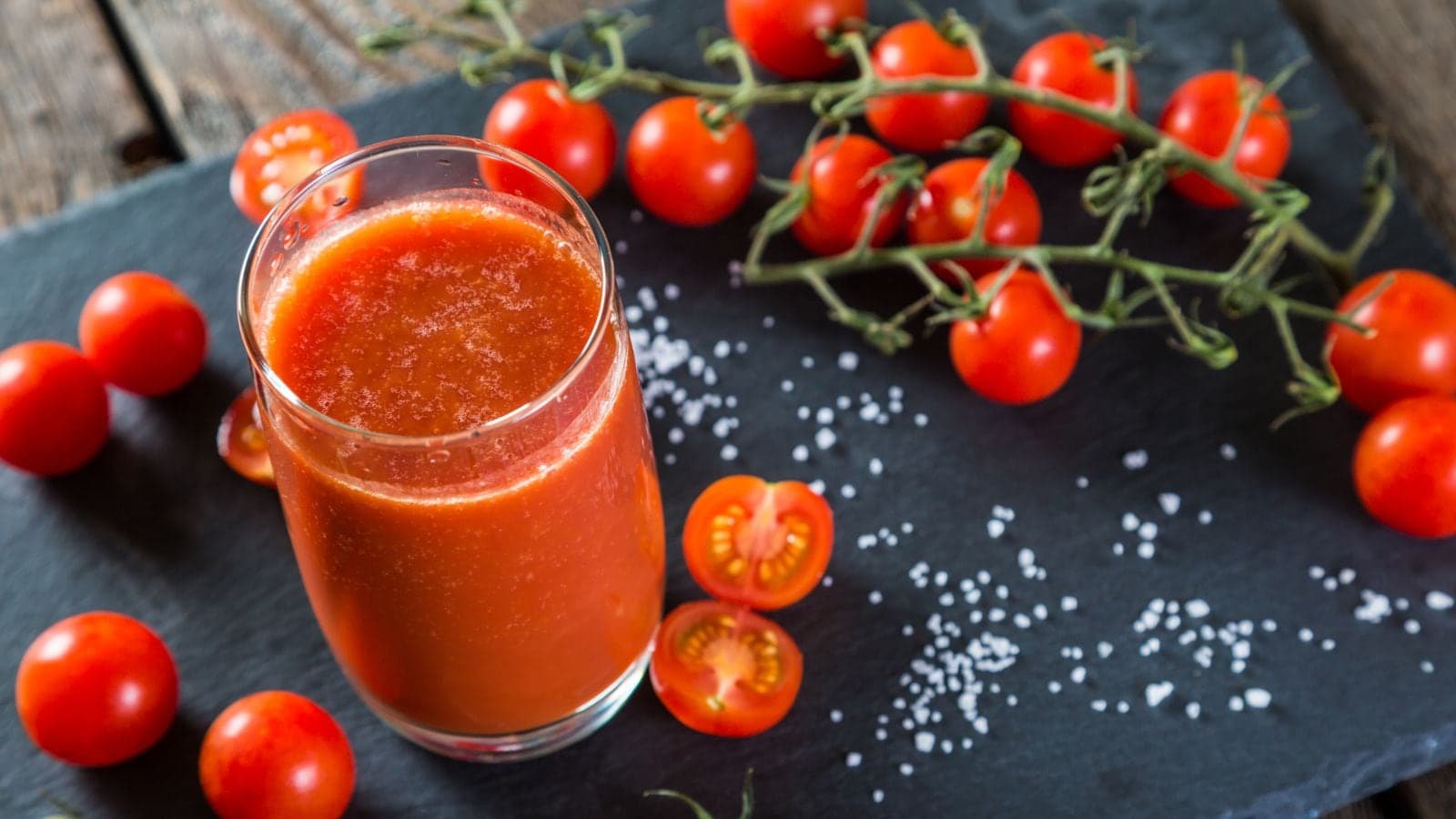
A new study led by Dr Jessica Cooperstone has found that drinking tomato-soya juice may help reduce chronic inflammation, which is known to trigger long-term diseases. This is mainly owing to the juice being rich in plant compounds that are beneficial for health.
The key ingredients of the juice, lycopene and soy isoflavones, which are in high concentrations, are among the two plant compounds that were earlier found to have antioxidant and inflammatory properties. When compared to a regular tomato juice that did not contain these compounds, the tomato-soy juice significantly reduced blood levels of three markers linked to systemic inflammation throughout the body.
The findings were published in the journal Molecular Nutrition & Food Research. Lycopene is the natural compound responsible for giving tomatoes and certain other fruits and vegetables their red colour.
Soy isoflavones are plant compounds that can mimic some of the actions of the oestrogen hormone. Both belong to a broader group of plant-based compounds known as phytochemicals, which are increasingly being studied for their potential health benefits.
Later research at the university found that higher consumption of the tomato-soy juice was linked to lower prostate-specific antigen levels in some men with prostate cancer. Other studies have also suggested that tomatoes and soy, whether eaten separately or together, may influence the inflammatory and metabolic processes connected to obesity and other long-term chronic diseases.
The study involved 12 healthy adults with obesity who drank two 6-ounce (177ml) cans of tomato-soy juice daily for four weeks. After a break to clear their systems, the same participants then consumed a low-carotenoid control tomato juice for another four weeks.
The researchers have collected blood samples before and after every four weeks to measure the cytokines, inflammatory proteins produced by the immune system. Significant reductions in these markers were observed only after participants consumed the tomato-soy juice, with no such changes seen during the control juice phase.
“Our hypothesis is that the tomato-soy juice may serve as an intervention to decrease inflammation and hopefully increase patients’ quality of life,” Jessica L. Cooperstone, lead author and associate professor of horticulture and crop science at The Ohio State University, said.
Researchers have also observed in animal studies that tomato-soy juice can reduce inflammation and lessen the severity of chronic pancreatitis.
These findings are now supporting an ongoing clinical trial that is investigating whether the same intervention could benefit people living with this condition in real life.
(This article has been curated by Paramita Datta, who is an intern with The Indian Express)