Navi Mumbai Residents Face Sleepless Nights Due to Frequent Power Outages Amidst Heatwave
Hindustan Times
నవీ ముంబైలో 30-35°C ఉష్ణోగ్రతలు, తీవ్రమైన వేడి హెచ్చరికల నేపథ్యంలో, అనేక ప్రాంతాలు తరచుగా విద్యుత్ కోతలు, వోల్టేజ్ హెచ్చుతగ్గులు, నీటి కొరతతో అల్లాడుతున్నాయి నవీ ముంబైలో తీవ్రమైన వేడి, విద్యుత్ కోతలు, నీటి కొరతతో ప్రజలు అల్లాడుతున్నారు. వేలాది మంది నివాసితులు రాత్రులు విద్యుత్ లేకుండానే గడుపుతున్నారు
NAVI MUMBAI: As temperatures hover between 30°C and 35°C and the India Meteorological Department (IMD) issues severe heat warnings, large parts of Navi Mumbai are grappling with a crisis that residents say is becoming unbearable- repeated power outages, voltage fluctuations and water shortages that are turning neighbourhoods into sleepless zones.
From Vashi and Turbhe to Kamothe, Kharghar, Ulwe, Airoli, Ghansoli and Kopar Khairane, thousands of residents have spent nights without electricity, struggling through heat, humidity and disrupted water supply. The outages have triggered protests, road blockades and growing public anger.
The crisis first surfaced prominently in the Turbhe-Vashi belt last week, where residents reported recurring outages over four consecutive days. Frustrated consumers staged protests outside MSEDCL offices after repeated complaints failed to bring lasting relief. “People kept registering complaints, but the disruptions continued for days. The bigger problem was the lack of clarity on when supply would be restored,” said Turbhe resident Purushottam K.
The strongest public backlash emerged in Kamothe, where a faulty 630 KVA transformer triggered prolonged disruptions that affected nearly 15,000 residents over a 27-hour period. The outage also impacted water supply as electric pumps stopped functioning, leaving thousands of households without access to basic services. Nearly 2,000 flats across nine towers of Shivkalpataru Society were affected.
“Thousands of residents in our complex were left dealing with both electricity and water disruptions. The biggest concern was not knowing when normalcy would return,” said resident Manoj Parmani.
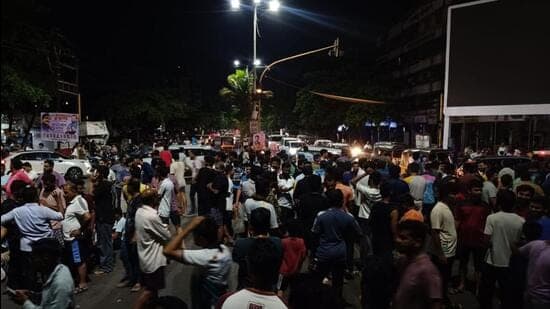
Public frustration spilled onto the streets as hundreds of residents gathered outside Kamothe police station before marching to the local MSEDCL office and staging a late-night protest. Residents also blocked roads and demanded accountability from officials.
According to residents, Kamothe’s infrastructure has failed to keep pace with its population growth. “The area has expanded rapidly over the years, but the supporting power infrastructure has not grown at the same pace. Long-term upgrades are needed instead of temporary repairs,” Parmani said.
Residents have pointed out that despite a population approaching 200,000, Kamothe continues to depend on only three substations.
The electricity disruptions have had a cascading impact on water supply across several nodes. Residents in parts of Airoli, Ghansoli and Kamothe reported interruptions in water distribution after pumping systems were affected by power failures. Several localities also complained of muddy water supply, further aggravating the situation.
In Ghansoli, residents of Sectors 7 and 21 said they have been experiencing recurring outages and voltage fluctuations for nearly two months. Similar complaints have emerged from Airoli and Kopar Khairane.
In a social media post that attracted widespread attention, Kopar Khairane resident Vishakha Gaikwad described how repeated late-night outages had disrupted daily life. “For the past few days, power has been going off for several hours at night. People have to report to work in the morning but are unable to get proper sleep. During one outage, residents stepped out around 4 am because the heat and lack of ventilation had become unbearable,” she said.
The issue has also drawn the attention of Navi Mumbai deputy mayor Dashrath Bhagat, who recently convened a meeting with MSEDCL officials following complaints from residents of Vashigaon, Sanpada, Palm Beach, Sector 17 and Sector 30.
“Repeated outages affecting homes, patients, senior citizens and businesses show that infrastructure upgrades can no longer be delayed,” Bhagat said, warning of public agitation if the situation failed to improve.
Residents say the outages are not merely an inconvenience but a serious quality-of-life issue.
“Voltage fluctuations are damaging appliances, lifts stop functioning and children are unable to get proper sleep before school. In nearly 10 years of living here, we have never seen such prolonged and unpredictable outages,” said Ulwe resident Shabana Parveen. Bharati Gudre, another resident of Ulwe, said senior citizens and patients were among the worst affected.
“When lifts stop working, elderly residents are forced to use staircases in the dark. Many people have hospital visits, work commitments and family responsibilities the next day, but power cuts often continue till early morning,” she said.
Responding to the concerns, MSEDCL superintendent engineer Deepak Patil said restoration work and infrastructure strengthening measures were underway. “Major restoration and repair works have been undertaken in areas where ageing underground cables have developed faults, and infrastructure augmentation is being carried out wherever required,” Patil said.
MSEDCL assistant engineer Gautam Suryavanshi said some of the recent outages were linked to technical works and maintenance activities being carried out on the network. “Power interruptions in certain pockets occurred due to box-related repairs and other technical works undertaken to stabilise the system,” he said.
MSEDCL officials, however, maintained that there was no citywide power shortage and attributed the disruptions to local technical faults, including transformer failures, ageing underground cables and excessive load on the network amid rising summer demand.