Gurgaon Gurugram Ai Sewer Sensors Monsoon Waterlogging Prevention
Indian Express
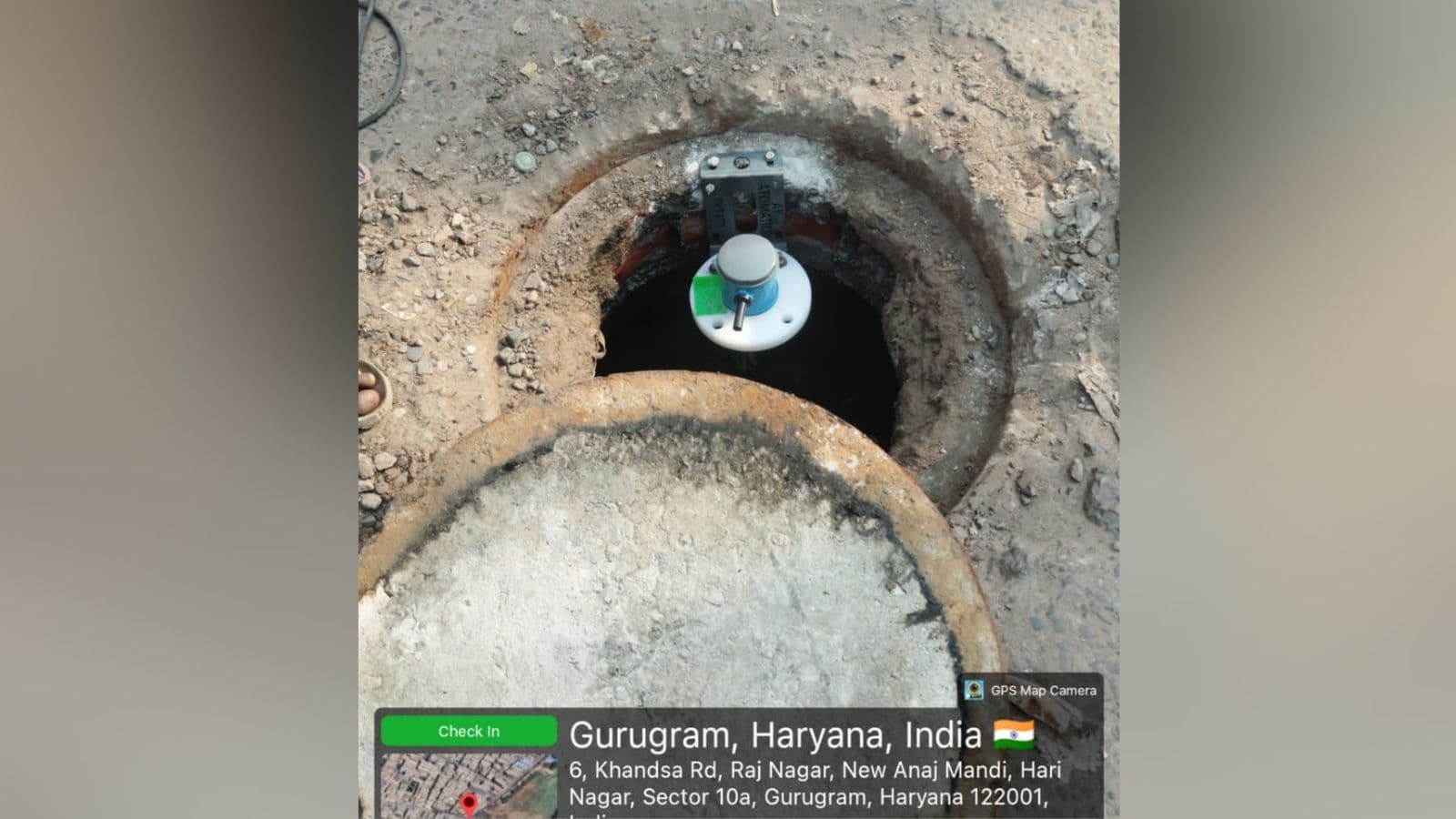
In an effort to prevent waterlogging and sewer overflows during the upcoming monsoon, the Municipal Corporation of Gurugram (MCG) has initiated the installation of advanced monitoring sensors across
the city’s critical sewer lines, officers said Friday. The civic body has collaborated with AIResQ, a startup incubated at IIT Gandhinagar, for the project. The sensor-based system is designed to continuously monitor the technical parameters of the sewer network in real-time. According to officers, if water levels exceed predefined limits or if an obstruction is detected, the sensors will automatically trigger alerts to the MCG control room. "This early-warning mechanism is intended to allow field response teams to address blockages and rising water levels before they escalate into major overflows onto streets. Special priority for the sensor installation is being given to vulnerable locations across Gurugram that historically experience severe waterlogging during the monsoon," an MCG spokesperson said. MCG Commissioner Pradeep Dahiya termed the project a significant step towards technology-driven proactive monitoring. “It will enable us to identify potential sewer overflow situations in advance and allow our teams to take timely action. Our goal is to provide citizens with better, seamless, and hassle-free sewerage services during the monsoon,” Dahiya said. Apart from providing immediate monsoon relief by keeping roads clear and reducing public health risks associated with stagnant sewer water, the civic body noted that the data collected will also support long-term maintenance planning and better resource allocation. Dahiya said the corporation remains committed to adopting modern technologies to make urban services more effective and citizen-centric. How it will work Additional Commissioner Yash Jaluka told The Indian Express that an MoU with IIT-Gandhinagar had been signed last November. "The startup incubated there developed AI simulations of floods. We have hired 50 data entry operators who will convey the information flagged with junior engineers as to where a new drain or civic repairs are needed." As of now, 20 sewer sensors and twenty flood depth sensors have been placed in around 15 flood-prone areas of the city on a pilot basis, he said. According to the official project draft, the network comprises a total of 40 practical monitoring candidates: 20 street flood-depth sensors and 20 manhole/sewer-watch sensors. "The stimulation and real-time flagging are very high-end, other such models tend to take 2-3 days to map and identify faults, but this one takes five minutes. For the data to be fed, we used GIS-mapped data of our water and sewer connections, and for elevation, we are coordinating with other departments." The idea is to flag the potential sewer overflow before it becomes an issue, he stressed. "Besides, a dashboard will give area-specific solutions like recommending rainwater harvesting structures too. Also on the anvil is a model to inform citizens of traffic routes to take based on predictive waterlogging," he said. Colonies in focus The MCG’s monitoring plan prioritises several of Gurgaon’s prominent upscale colonies and key traffic corridors. Multiple flood depth sensors are slated for the Golf Course Extension Road and the Sushant Lok area. Sushant Lok and Golf Course Extension: The civic body will install sensors at Gulab Park Road in Sushant Lok, Sushant Lok Phase 3, and Sushant Lok 2's F and G Block. The Phase 3 location is a high-priority zone, with model diagnostics projecting flood depths of up to 2.98 meters along the Golf Course Extension Road. Major Residential Hubs: Other posh colonies identified for sensor placement include Ardee City at Gate No. 3, Rosewood City at C Block, and South City A1 Block near the Malibu Town cluster. A sensor is also planned for Sector 46 along Vikas Marg. Sikanderpur Transit Nodes: To monitor critical bottlenecks, sensors will track waterlogging near the Harijan Basti and the Sikanderpur entry from Bristol Chowk. Both points are vital to managing flow around the Sikanderpur Metro Station. To ensure accurate readings and avoid traffic disruption, these street flood-depth sensors are designed to be installed on the nearest safe kerb, pole, or wall face at accessible street low points.