India's engagement with Europe is becoming more strategic, diversified, technology-oriented, and institutionally grounded. Prime Minister Narendra Modi s recent visit to four European countries - the Netherlands, Sweden, Norway, and Italy - underscores the gro
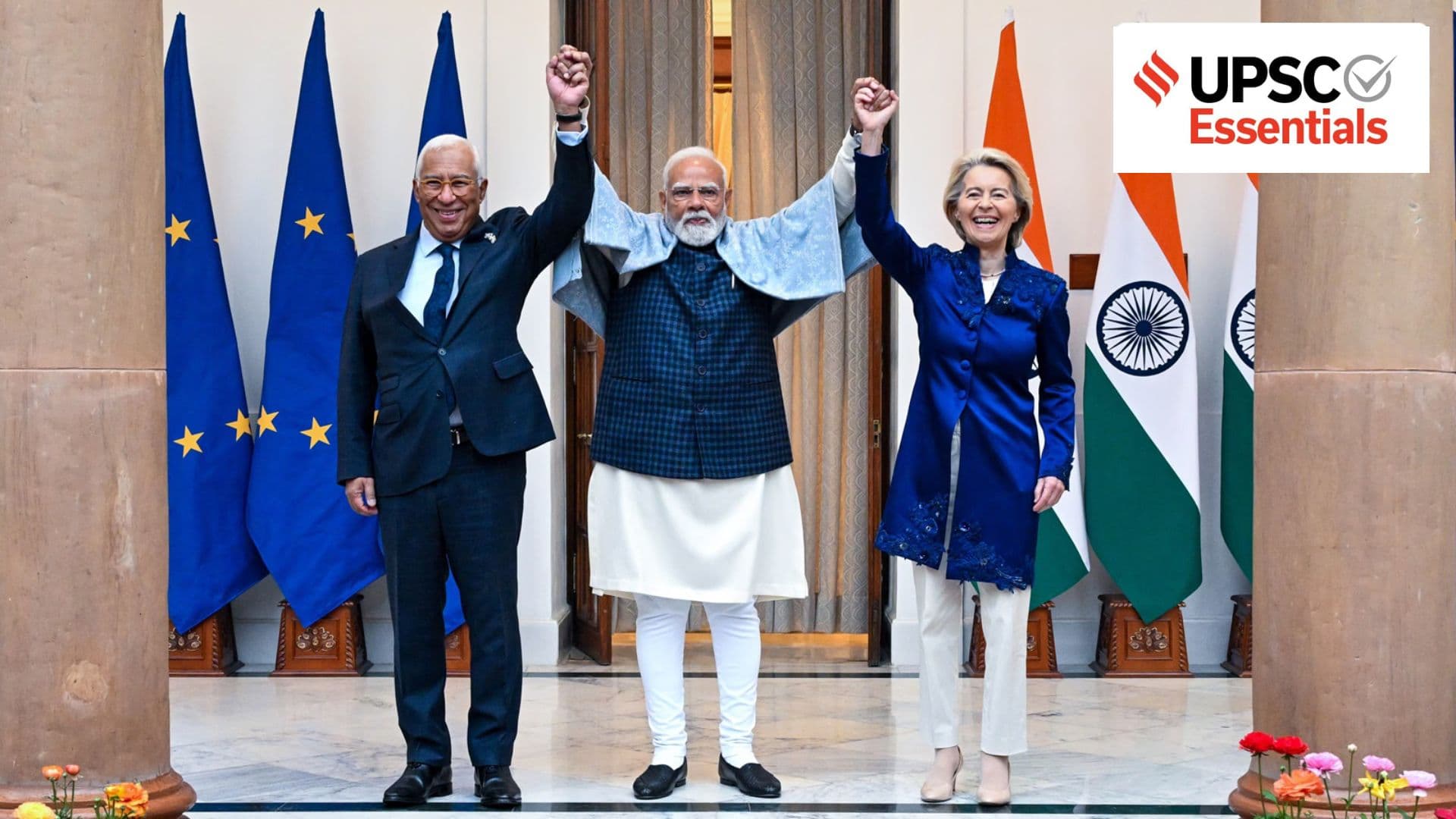
India's engagement with Europe is becoming more strategic, diversified, technology-oriented, and institutionally grounded. Prime Minister Narendra Modi’s recent visit to four European countries - the Netherlands, Sweden, Norway, and Italy - underscores the growing momentum in India’s engagement with Europe. Over the past few years, Europe has emerged as a key partner for India in areas such as trade, investment, technology, and the green transition. The growing convergence of interests between India and Europe was evident at the 16th India–EU Summit in New Delhi, where the two sides declared the successful conclusion of trade negotiations and adopted Towards 2030: A Joint Comprehensive Strategic Agenda. Prime Minister Modi’s visit further reinforced this trajectory, with a strong emphasis on green growth, technological collaboration, and defence industry cooperation. Four major developments stand out as the most significant outcomes of the visit - upgrading partnerships, technology diplomacy, green growth, and defence and security cooperation. Expanding and upgrading European partnerships A clear strategy is emerging in the way New Delhi now engages with Europe. This reflects a deeper understanding of how the European Union (EU) functions and how competencies are divided between the EU and its member states. It also demonstrates a growing appreciation of the close economic and strategic linkages between EU member states and other non-EU European countries. India and the EU have been strategic partners since 2004. Similarly, India has established strategic partnerships with major European powers, including France (1998), Germany (2000), and the United Kingdom (2004). More recently, India signed strategic partnerships with Italy and Greece in 2023, followed by Poland in 2024. Following Brexit, India upgraded its relationship with the United Kingdom to a Comprehensive Strategic Partnership in 2021. Likewise, the India–France partnership was elevated to a Global Strategic Partnership in 2026. Recently, New Delhi has signed one more strategic partnership with Cyprus. During Prime Minister Modi’s recent visit, India signed two new strategic partnerships with the Netherlands and Sweden, while its relationship with Italy was elevated to a Special Strategic Partnership. Technology diplomacy The visit was a clear manifestation of India’s growing emphasis on technology diplomacy. Operating at the intersection of foreign policy, economics, technology, and security, technology diplomacy seeks to address issues such as artificial intelligence (AI), digital governance, semiconductors, quantum computing, telecommunications, critical technologies, and cybersecurity through international cooperation and partnerships. In an era where technological dependence is increasingly viewed through the lens of strategic vulnerability, both India and Europe are seeking trusted partners to advance their ambitions in emerging technologies. At present, both lag behind the United States and China in several breakthrough digital technologies. Nevertheless, European and Indian companies possess significant strengths in niche technological domains and considerable potential for innovation-led growth. Policymakers on both sides have therefore been working to combine Europe’s technological capabilities with India’s scale, talent pool, and rapidly expanding innovation ecosystem. Boost to India’s semiconductor mission This approach was clearly visible during Prime Minister Modi’s visit to the Netherlands, where Tata Electronics signed a strategic partnership with the Dutch technology leader ASML to support the development of India’s semiconductor ecosystem. It represents a major boost to India’s semiconductor mission. Backed by an investment of $11 billion, Tata Electronics is developing India’s first commercial 300 mm semiconductor fabrication facility in Dholera, Gujarat. The plant is expected to manufacture chips for applications ranging from automobiles and mobile devices to AI. Technology cooperation also featured prominently in Sweden. The two countries launched an upgraded Joint Innovation Partnership 2.0 and established the virtual India–Sweden Joint Science and Technology Centre (ISJSTC). The Centre will focus on priority areas, including AI, 6G technologies, quantum computing, sustainable mining, sustainable transport, critical minerals, space and geospatial research, and life sciences. Similarly, the outcomes of the India–Nordic Summit placed strong emphasis on innovation, research and development, AI, space cooperation, and Arctic and polar research. During his visit to Rome, Prime Minister Modi and Italian Prime Minister Giorgia Meloni announced the launch of INNOVIT India, an innovation hub designed to deepen cooperation between the innovation ecosystems of the two countries and promote closer engagement among startups, researchers, investors, and technology firms. Cooperation in supercomputing was also emphasised. Green growth Given the comparative strengths of the Nordics and the Netherlands, a major focus of the various bilateral roadmaps and partnerships was on climate action and green growth. Key areas of cooperation emerged during the visit include renewable energy technologies, water resource management, the blue economy, green hydrogen, biofuels, the circular economy, and the development of green shipping and trade corridors. A notable outcome of Prime Minister Modi’s visit was the launch of the India–Norway Green Strategic Partnership. Despite being a major producer and exporter of oil and gas, Norway is at the forefront of the green transition and is widely recognised for its advances in renewable energy, electric mobility, and other green technologies. About 98 per cent of the country's electricity is generated from renewable sources, primarily hydropower. While focus at the India-Nordic summit was on broad issues of climate action, green transition, and the blue economy, India-Netherlands roadmap emphasised water, agriculture, and health. In Sweden, the focus was on jointly developing clean technologies. In addition, several sector-specific initiatives have been launched in recent years, including a Water Partnership with the Netherlands, a Green Strategic Partnership with Denmark, an Innovation Partnership with the Czech Republic, and a Strategic Partnership in Digitalization and Sustainability with Finland. The Sweden–India Technology and Artificial Intelligence Corridor (SITAC) has also been established to deepen cooperation in emerging technologies. India’s engagement with the Nordic countries was also elevated to a Trusted Green Technology and Innovation Strategic Partnership. This reflects the growing importance of sustainability, innovation, and advanced technologies in India’s relations with the Nordics. In 2025, India concluded its first trade and investment agreement with the four non-EU members of the European Free Trade Association (EFTA) - Iceland, Liechtenstein, Norway, and Switzerland. This was subsequently followed by similar agreements with the UK and the EU. This network of strategic partnerships, sub-regional outreach, sectoral collaborations, and trade agreements are supported by robust institutional mechanisms, including the India–EU Trade and Technology Council, over 50 sectoral dialogues and a wide range of bilateral institutional frameworks. Defence and security cooperation Due to the war in Ukraine, uncertainty over long-term American security commitments, and the emergence of new domains of warfare, a major transformation is underway in European security and defence. Under the ReArm Europe/Readiness 2030 initiative, EU member states are expected to spend more than €800 billion in defence over the coming years. As India pursues an ambitious defence indigenisation programme and its defence exports continue to grow, linking its defence industry with Europe is emerging as an important area of cooperation. India and the EU have also signed a Security and Defence Partnership. Against this backdrop, defence cooperation featured prominently during Prime Minister Modi’s visit, particularly in the Netherlands, Sweden, and Italy. Cooperation in defence industries also figured prominently in discussions at the India-Nordic Summit. In Italy, the two sides adopted a bilateral defence industrial roadmap. Although India has long procured defence equipment from European partners, maintains robust defence cooperation with France, Germany, and the United Kingdom, and has collaborated with the EU on issues such as maritime security, cyber security, and counter-radicalisation, discussions on deeper integration between Indian and European defence industries are relatively recent. However, focus on the issue during the visit suggests that such cooperation is now gaining momentum. Triangular development cooperation Overall, the visit took place against the backdrop of growing geopolitical fragmentation, the rise of an increasingly assertive China, and the disruptive policy shifts of the Donald Trump administration. Simultaneously, India-Europe relations have gained fresh momentum through the conclusion of three important trade agreements—with EFTA, the UK, and the EU. Beyond the connectivity narrative, particularly the India–Middle East–Europe Economic Corridor (IMEC), and issues related to migration and mobility, triangular development cooperation also emerged as an important pillar of engagement. India and Italy agreed to collaborate in Africa in sectors such as Digital Public Infrastructure (DPI), agriculture, education, and healthcare. Likewise, India and Norway agreed to explore joint development projects in third countries, with a particular focus on promoting DPI. These initiatives reflect the growing convergence between India and European partners in leveraging their complementary strengths to support sustainable development and digital transformation across the Global South. Post read questions Over the past few years, Europe has emerged as a key partner for India in areas such as trade, investment, technology, and the green transition. Examine the factors driving the growing convergence of interests between the two sides. Technology diplomacy has emerged as an important pillar of India's foreign policy. Discuss its significance in addressing challenges and opportunities related to artificial intelligence, semiconductors, quantum computing, cybersecurity, and other critical technologies. Analyse how the changing European security landscape has opened new avenues for India–Europe defence cooperation. Discuss the prospects and challenges of defence industrial cooperation between India and Europe. Discuss how climate action and the green transition have emerged as important pillars of India–Europe cooperation. Examine the role of Nordic countries and the Netherlands in advancing India's green growth and sustainability agenda. Triangular development cooperation is emerging as a new dimension of India–Europe relations. Examine its significance for the Global South. How can India–Europe cooperation contribute to achieving sustainable development and energy transition goals? (Gulshan Sachdeva is Professor and Jean Monnet Chair at the Centre for European Studies, Jawaharlal Nehru University) Share your thoughts and ideas on UPSC Special articles with ashiya.parveen@indianexpress.com. Click Here to read the UPSC Essentials magazine for May 2026. Subscribe to our UPSC newsletter and stay updated with the news cues from the past week. Stay updated with the latest UPSC articles by joining our Telegram channel – IndianExpress UPSC Hub, and follow us on Instagram and X.