Love Border Village Pok Uri
Indian Express
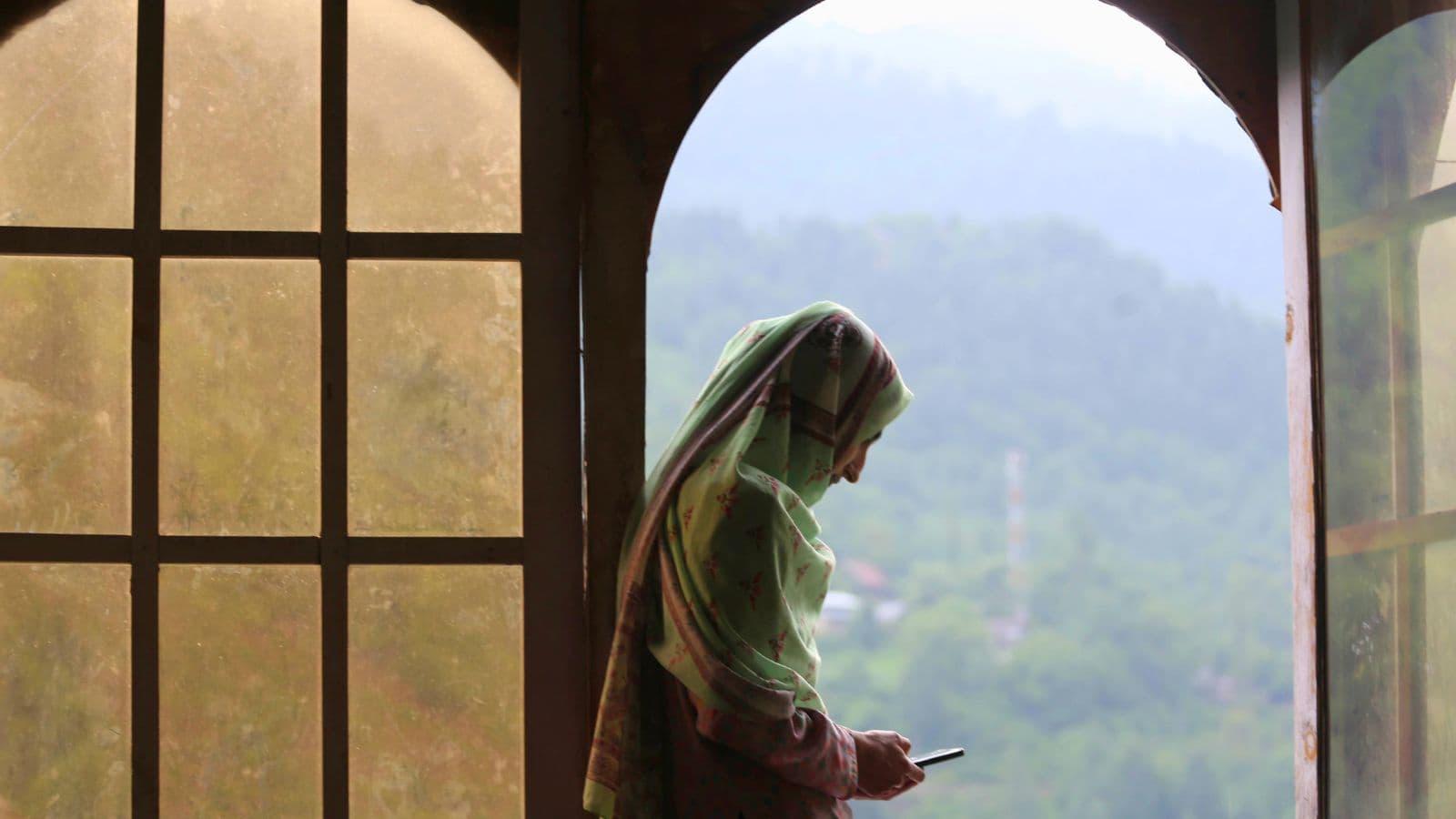
One May morning, in an Uri village, a message slid into Iram Majeed s phone. It was a friend request from Zeeshan, a 22-year-old from a village in Pakistan-occupied Kashmir
One May morning, in an Uri village, a message slid into Iram Majeed’s phone. It was a friend request from Zeeshan, a 22-year-old from a village in Pakistan-occupied Kashmir. Over the next year, their conversations turned into a daily ritual, until, one day, Zeeshan crossed the Line of Control to meet Iram.
As Iram runs up to Silikote, the distance seems longer. She sweeps down the mountain, crosses a footbridge, and walks up the 2-km road to Silikote, pausing midway to catch her breath, the cool mountain air soothing her burning lungs. Thirty minutes later, her run ends at Silikote’s guarded gates, as the soldiers step out to stop her.
They were convinced that he had “no hostile intent”.
There is a lot that can come between two young people — caste, communities, parents, religion, money. Or, as in the case of 22-year-olds Iram and Zeeshan, a dotted line on the map.
Iram grew up in Tilawari, in the border district of Uri, as the eldest of four children of Abdul Majeed, a municipal employee posted in Uri town, and homemaker Afroza Begum. Most mornings in Tilawari are unhurried, unless there is a landslide and everyone gathers to talk about it, or the air sirens go off in the event of cross-border firing.
Zeeshan dropped out of school after Class 5 — at least that’s what he told Iram. “I don’t know if he said it as a joke to tease me or if it is the truth,” she says. The youngest of five brothers, Zeeshan grew up in a family of farmers in PoK’s Pankedi village. Unlike his farmer brothers, he worked at a cardboard packaging factory in Lahore.
It was a year ago that Zeeshan entered Iram’s life — through a friend request on Snapchat. The two had never met, but their families had once been in touch, with a common relative even suggesting a marriage alliance. It was the mid-2000s, when relations between India and Pakistan were markedly better, when a cross-LoC bus service between Srinagar and Muzaffarabad had been launched as a confidence-building measure. But the 2019 Pulwama attack changed that. The bus, and the border, shut down, and with that, the only way for people on both sides to connect with each other.
But then, over time, another window opened up. The growing popularity of social media, particularly among youngsters, allowed snippets of life from both sides of the LoC to slip across the barbed fence.
Just as Zeeshan’s friend request slid into Iram’s phone on May 14, 2025.
The two got talking — initially about their shared links to Iram’s village, Tilawari. Zeeshan told her that his grandfather had migrated from Tilawari to Pankedi village in PoK’s Forward Kahuta sometime before 1947.
Soon, their conversations turned into a daily ritual they both looked forward to. “We exchanged stories and shared photographs… I can’t really say when it happened, but before we knew it, we had fallen in love,” says Iram.
Yet, Iram kept the conversations — and her budding relationship with Zeeshan — a secret from her family. Not even her best friend, Shaheena, knew. She was unsure how her parents and sisters would react if she told them. “Since I am the eldest, I am supposed to set an example for my siblings. But what can you do about love,” she says.
They talked about “life here and life there… our dreams, our future”. Soon, Zeeshan was talking about how he was yearning to visit her. “But I never imagined — not even for a moment — that he would try to cross the border,” says Iram.
Silikote, less than a kilometre from the Line of Control (LoC), can seem forbidding to an outsider. Layers of security, in the form of Army bunkers, line the road that cuts through the village. Movement is highly restricted and to cross the military bunkers, residents must carry specialised smart identity cards, which are verified by Army personnel. Over time, most residents have moved out of Silikote, leaving behind barely five to six households.
It was at one of the Army bunkers that Zeeshan landed up that day. Officers say he turned himself in. “He took out his phone and identity card and handed them over,” says a security officer.
The identity card, issued by Pakistan in August 2022, identified him as Zeeshan Mir, son of Lal Mir and a resident of “AJK State (Azad Jammu and Kashmir)”.
Minutes later, Iram landed up at the same checkpoint. Zeeshan, who caught a glimpse of her before he was taken away, told the soldiers that he had come for Iram. For the next 15 minutes, as she stood outside the guarded gate, pacing between its two ends, Iram’s heart pounded. Was Zeeshan in trouble? Was he injured, shot by the Army personnel, hit by a stray bullet perhaps?
Officials say that in most cases, intruders who are not deemed a security threat are sent back. “There is a possibility that the court may allow him to stay back on humanitarian grounds. But the chances of deportation are always higher,” says a police officer.
Iram now counts the days, waiting for some news about Zeeshan. “I wonder what got into him. He never hinted that he would get up one day and cross over. At least when we were chatting, he seemed very practical — he would say that he would apply for a visa and come here,” she says.
Then, I thought, we must stand by them. I have four daughters, and I have always wished for a son. God has sent us one. We only hope he is released and allowed to stay here.”
“How can they send him back? And even if they do, Zeeshan will come back. I am certain,” says Iram.