Environmental Concerns Decongestion Citizens Wise Shimla Smart
Indian Express
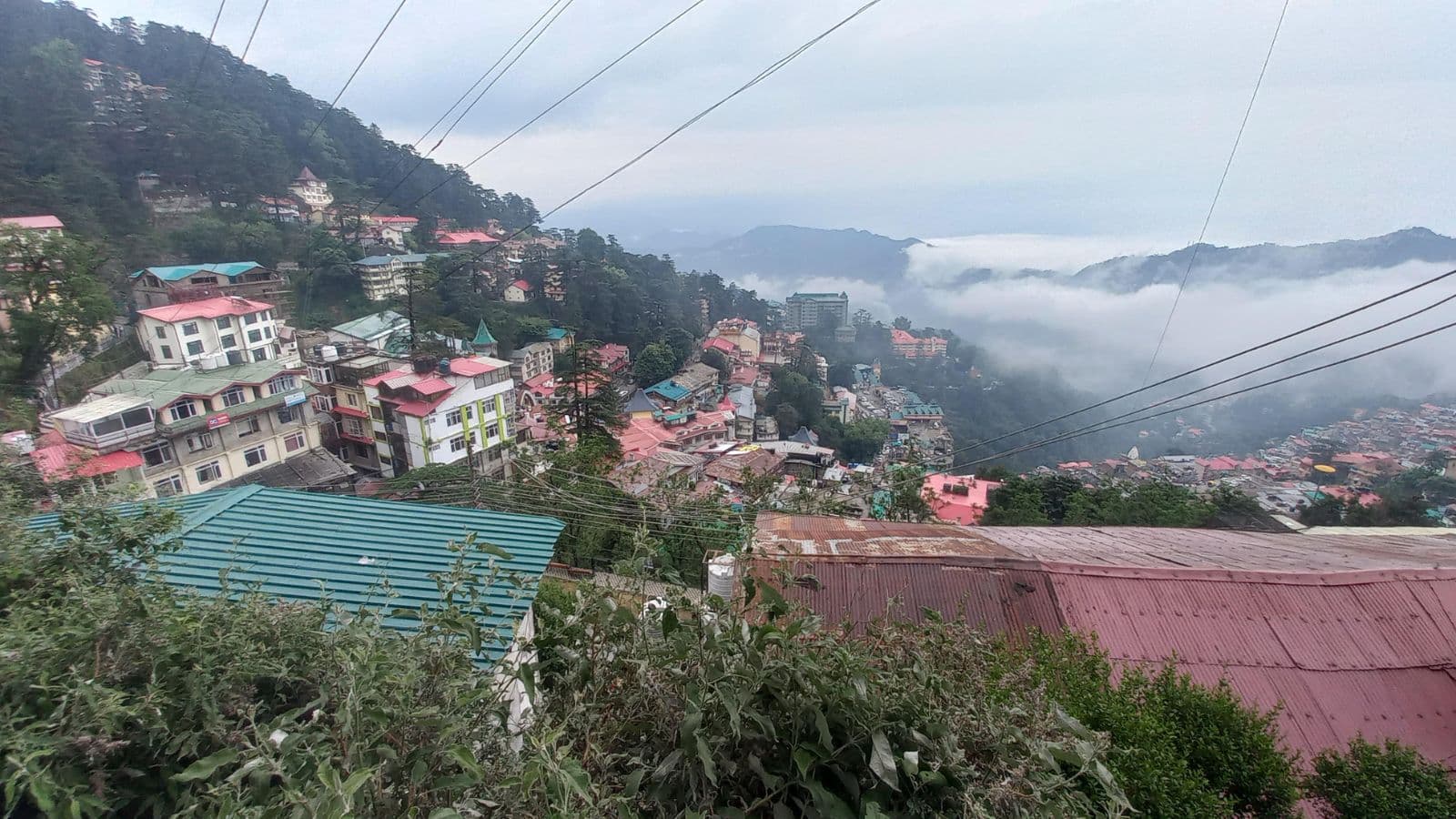
In an attempt to accommodate the city s growing population, the planned township of New Shimla has gradually transformed into a new slum .
In an attempt to accommodate the city’s growing population, the planned township of New Shimla has gradually transformed into a “new slum”. Ornamental and exotic plants are replacing indigenous trees and native vegetation.
Today, what Shimla now needs is a “Wise Shimla” rather than merely a “Smart Shimla”, people argue. Residents said the hill town should evolve from being a vehicle-centric city into a walkable city.
These were among the key observations made during a discussion organised by the Simla Collective on Thursday. Residents, environmentalists, academicians, lawyers, retired officials and even students gathered to deliberate on “The People’s Manifesto for Shimla”. It is a citizen-driven vision document outlining the future of the hill town, based on extensive surveys, group discussions and citizens’ suggestions.
Activist Tikender Panwar said the township was conceived during the 1980s and 1990s as a modern residential extension to accommodate Shimla’s expanding population. However, he argued that inadequate planning for mobility had defeated its very purpose. “New Shimla was envisioned as a planned locality to decongest the city. But today… it would not be incorrect to describe it as a new slum. It has become a concrete jungle where vehicles move bumper to bumper.”
Prof Aparna Negi, Department of Economics (Himachal Pradesh University), mentioned recent data released by the Shimla Police, according to which nearly 1.8 lakh vehicles entered the city within 72 hours.
“Are we turning Shimla into a city dominated by vehicles? Why can’t we transform it into a walkable city… Some attempts have been made in the past, but they have failed.” She said most tourists only visit a couple of popular destinations and return without exploring Shimla’s biodiversity. “This pattern of tourism is proving environmentally unsustainable in the longer run.”
SSP Arjit Sen of the Himachal Pradesh State Disaster Response Force (SDRF) said residents need a “Wise Shimla” rather than a “Smart Shimla”, to be adequately prepared to deal with a major seismic event. “We need governance based on evidence, scientific data and well-planned systems rather than merely ambitious goals. Shimla’s vulnerability to landslides, cloudbursts, and other natural disasters became evident during the disasters of 2023 and 2024.”
A retired scientist from the Himalayan Forest Research Institute (HFRI), Vaneet Jishtu, criticised the authorities for neglecting the concept of urban green spaces. “Shimla has 17 notified green belts which were created during the British era… these existing green belts are under tremendous pressure from construction and other human activities. Our natural drainage channels are choked with plastic and garbage. Conservation must take precedence over replacement.”
Principal of RKMV College (Shimla) Anurita Saxena and educationist Preeti Chauhan stressed that environmental conservation must begin with individual responsibility. “Over the past two years, our college staff and students have collected nearly 800 kilograms of plastic waste from different parts of the city,” Saxena said.
Chauhan emphasised the role of families in creating environmentally conscious citizens. “Students are the future, but parents also have a crucial responsibility to make them aware of their city and encourage responsible civic behaviour.”
DIG (Traffic, Tourism and Railways) Sanjeev Gandhi urged young people to reduce their dependence on motor vehicles and adopt walking as part of their daily routine. Apart from contributing to a sustainable urban environment, it would also reduce traffic congestion.
Earlier, Uma Mahajan introduced the Simla Collective and outlined its objectives before the gathering, while Deven Khanna presented the organisation’s long-term vision for the city. This was followed by a presentation by Himanshu Sood on “The People’s Manifesto”.