Nasa Explores Sending Backup Mars Rover To Moons South Pole
Indian Express
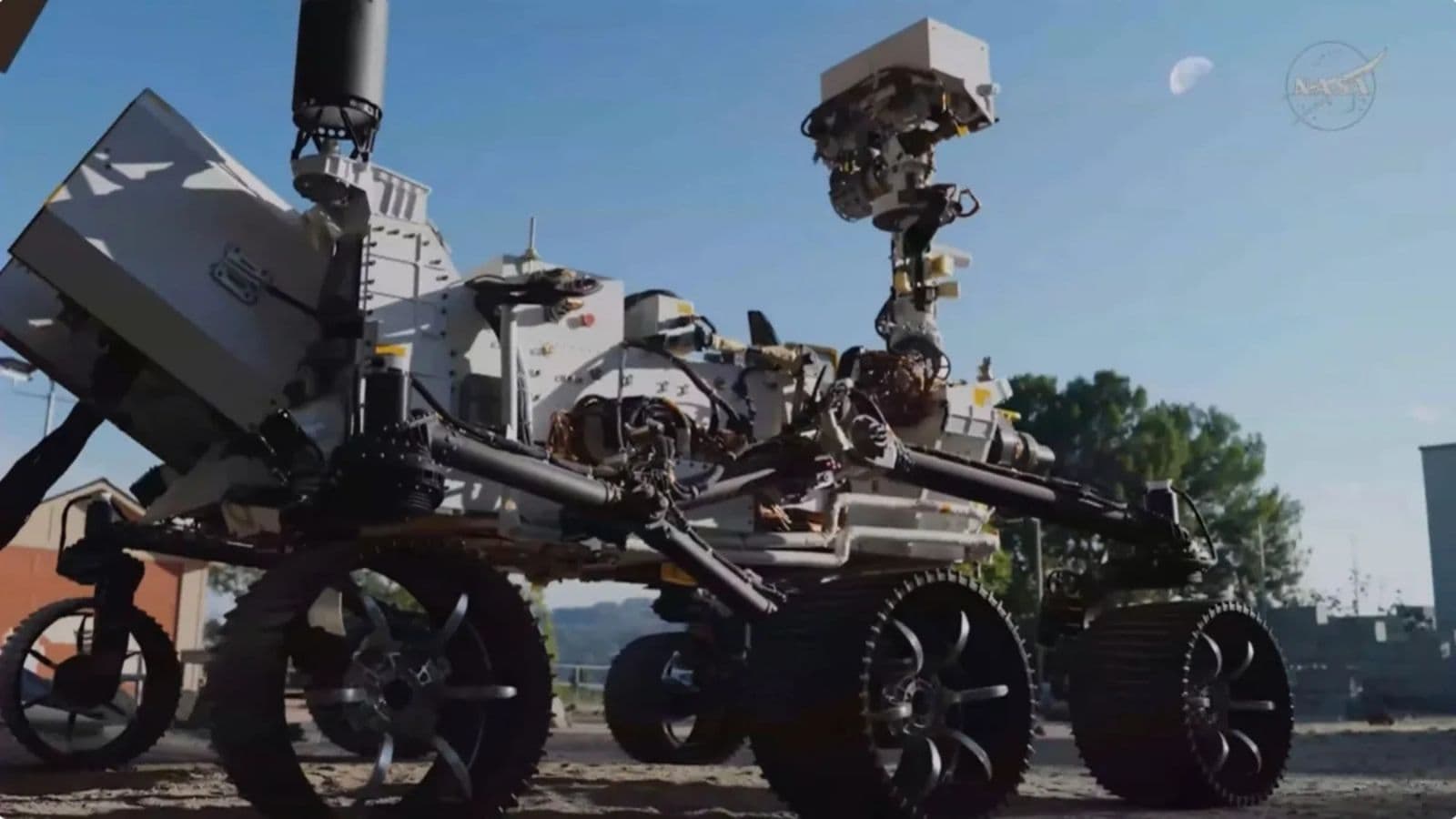
Nasa is exploring an unexpected new way to strengthen its Artemis lunar exploration programme by sending a spare version of its Mars rover to the Moon.
During the agency’s latest Moon Base programme update, Nasa revealed that it is considering repurposing PROMISE, a full-scale engineering model originally built to support the Curiosity and Perseverance Mars missions, into a lunar rover capable of exploring the Moon’s south pole.
If approved, the mission would give the decades-old test rover an entirely new purpose while helping NASA prepare for a permanent human presence on the lunar surface.
PROMISE, short for Polar Rover for Observation, Mapping, and In-Situ Exploration, was originally developed at Nasa’s Jet Propulsion Laboratory as a ground-based engineering model of the Curiosity and Perseverance rovers.
Previously known as OPTIMISM, the rover has spent years helping engineers test software updates, commands and hardware fixes before sending them millions of kilometres away to Mars. Nasa validates every major change for Curiosity or Perseverance on PROMISE first to avoid risking the actual spacecraft.
Now, Nasa believes the rover could perform valuable scientific work on the Moon instead.
Announcing the proposal during the agency’s Artemis update, Nasa Administrator Jared Isaacman joked by quoting Yoda’s famous line from Star Wars: The Empire Strikes Back, “There is another”, before revealing the possibility of giving PROMISE its own space mission.
According to Isaacman, Nasa has accumulated enough operational experience from Curiosity and Perseverance that the engineering model may no longer be needed solely as a test platform.
One of the biggest reasons Nasa is considering PROMISE is its radioisotope thermoelectric generator (RTG) the same nuclear power system used by Curiosity and Perseverance.
Unlike solar-powered vehicles, an RTG generates electricity from the natural decay of radioactive material, allowing the rover to continue operating regardless of sunlight.
This capability makes it particularly valuable for missions near the Moon’s south pole, where Nasa plans to establish its future Artemis base.
Although parts of the lunar south pole receive extended periods of sunlight, many regions experience long, cold shadows that make solar power challenging. A nuclear-powered rover could continue operating through these conditions, collecting scientific data even when sunlight is unavailable.
Nasa officials believe only limited refurbishment would be required before PROMISE could be adapted for lunar operations.
The rover announcement came alongside several new commercial lunar landing contracts awarded under Nasa’s Commercial Lunar Payload Services (CLPS) programme.
The agency selected Astrobotic, Firefly Aerospace, and Intuitive Machines to deliver scientific instruments and technology demonstrations to the lunar surface over the next several years.
These missions are part of Nasa’s phased approach to building a permanent lunar outpost rather than attempting an immediate long-duration human presence.
Nasa expects to launch up to 20 CLPS missions through 2029, each helping scientists better understand the lunar environment before astronauts begin living and working there regularly.
Upcoming landers will carry instruments designed to study how rocket exhaust affects lunar dust, improve navigation using laser reflectors, and measure radiation levels across different regions of the Moon.
Nasa says understanding the lunar south pole remains one of the biggest challenges before Artemis astronauts can establish a long-term base.
The region is believed to contain significant deposits of water ice, which could eventually provide drinking water, breathable oxygen and rocket fuel for future missions deeper into space.
Agency officials say additional robotic explorers like PROMISE could map the terrain, study resources and help identify safe locations for future infrastructure.
Carlos Garcia-Golan, Nasa’s Moon Base programme manager, said that while sending a spare Mars rover to the Moon may sound unconventional, it reflects the agency’s willingness to make the most of existing technology.
With Curiosity and Perseverance continuing to operate successfully on the Mars, Nasa now sees an opportunity to give its Earth-bound twin a second life this time on the lunar surface. If the proposal moves forward, PROMISE could become one of the first nuclear-powered rovers to explore the Moon, providing valuable experience for the next phase of human lunar exploration.