Inside 5 5 Billion Apptronik Robot Park Where Humanoid Robots Learn To Work Before Getting Jobs
Indian Express
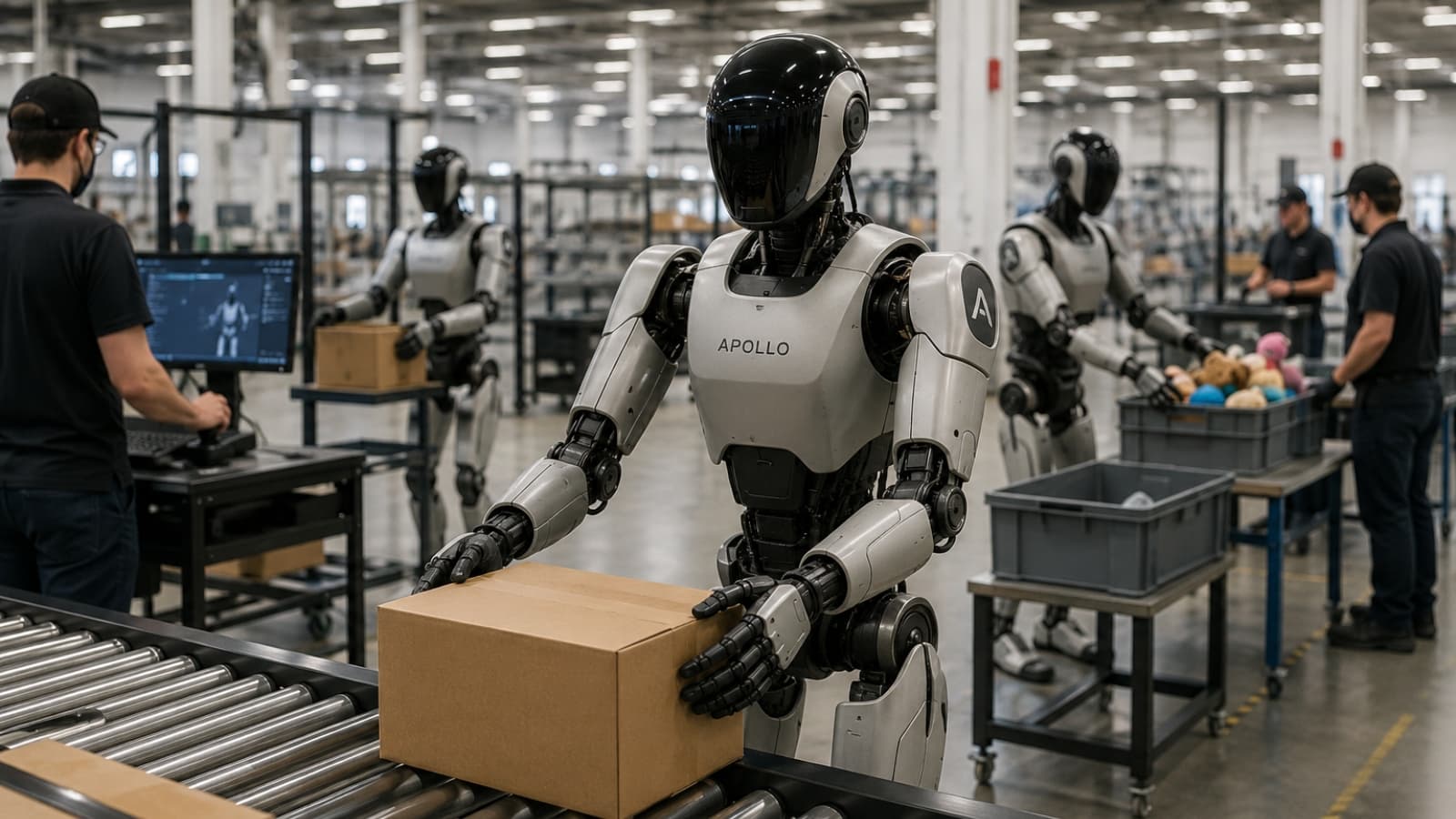
Apptronik, a Texas robotics startup backed by Google and Mercedes, has unveiled what it calls a Robot Park in Austin, a dedicated facility where its humanoid robots are trained to carry out everyday...
Apptronik, a Texas robotics startup backed by Google and Mercedes, has unveiled what it calls a ‘Robot Park’ in Austin, a dedicated facility where its humanoid robots are trained to carry out everyday workplace tasks before being deployed in the real world, according to a report by Business Insider. Spread across nearly 90,000 square feet, the warehouse operates every day of the week. Inside, the company's Apollo robots repeatedly practise tasks such as stacking boxes on conveyor belts and sorting toys into bins. While the robots perform these activities, human operators remain nearby, remotely guiding many of their actions. Each training session generates fresh data that is fed back into the robots' AI models, allowing them to improve with every cycle. Apptronik co-founder and CEO Jeff Cardenas likened the facility to a manufacturing plant, except its output is knowledge rather than machines. He described it as a playground where robots gain practical experience, calling it a "data factory." The concept closely resembles Elon Musk's vision for Tesla's proposed ‘Optimus Academy’, where humanoid robots would continuously learn from real-world interactions to create an ever-growing stream of training data. Apptronik, how it started According to Business Insider, Apptronik was founded in 2016 as a spin-off from the University of Texas' robotics laboratory. The company traces its origins to research supported by a US military programme focused on disaster-response robots. It initially supplied robotic components to other businesses before pivoting to develop its own general-purpose humanoid robot. Since then, the company has secured roughly $1 billion in funding and reached a valuation of more than $5.5 billion. Its Apollo robots are already being used by Mercedes-Benz for basic assembly work on factory floors, while Google's DeepMind division is using them to advance its robotics AI research. Apollo robots The first Apollo robot debuted in 2023. It has since been succeeded by Apollo 2, which features upgraded motors, sensors, and battery technology. Standing about six feet tall, the robot can operate for up to four hours on a charge and lift objects weighing as much as 55 pounds. A more advanced commercial model, Apollo 3, is under development, although Cardenas declined to reveal when it would be launched. Cardenas believes the humanoid robotics industry is progressing through three key milestones: first demonstrating that the technology works, then proving customers are willing to pay for it, and finally scaling into a profitable business. In his view, the industry has now entered the second stage, comparing today's humanoid robots to personal computers in the early 1980s, when the technology was beginning to find practical, everyday applications. Digit robots heading for public listing The race to commercialise humanoid robots is accelerating. Figure AI, now valued at $39 billion, has started deploying robots in logistics facilities. Meanwhile, 1X says it plans to place more than 10,000 humanoid robots in homes this year. Agility Robotics has already rolled out its Digit robots across nine locations for companies including Amazon, Toyota and GXO, and is preparing for a public listing. One area where Apptronik differs from many competitors is its decision to build both walking and wheeled robots. Cardenas said legged robots offer the greatest long-term potential because they could eventually move through the world much like humans. However, he expects wheeled robots to be adopted first in workplaces since they are safer and consume less energy. Looking ahead, the company plans to expand its network of Robot Parks beyond its existing facilities, which already operate at customer sites around the world. Cardenas said his long-term goal is to eventually open these training centres to the public so people can watch humanoid robots learn and evolve firsthand.