Doctors Musical Antibiotics Antimicrobial Resistance Amr India Tour
Indian Express
Even as many of us reach for an antibiotic pill at the first sign of a fever, penicillin creator Alexander Fleming had warned decades ago that the misuse of these life-saving drugs could one day...
Even as many of us reach for an antibiotic pill at the first sign of a fever, penicillin creator Alexander Fleming had warned decades ago that the misuse of these life-saving drugs could one day render them ineffective. On a stage in New Delhi, actor Alan Vicary, dressed in Fleming’s trademark bow tie, brought that warning to life. Speaking words drawn from Fleming’s own speeches, he told the story of “Mr X”, whose failure to complete a course of antibiotics for a sore throat ultimately meant that the pneumonia his wife later developed could no longer be treated.
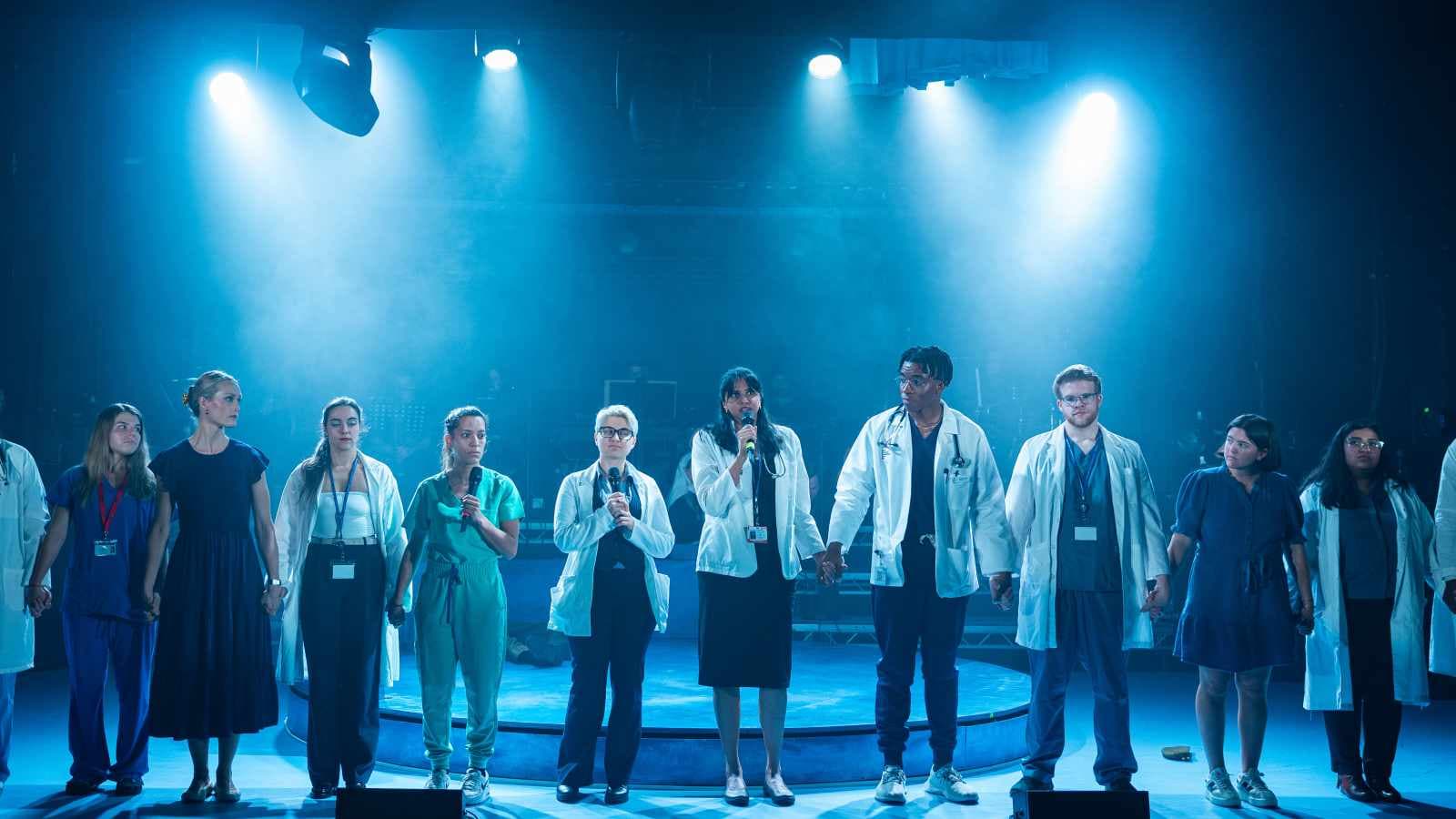
The performance was part of ‘Lifeline,’ an acclaimed musical on antimicrobial resistance (AMR) that the UK government, along with international health organisations including PATH, has brought to India to encourage more responsible use of antibiotics. The only musical to have been showcased at the United Nations General Assembly, Lifeline is expected to travel to several Indian cities over the coming year. The cast is also preparing to incorporate stories from India into the production, with doctors and nurses joining them on stage. At least two doctors from the All-India Institute of Medical Sciences (AIIMS) have already expressed their enthusiasm about becoming part of the chorus.
The play uniquely combines a West End and Broadway musical theatre cast and a live six-piece band with a chorus of real-life scientists, doctors, nurses and microbiologists.
Around the same time that he discovered penicillin, Fleming had warned the world of the dangers of antibiotic misuse. “Many of the words spoken by me today on stage are those of Fleming himself,” Vicary told the audience. Nearly a century later, AMR has become one of the world’s most pressing public health threats, making once-treatable infections increasingly difficult and sometimes impossible to cure.
The musical tells two stories set nearly a century apart, weaving together the origins of antibiotics with the consequences of their misuse today.
In present-day London, Aaron is undergoing surgery for colon cancer when he develops a drug-resistant infection. His childhood sweetheart, Jess, now a paediatrician, struggles to save patients whose infections no longer respond to antibiotics. In one of the production’s most emotional scenes, she breaks down while recounting the death of a young mother who should have been with her newborn but succumbed to an infection that antibiotics could no longer treat. The woman, she explains, had likely been exposed to resistant bacteria through contaminated water and food, while the widespread use of antimicrobials in livestock and fish farming has further fuelled resistance.
Running alongside this story is that of Fleming, who has just discovered penicillin. Even as colleagues urge him to embrace the limelight, he remains haunted by memories of soldiers with infected wounds he could not save during the First World War. The musical draws striking parallels between Aaron and Fleming’s wartime friend Clowes — both portrayed by actor Nathan Salstone — to underline that despite a century of medical advances, humanity risks returning to an era where common infections once again become deadly.
The production has already demonstrated its ability to change perceptions around antimicrobial resistance. According to a study published in the journal Nature last year, audience members and performers reported a deeper understanding of AMR and greater motivation to act after watching the musical. Many said they came away with a stronger appreciation of how human health, food and water safety, agriculture and livestock management are all interconnected in the spread of antimicrobial resistance.
More than 80 per cent of respondents said they discussed AMR more frequently with friends, family and colleagues after watching the musical. Seventy-four per cent reported feeling more optimistic about tackling the problem, while 80 per cent said they felt more passionate about taking action, the study found.
Speaking after the performance, Sarah Cooper, Director of Climate, Science and Technology at the British High Commission, said the production complemented policy efforts to tackle antimicrobial resistance.
“As we experience Lifeline today, I read in the newspaper that the Indian government has mandated QR code tracking of antimicrobials. India can provide such solutions at scale to global challenges. AMR is one of the biggest challenges of our time, and behaviour change is equally important. Art like this makes a complex issue tangible and relatable,” she said.
Dr Kamini Walia, who heads the Antimicrobial Research and Surveillance Network at the Indian Council of Medical Research (ICMR), said India bears a disproportionate burden of antimicrobial resistance. “AMR impacts India more than the UK. We have 18 per cent of the world’s population and consume more antibiotics than much of the world. This is a complex problem, but we often forget its psychosocial and economic dimensions. My experience working on HIV showed the impact awareness campaigns can have —but that is still missing in our response to AMR,” she said.
Anonna Dutt is a Principal Correspondent who writes primarily on health at the Indian Express. She reports on myriad topics ranging from the growing burden of non-communicable diseases such as diabetes and hypertension to the problems with pervasive infectious conditions. She reported on the government’s management of the Covid-19 pandemic and closely followed the vaccination programme. Her stories have resulted in the city government investing in high-end tests for the poor and acknowledging errors in their official reports. Dutt also takes a keen interest in the country’s space programme and has written on key missions like Chandrayaan 2 and 3, Aditya L1, and Gaganyaan. She was among the first batch of eleven media fellows with RBM Partnership to End Malaria. She was also selected to participate in the short-term programme on early childhood reporting at Columbia University’s Dart Centre. Dutt has a Bachelor’s Degree from the Symbiosis Institute of Media and Communication, Pune and a PG Diploma from the Asian College of Journalism, Chennai. She started her reporting career with the Hindustan Times. When not at work, she tries to appease the Duolingo owl with her French skills and sometimes takes to the dance floor. ... Read More