Delhi Weather Heat Continues Humidity Pushes Citys Real Feel Temp Past 53 Degree Celsius Imd Update
Hindustan Times
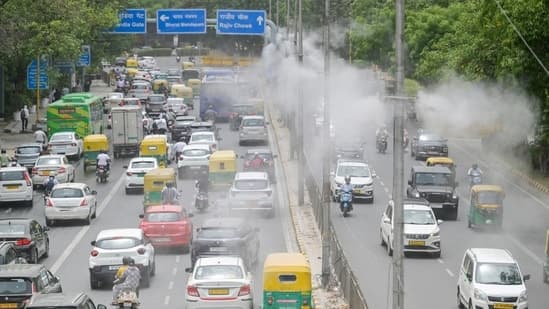
Delhi continued to simmer for a fourth consecutive day on Tuesday, as unfavourable meteorological conditions led to a peak real feel temperature or heat index (HI) of 53.
Delhi continued to simmer for a fourth consecutive day on Tuesday, as unfavourable meteorological conditions led to a peak “real feel” temperature or heat index (HI) of 53.5 degrees Celsius (°C) amid a yellow alert for rainfall and thunderstorms during the day falling flat, according to India Meteorological Department (IMD) data.
Experts said that while high humidity is expected to persist—it was between 48% and 65% on the day—Delhi will see some relief from these heatwave-like conditions from Thursday, as the monsoon advances.
The city recorded a maximum temperature of 40.5°C, which was over 3°C higher than the normal, and a minimum temperature of 30.2°C, which was over 2°C higher than the normal. However, there was no heatwave on the day. “No heat wave was realised over Delhi today as we need a minimum of two stations over the subdivision Haryana-Chandigarh-Delhi. As per data received until now, heat wave criteria is satisfied only at one station over the Subdivision of Haryana-Chandigarh-Delhi,” the IMD said in a statement.
The city had recorded heatwaves on Sunday and Monday, as the maximum temperature exceeded 40°C and was at least 4.5°C above normal. To be sure, a heatwave is also declared when a temperature of 45°C or higher is recorded by at least two stations.
While the city did not meet this criterion on Tuesday, the maximum temperature at the Delhi Ridge station was 41.5°C, which was 4.8°C above normal for this time of the year. The heat index peaked at 5.30pm, when the maximum was 37.6°C and the humidity was 60%.
Due to the high humidity, the city also recorded high wet-bulb temperatures during the day, with readings of 29.7°C at 2.30pm, and 30.8°C at 5.30pm. The wet-bulb temperature is the lowest temperature that can be achieved through evaporative cooling against the actual temperature. A wet-bulb temperature of 32°C or higher makes it difficult for even fit and acclimatised people to work outdoors for long. At a value of 35°C — the highest reading on the scale — the human body can no longer regulate temperatures, leading to heatstrokes and collapse.
The IMD has said that the city was likely to see relief from the heat from Thursday, with the maximum temperature expected to dip to 32-34°C by Friday, before a marginal rise. Additionally, the IMD stated that conditions were favourable for the monsoon to advance into “most parts of Haryana-Chandigarh-Delhi & Punjab, and some parts of Rajasthan during next 2-3 days.”