Operating In Dark Army Doctor S Unforgettable Night In Tawang
Hindustan Times
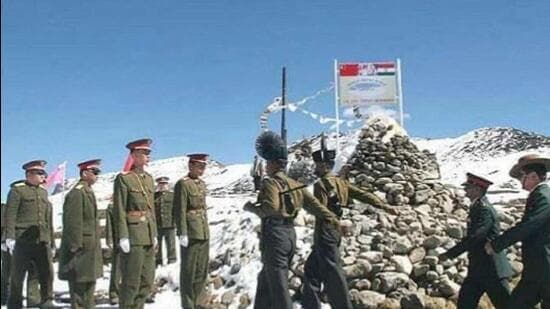
The mountains ahead of Tawang teach a strong sense of humility. Their beauty, serene under a thick shroud of snow, can turn treacherous in an instant, isolating you from the world in a heartbeat
.
Serving as a young medical officer in a vulnerable detachment perched 9,000 feet above sea level—the ADS (advanced dressing station) in military terms—I tasted that isolation daily. It was 1987. Winter had descended like a sentient force. Merciless snowfall erased roads, grounded helicopters and made evacuating the seriously sick and injured an impossible task.
One night, in heavy snowfall, a young soldier was brought in from a remote post. He had been unwell for days. His face looked pale, his uniform hung loose from his frame, and every movement caused him excruciating pain. He had a deeply rooted abscess high up in the thigh, buried below layers of muscles. Under normal circumstances, he would have been transferred to a larger medical unit. But normal circumstances had disappeared beneath six feet of snow.
His company commander looked at me and asked the question already written on every face in the ADS. “Can we wait?” The answer was a clear no.
An abscess is an unusual enemy. Unlike a bullet or a fracture, it hides in silence. Yet once infection enters the bloodstream, it can overwhelm even a healthy young man with frightening speed.
That night, we converted our small treatment room into an operating theatre. The generator groaned in the freezing air. The surgical light struggled against frequent voltage fluctuations, and the pale yellow glow barely illuminated the surgical field. Outside, the wind battered the tin roof like the staccato of far-off gunfire. Finally, we parked a Jonga just outside the doorway and turned its headlights towards the operating table. The powerful beams flooded the room with a sharp white light. It was hardly textbook operating theatre illumination, but in the mountains, one learns to improvise or not operate at all.
The soldier lay stoically on the table, more anxious about missing duty with his regiment in the recovery phase than undergoing surgery.
After administering sedation and topical anaesthesia, I made a careful incision. For a few moments, nothing happened. Then, the wall of the abscess gave way as the knife entered the cavity. A large amount of pus gushed out under pressure. The relief was immediate as the turgid tissues softened under my palm, which exerted steady pressure. My nursing assistant and I drained the infection, irrigated the cavity, inserted a drain for any remaining fluid to find its way out and finally tied a firm bandage.
By morning, the recovery was striking. The fever had subsided, colour returned to his face and he wore an infectious smile. By evening, he was walking about the ward, smiling wryly, demanding extra soup.
A week later, the roads reopened, and evacuation became possible. But our soldier would much rather return to his company than be transported to the Field Hospital for convalescence.
Decades have passed since that winter. The army took me to larger and better equipped operating theatres. However, that night of 1987 stays vividly etched in my memory.
Whenever someone mentions Tawang, I remember a snowbound-mountain post, a young soldier, the blinding headlights of a Jonga ambulance and a makeshift operation theatre.
The writer is a Chandigarh-based retired Army Medical Corps officer.