Ram Mandir Theft Police Question Rai Mishra Arrest Jail
Indian Express
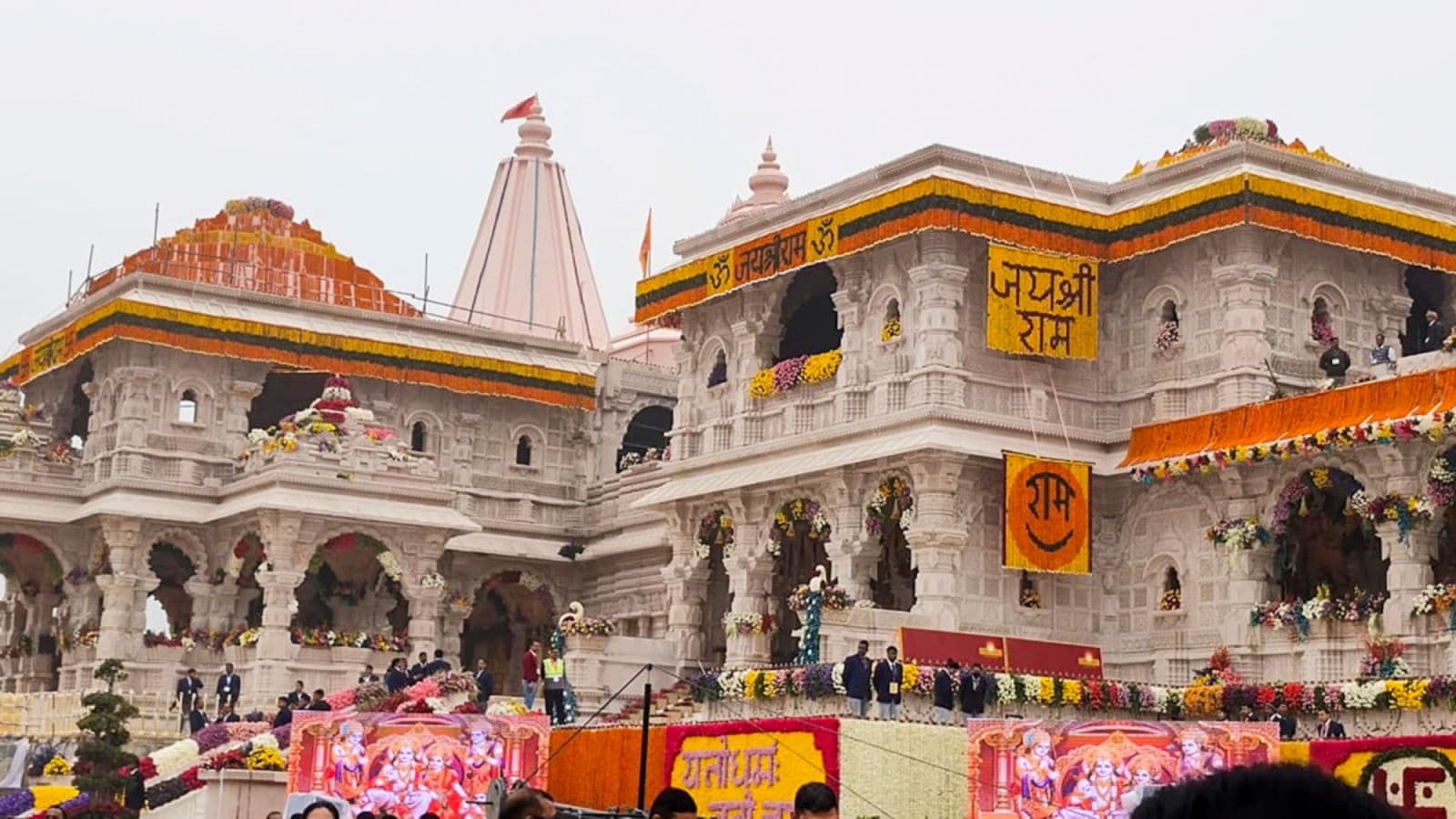
Police in Ayodhya, investigating the alleged theft and embezzlement of funds and valuables donated to the Ram temple, have been seeking details from Champat Rai, general secretary of the Shri Ram...
Police in Ayodhya, investigating the alleged theft and embezzlement of funds and valuables donated to the Ram temple, have been seeking details from Champat Rai, general secretary of the Shri Ram Janmbhoomi Teerth Kshetra Trust, and trustee Anil Mishra on the duties and responsibilities of eight persons arrested so far in the case.
Rai and Mishra sent their resignations to the Trust following the registration of an FIR on June 25 and the arrest of Avinash Shukla, Lavkush Mishra, Anukalp Mishra, Manish Kumar Yadav, Karunesh Pandey, Ramashankar Mishra, Ram Shankar Yadav alias Tinnu Yadav and Subhash Srivastav.
Tinnu Yadav is Rai’s former driver. All the arrested men are currently in judicial custody.
Following court permission, a police team visited the jail Tuesday to question Avinash Shukla on the role of the private agency hired by the State Bank of India for counting of cash and its dispatch to the bank branch. Shukla, an official said, was recruited by the agency and the bank. It is likely that another arrest will be made soon, an official said.
Rai and Mishra, officials said, were the key persons behind the administration of the Ram temple and knew the eight accused.
While the Uttar Pradesh SIT already has collected details from Rai and Mishra, the police team investigating the case has also been making inquiries from them on the functioning of the temple affairs, especially about the donation boxes kept on two floors of the temple and the persons entrusted the task of monitoring the counting of the cash and valuables from the boxes.
The SBI was given the responsibility of ensuring the deposits in the bank branch and keeping the Trust informed. The bank, an official said, had hired a private agency for the counting of the cash and its deposit in the bank.
Sources said there was overreliance by the Trust on a battery of informal workers who had access to all parts of the complex, including the room where counting was done daily. These workers were volunteers who were paid monthly retainership and were assigned various duties, including for the counting of cash donations, sources said.
“The system was based more on trust and less on accountability,” a source said. “Since the Trust felt they were offering their services round the clock without any remuneration, it was decided to engage those interested at a fixed monthly compensation of around Rs 20,000.”
Following the FIR, sources said the informal staff may now be restricted to non-cash functions – prasad distribution, cooking, queue management, footwear and other facilities – while regular staff will be employed for more accountable functions, including cash counting. A specialised agency could also be engaged for cash handling, if need be, sources said.
More and more QR codes will be displayed in the complex to minimise cash contributions to an extent. Several other internal systems will also be audited and overhauled, sources said.
Bhupendra Pandey is the Resident Editor of the Lucknow edition of The Indian Express. With decades of experience in the heart of Uttar Pradesh’s journalistic landscape, he oversees the bureau’s coverage of India’s most politically significant state. His expertise lies in navigating the complex intersections of state governance, legislative policy, and grassroots social movements. From tracking high-stakes assembly elections to analyzing administrative shifts in the Hindi heartland, Bhupendra’s reportage provides a definitive lens on the region's evolution. Authoritativeness He leads a team of seasoned reporters and investigators, ensuring that The Indian Express’ signature "Journalism of Courage" is reflected in every regional story. His leadership is central to the Lucknow bureau’s reputation for breaking stories that hold the powerful to account, making him a trusted figure for policy analysts, political scholars, and the general public seeking to understand the nuances of UP’s complex landscape. Trustworthiness & Accountability Under his stewardship, the Lucknow edition adheres to the strictest standards of factual verification and non-partisan reporting. He serves as a bridge between the local populace and the national discourse, ensuring that regional issues are elevated with accuracy and context. By prioritizing primary-source reporting and on-the-ground verification, he upholds the trust that readers have placed in the Express brand for nearly a century. ... Read More
Divya A reports on travel, tourism, culture and social issues - not necessarily in that order - for The Indian Express. She's been a journalist for over a decade now, working with Khaleej Times and The Times of India, before settling down at Express. Besides writing/ editing news reports, she indulges her pen to write short stories. As Sanskriti Prabha Dutt Fellow for Excellence in Journalism, she is researching on the lives of the children of sex workers in India. ... Read More