Today India Breaking News Live Updates 20 August 2026 Noida Workers Jailed Southern Zonal Council Ministers Social Media
I
Indian ExpressVerified Publisher
An Indian Express investigation has found that workers arrested during the April protests in Noida were jailed for an average of 53 days before courts intervened, granting bail in 84 per cent of cases involving substantive allegations. Judges held that mere pr An Indian Express investigation has found that workers arrested during the April protests in Noida were jailed for an average of 53 days before courts intervened, granting bail in 84 per cent of...
An Indian Express investigation has found that workers arrested during the April protests in Noida were jailed for an average of 53 days before courts intervened, granting bail in 84 per cent of cases involving substantive allegations. Judges held that “mere presence is not enough to deny bail” and that workers could not be equated with instigators. However, bail has offered cold comfort to many families who face debt and fear of re-arrest, while some protesters had bail denied after the NSA was invoked and books and articles cited as evidence of dangerous intent.
The NTA is overhauling its system by shortening the tenures of subject experts, staggering the spread of question paper information and introducing air-gapped systems — steps the agency says are necessitated by the existence of “a big mafia that tries to get experts compromised,” according to an NTA official, in a candid admission of the scale of the threat to examination security.
India’s plan for a caste census involves open-ended enumeration — a method that has historically produced messy, contested and politically charged data, with problems ranging from self-reporting inconsistencies to the challenge of mapping thousands of sub-castes onto a usable administrative framework. An explainer lays out the method and its risks.
Unauthorised structures outside the Pakistan High Commission in New Delhi have been demolished — a routine administrative action, but one whose timing, in the post-Operation Sindoor diplomatic environment, has not gone unnoticed.
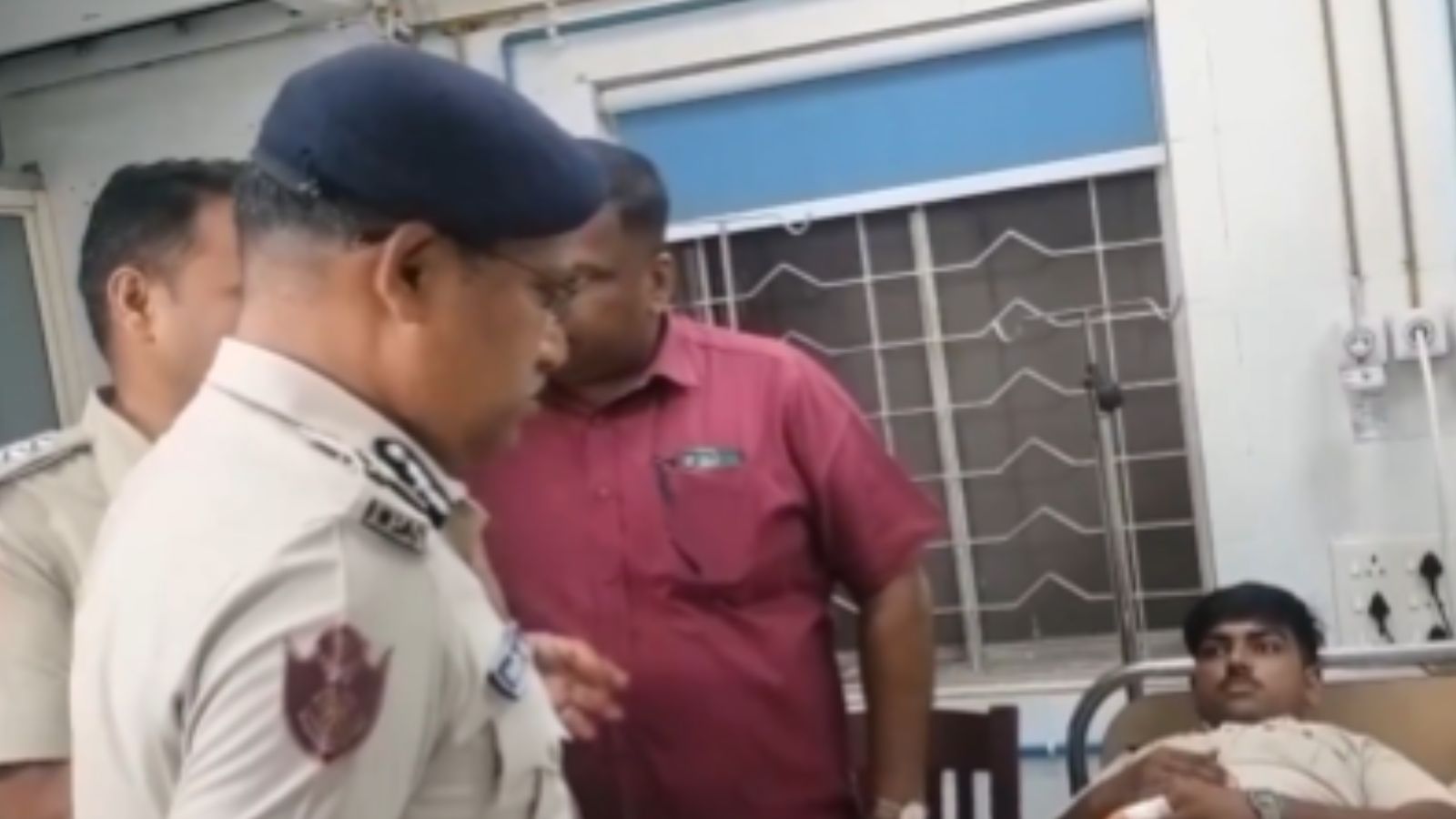
Odisha Police have arrested 113 people for their alleged involvement in violence during a protest by app-based cab and auto-rickshaw drivers and motorcycle riders in Bhubaneswar. Another 60 detained protesters were released on bonds of good behaviour, police said. A total of 354 vehicles were also seized for alleged violations. Seven FIRs have been registered at Kharvel Nagar police station in connection with the violence. The protesters had begun a cease-work on August 17, demanding fare hikes, lower app fees, social security and other benefits. The agitation turned violent after protesters allegedly pelted police with stones and vandalised three police vans and several buses. At least 13 police personnel were injured in the clashes, including the inspector-in-charge of Capital police station in Bhubaneswar.
Kerala Governor Rajendra Vishwanath Arlekar on Thursday reacted to remarks by Kerala University Vice-Chancellor Dr Mohanan Kunnummal, who had used the terms "cockroaches" and "lions" while addressing students. Arlekar said he was unaware of the context in which Kunnummal had made the remarks. The Governor also used the analogy while speaking about what people should aspire to become, saying he did not want to be like "other cockroaches". Arlekar clarified that his remarks were not related to the ongoing student protests at Jantar Mantar. Kunnummal had earlier urged students to reject the description of young people as "cockroaches" and instead see themselves as "lions" representing the strength of the country.
India has urged the UN Security Council not to allow its membership by nation states to pursue narrow political interests or "legitimise" terrorists through the sanctions process. Speaking at a Security Council open debate on working methods, India's Charge d'Affaires at the UN, Ambassador Yojna Patel, called for greater transparency and objectivity in the listing and de-listing of terrorists and terror groups. Patel said terrorists should not be removed from sanctions lists, or other entities added to them, solely on political considerations and without objective criteria or supporting evidence. India has repeatedly raised concerns over the opaque decision-making process of UNSC sanctions committees.