Supreme Court Nta Reform Radhakrishnan Nilekani Committee
I
Indian ExpressVerified Publisher
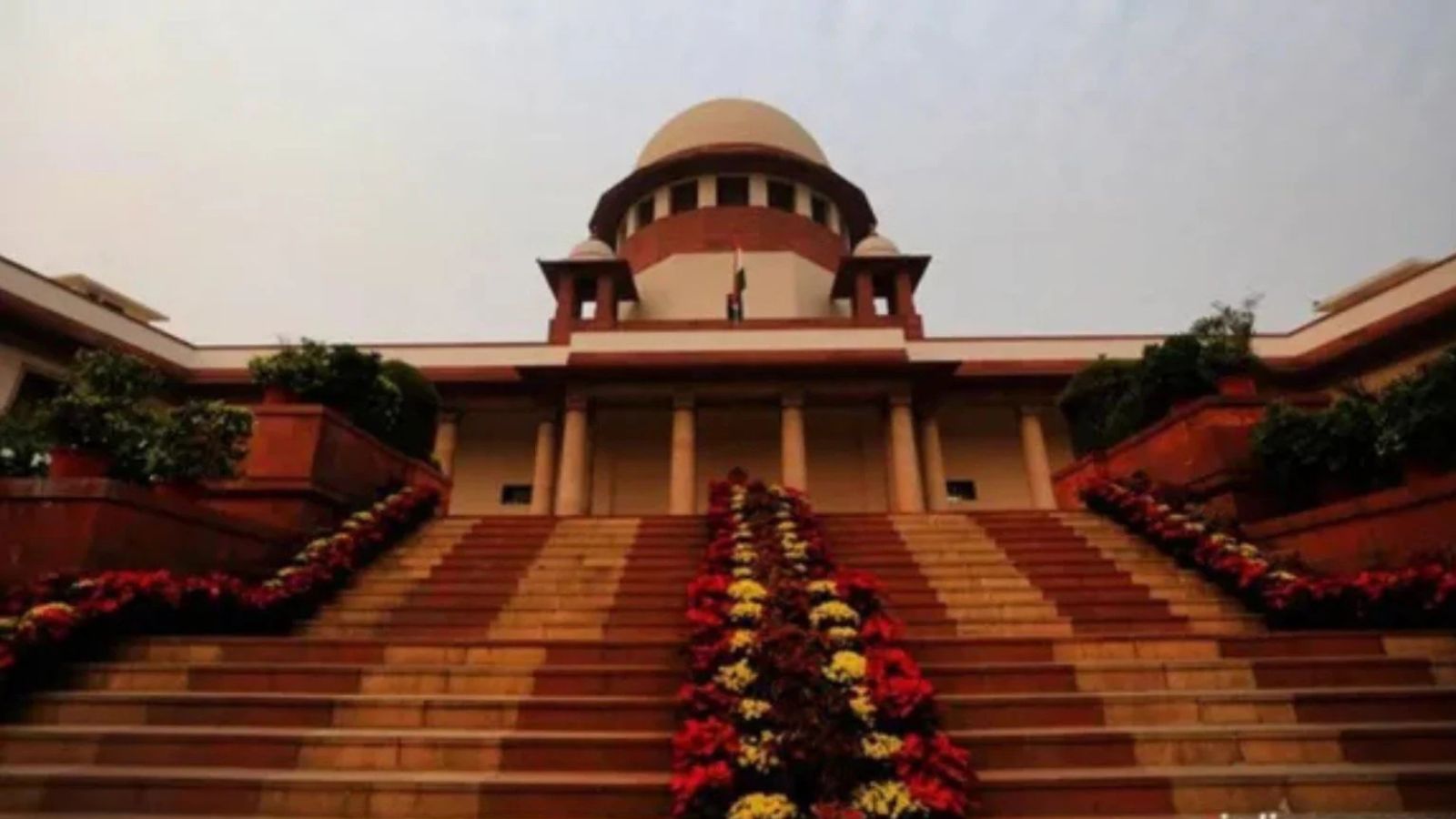
Reiterating that the institutionalisation of the National Testing Agency (NTA) is extremely important , the Supreme Court on Wednesday asked the Centre to file an affidavit detailing the steps taken to implement the recommendations of the expert committee head Reiterating that the institutionalisation of the National Testing Agency (NTA) is extremely important , the Supreme Court on Wednesday asked the Centre to file an affidavit detailing the steps taken...
Reiterating that the institutionalisation of the National Testing Agency (NTA) is “extremely important”, the Supreme Court on Wednesday asked the Centre to file an affidavit detailing the steps taken to implement the recommendations of the expert committee headed by former ISRO chairman K Radhakrishnan and the recently appointed one under Nandan Nilekani.
Justice P S Narasimha, presiding over a two-judge bench, cited the example of the Union Public Service Commission (UPSC) and its history of conducting foolproof exams and said it wanted NTA to become “a vibrant institution like that”.
“Take UPSC for example. Over a period of time, regularly they were conducting exam after exam, foolproof, which means they have institutional memory, institutional expertise. We want this institution (NTA), if it has to be entrusted with obligation of conducting exams year after year, (also) to ensure that it also upgrades itself and remains a vibrant institution like that.”
The bench, also comprising Justice Alok Aradhe, was hearing petitions seeking restructuring of NTA in the wake of the NEET-UG question paper leak.
The bench perused a progress report filed by the Centre and conveyed to Solicitor General Tushar Mehta that it is “concerned about the institutionalisation of the Agency with all necessary infrastructure, manpower, and other technological capabilities…”.
“We are informed that the Nandan Nilekani Committee, which has been constituted to recommend end-to-end reforms focusing on leveraging advanced technology like AI and blockchain to strengthen security and integrity in examinations, has convened a meeting to consider various recommendations…,” the court said in its order.
“We direct the secretary to file an affidavit indicating in detail the steps that have been taken to implement the suggestions made by the Radhakrishnan Committee, as reflected and nuanced by the Nandan Nilekani Committee. This affidavit, containing all details and indicative timelines, shall be filed within a period of three weeks from today,” it added.
The Nandan Nilekani Committee is scheduled to meet on Wednesday.
Mehta, appearing for the Centre, apprised the court of the logistical improvements put in place to prevent paper leaks. He submitted that “the system in place is foolproof, but at some point, there is human interventions”.
Justice Narasimha pointed out that the logical arrangements were already dealt with by the Radhakrishnan Committee “which has very correctly said it’s a systemic problem” and suggested measures for institutionalisation.
“So where is the body (NTA)? How many officers are there? Where is the office situated? How much staff available?” the judge asked, saying “those are the matters which we are seriously concerned with”.
Mehta pointed out that the government had already accepted the recommendations of the Radhakrishnan Committee.
“Maintaining the integrity of the exams is what we are concerned about…how do we institutionalise? You have to train and prepare the personnel for times to come, not just for one examination, (put in place) candidate-friendly arrangements, grievance mechanism…Then strengthening physical and intellectual capacity. This is the most important,” Justice Narasimha said.
Stressing the need for secure office premises and confidential operational infrastructure, Justice Narasimha said it is not something to be done just for one examination.
The court also sought to know if the various director and joint director positions at NTA have been filled. “Have all those directors and joint directors been appointed? How many (have) taken charge? Is there a premises? Where is it?”
Mehta said the hiring process for scaling up digital infrastructure is on and that he has been told the chief technology officer and chief financial officer have already been selected.
The court also pointed to the need to ensure digital security, saying the technology keeps changing with every exam. Justice Narasimha asked if the NTA has a sovereign database to store data. “Where are you going to store the question papers?…So for that you need to develop your infrastructure, you need to have your entire base ready,” the judge said, adding “What needs to be put in place is a vibrant system, institutionalisation”.
Justice Narasimha said that the Nilekani Committee “must review the recommendations of the Radhakrishnan Committee” and improve upon them if necessary.
“Why we are saying this is, the reason is this: You can’t get into this—one committee gives recommendations, and then lock, stock, and barrel, we leave it, and another committee starts. And then, yet another committee starts. There must be some continuity…Let the new committee go into the recommendations made by Radhakrishnan Committee,” he said, adding that Radhakrishnan can also be made a part of the new committee.
Mehta said he had already spoken to the government on this.
Justice Narsimha pointed out that there were two more committees before the Radhakrishnan Committee and added that the recommendations must not just remain on paper but “must translate into action”.