Sukhvinder Sukhu Has Survived Rebellion Disaster And Debt Can He Now Win
I
Indian ExpressVerified Publisher
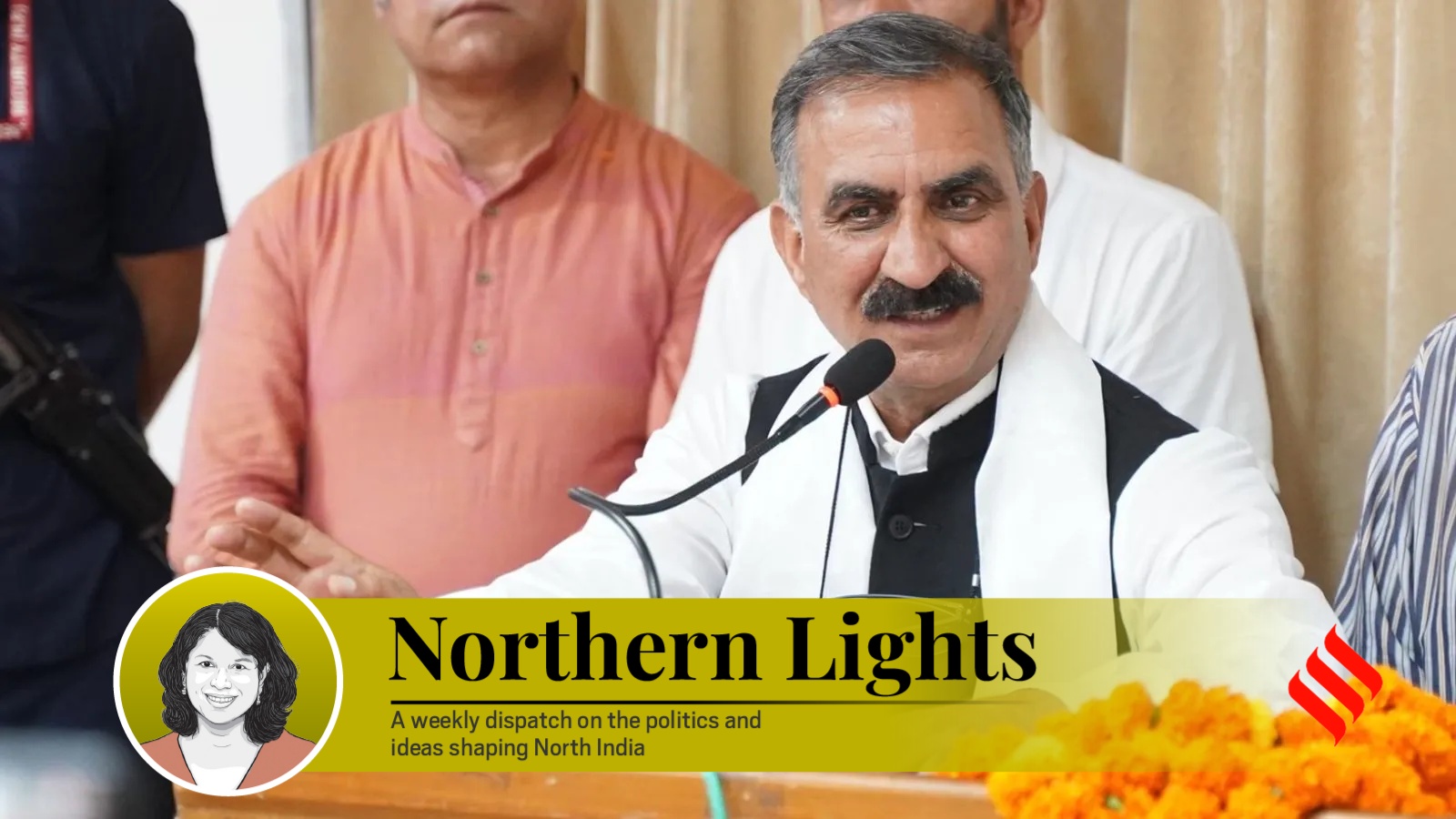
This week, Himachal Pradesh Chief Minister Sukhvinder Singh Sukhu, who has long championed vyavastha parivartan (systemic change), turned on the system itself, calling it too bulky and costly. His government plans a 15 30% cut in the sanctioned strength of IAS This week, Himachal Pradesh Chief Minister Sukhvinder Singh Sukhu, who has long championed vyavastha parivartan (systemic change), turned on the system itself, calling it too bulky and costly. His...
This week, Himachal Pradesh Chief Minister Sukhvinder Singh Sukhu, who has long championed vyavastha parivartan (systemic change), turned on the system itself, calling it too bulky and costly. His government plans a 15–30% cut in the sanctioned strength of IAS, IPS, and Indian Forest Service officers, a move he says will save the cash-strapped state about Rs 200 crore and ensure more meaningful deployment of personnel.
It is a typically Sukhu response to the dilemma that has defined his tenure: how to run a welfare-heavy state with an increasingly empty purse.
Sukhu, who rose through the ranks to become the Congress’s lone Chief Minister in the North, occupies a space once dominated by six-time CM Virbhadra Singh, the flamboyant erstwhile royal of the Rampur-Bushahr estate.
After Virbhadra died in 2021 and Congress’s 2022 victory, many expected the mantle to pass to his family. Instead, the high command backed Sukhu, once at daggers drawn with the old royal.
Sukhu was everything Virbhadra was not: the son of a Himachal Road Transport Corporation driver from the lower hills who worked his way up the party ladder. His family, by his own accounts, knew hardship. His mother, Sansar Dei, has recalled how the family sometimes struggled to put enough food on the table.
As a student at Himachal Pradesh University, Sukhu ran a milk counter and sold newspapers in the mornings while cutting his teeth in student politics. He bought his first car, a white Maruti Alto, after becoming an MLA in 2003 and still drives it, taking it to the Assembly even after becoming CM.
“A man should never forget his past,” said the CM who, by his own admission, spent years looking at Oakover, the official CM residence, thinking that one day he would live there.
The Congress’s decision to choose him was not taken on a whim. As the party’s campaign in-charge for the 2022 polls, Sukhu commanded the support of more than half the legislators.
But CM-ship hasn’t been all roses for Sukhu. He’s had to fight to survive.
Barely six months after he took over, Himachal suffered one of its worst monsoon disasters in decades. Terrifying images of floodwaters sweeping away shops, roads and homes dominated the news, with the state pegging the losses at more than Rs 10,000 crore.
Then came the political crisis. In the February 2024 Rajya Sabha election, six Congress MLAs crossed voted to help the BJP defeat Congress candidate Abhishek Manu Singhvi. For weeks, Sukhu’s government teetered on the brink. But the rebels were disqualified, bypolls followed, and the Congress clawed back enough seats, including one won by Sukhu’s wife Kamlesh, to restore its strength to 40 in the 68-member House.
But surviving a political crisis is one thing. Surviving a financial crisis is another.
The state was already drowning in debt when Sukhu inherited it from the Jai Ram Thakur government. The debt has since crossed Rs 1 lakh crore. Almost 70% of revenue goes towards salaries, pensions, interest payments and debt servicing. The pressure is reflected in the state’s 2026-’27 budget, with expenditure estimates lower than the previous year.
Sukhu has repeatedly blamed the Centre for what he calls turning its back on the hill state. He has also argued that Himachal suffered heavily under the GST regime, claiming a loss of Rs 25,000 crore because the state is a manufacturing hub for pharma drugs, not a major consumer. The 16th Finance Commission’s decision to discontinue the Revenue Deficit Grant of more than Rs 10,000 crore from 2026-27 has further strained the state’s finances.
Sukhu’s answer has been austerity: salary cuts for ministers, MLAs, and senior officers; rationalisation of MLA funds; curbs on vehicle purchases; and a squeeze on government expenditure. While the salary cut for others was later rolled back, Sukhu continues to draw only 50% of his salary.
Critics say penny-pinching is no substitute for raising revenue. Some of Sukhu’s revenue-raising gambits have hit a wall. The High Court struck down his water cess on hydropower, aimed at raising Rs 1,800 crore.
The political criticism has been equally persistent. Within Congress, Sukhu’s critics call him arrogant, while admirers say he believes in straight talk. The residual Virbhadra Singh camp has griped about being sidelined.
Leader of Opposition Jai Ram Thakur has kept up the pressure, dubbing the government a “mitron ki sarkar (a government of its leaders’ friends)” and accusing Sukhu of rewarding friends with political appointments while pursuing a political vendetta against defectors.
So, farmers get support prices for organic produce and milk; orphans and vulnerable children are looked after by the state; English is now taught from Class I; young people can get a 50% subsidy for e-taxis, with government leases providing assured income.
On Independence Day, Sukhu announced measures to improve the economic condition of 1.8 lakh families over two years. He also extended doctors’ retirement age, raised remuneration for health workers and announced 100 new CBSE schools.
The message is clear: cut fizulkharchi (unnecessary spending) at the top, while putting money into the hands of those at the bottom.
In a state where power has ping-ponged between the Congress and the BJP since 1990, incumbents rarely get a second chance. Sukhu has survived rebellion, disaster, and a fiscal squeeze. Now comes the harder part.
(Manraj Grewal Sharma is National Editor — North, The Indian Express)
Manraj Grewal Sharma is a senior journalist and the Resident Editor Read More