Jantar Mantar Protest Neet Leak Delhi Police Plainclothes Crowd Control Supreme Court
I
Indian ExpressVerified Publisher
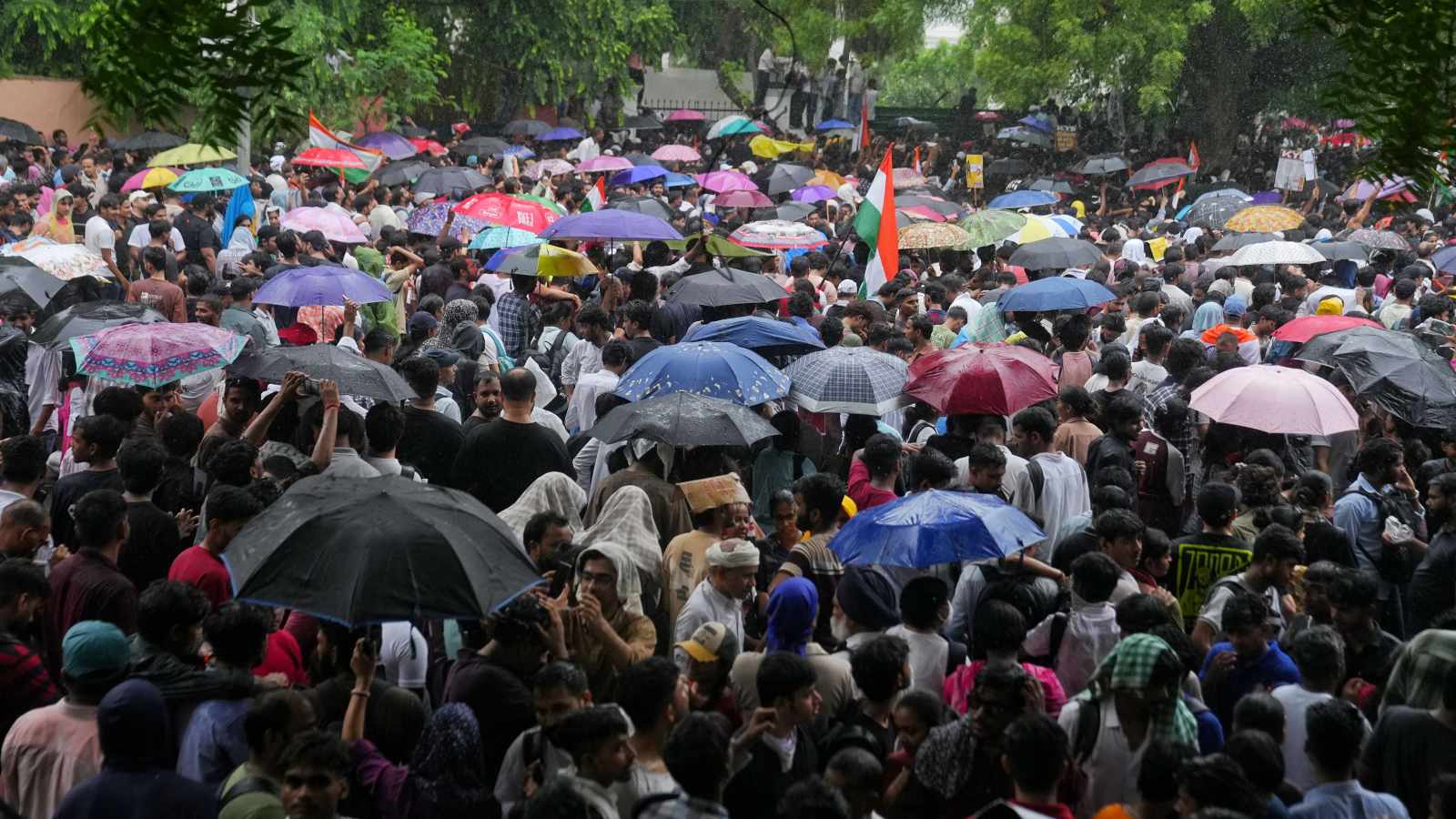
Cops in plain clothes were deployed during the July 20 march to Parliament as part of a crowd-control measure and to help anyone being harassed at the protest, Delhi Police have told the Supreme Court. The police have denied the allegations of excessive use of Cops in plain clothes were deployed during the July 20 march to Parliament as part of a crowd-control measure and to help anyone being harassed at the protest, Delhi Police have told the Supreme...
Cops in plain clothes were deployed during the July 20 march to Parliament as part of a “crowd-control measure” and to help anyone being harassed at the protest, Delhi Police have told the Supreme Court.
The police have denied the allegations of excessive use of force during the Cockroach Janta Party (CJP)-led march to demand former Union Minister Dharmendra Pradhan’s resignation. It said its officers used force only after protestors “started resorting to violence”.
In a counter-affidavit filed late Monday night, the police responded to videos showing plain-clothes cops. “…the deployment of police staff in plain clothes in the big rallies and demonstrations, Republic Day gathering, Independence Day gathering or any big congregation is a part of normal arrangement that is followed by the Police Departments globally so as to keep a vigil on anti-social elements or any criminal activity that pose a threat to the gathering or movement,” it said.
These officers in plain clothes are called “spotters” and were part of the crowd-control measures, the police said. It added that these “spotters” merged with the protesters “to avoid being identified by the anti-social elements and criminals and to be in a position to provide immediate assistance to anyone being harassed at the protest site”.
In the affidavit, Delhi Police have also said that the use of facial recognition at the protest site was to profile those with a criminal record, and not every individual.
Explaining how the situation worsened, the police said, “… the events spiraled into an escalatory matrix when in spite of repeated requests and persuasions, a section of the protestors turned aggressive and attempted to breach the police barricades in a bid to advance towards the Parliament.”
Police also rejected the charge that it used lathis with nails and said it “appears to be only a solitary video and if the video is analysed in full, it would be clear that… the said lathi is in the hands of the protestors and not the police officials”.
Explaining the manner in which the violence unfolded, the affidavit said, “They started attacking the police and other security forces stationed at the barricades and other deployed spots. They even started manhandling and pulling the lady uniformed police officers as well as their male counterparts into the crowd. The videos that have been captured narrating these incidents are widely being circulated on social media would demonstrate the manner in which the crowd at various points attacked and thrashed police personnel who were only performing their duty of manning the barricades; thereby causing extensive damage to Government vehicles, police vehicles, barricades and other public property, and injuries to the police personnel thus, creating a grave law and order as well as security situation.”
Police cited “disturbing visuals of big groups of protestors targeting lone police officials with stones, sticks, beating them up without any provocation almost in a mob lynching fashion…”.
Pointing out that “the students will not do any such criminal acts”, the affidavit said, “There are multiple videos showing how the protestors were pulling off the protective gears worn by the police officers, dragging them, removing their helmets, and deliberately pushing them onto the stone pavement thereby causing various kinds of bodily injuries to over 240 officers and personnel including female police officers.”
The affidavit pointed to “heavy stone pelting” on uniformed police officers near the office of the registrar of co-operative societies at Sansad Marg. A group of protestors vandalised the building, went inside and started throwing furniture on police officers outside. “Not only this, they started breaking the walls of the said building, they started using those bricks to attack the officers…,” the affidavit said.
“…the stone pelting got so heavy that numerous officers got severely injured. The peaceful protest took a violent turn and the crowd became uncontrollable due to the acts of miscreants and anti-social elements disguised amongst the protestors,” it added. The affidavit added that owing to the “violent conduct of a section of the protesters, nameplates of some police personnel were damaged and some became detached when they were roughed up and manhandled.”
The affidavit said that more than 30,000 protesters gathered within a radius of approximately 3 km and only 5,000 police officers were on duty to control the crowd and restore peace.
The injuries suffered by 218 protestors, though very unfortunate, may not be qualified on account of use of any excess force, it said. “The same unfortunately were sustained when the crowd became completely out of control and the struggle that occurred between the police and the unruly elements,” Delhi Police said.
Police said that “at one point, the protestors, females included, started attacking the police officers, snatching their sticks, lady officers were being pulled into the dense crowd, and the officers of the Answering Respondent had no choice but to contain the aggressors with required use of force.”
Ananthakrishnan G. is a Senior Assistant Editor with The Indian Express. He has been in the field for over 26 years, kicking off his journalism career as a freelancer in the late nineties with bylines in The Hindu. A graduate in law, he practised in the District judiciary in Kerala for about two years before switching to journalism. His first permanent assignment was with The Press Trust of India in Delhi where he was assigned to cover the lower courts and various commissions of inquiry. He reported from the Delhi High Court and the Supreme Court of India during his first stint with The Indian Express in 2005-2006. Currently, in his second stint with the daily newspaper, he reports from the Supreme Court and writes on topics related to law and the administration of justice. Legal reporting is his forte though he has extensive experience in political and community reporting too, having spent a decade as Kerala state correspondent, The Times of India and The Telegraph. He is a stickler for facts and has several impactful stories to his credit. ... Read More