Delhi Hc Llm Training Copyright Fair Dealing
I
Indian ExpressVerified Publisher
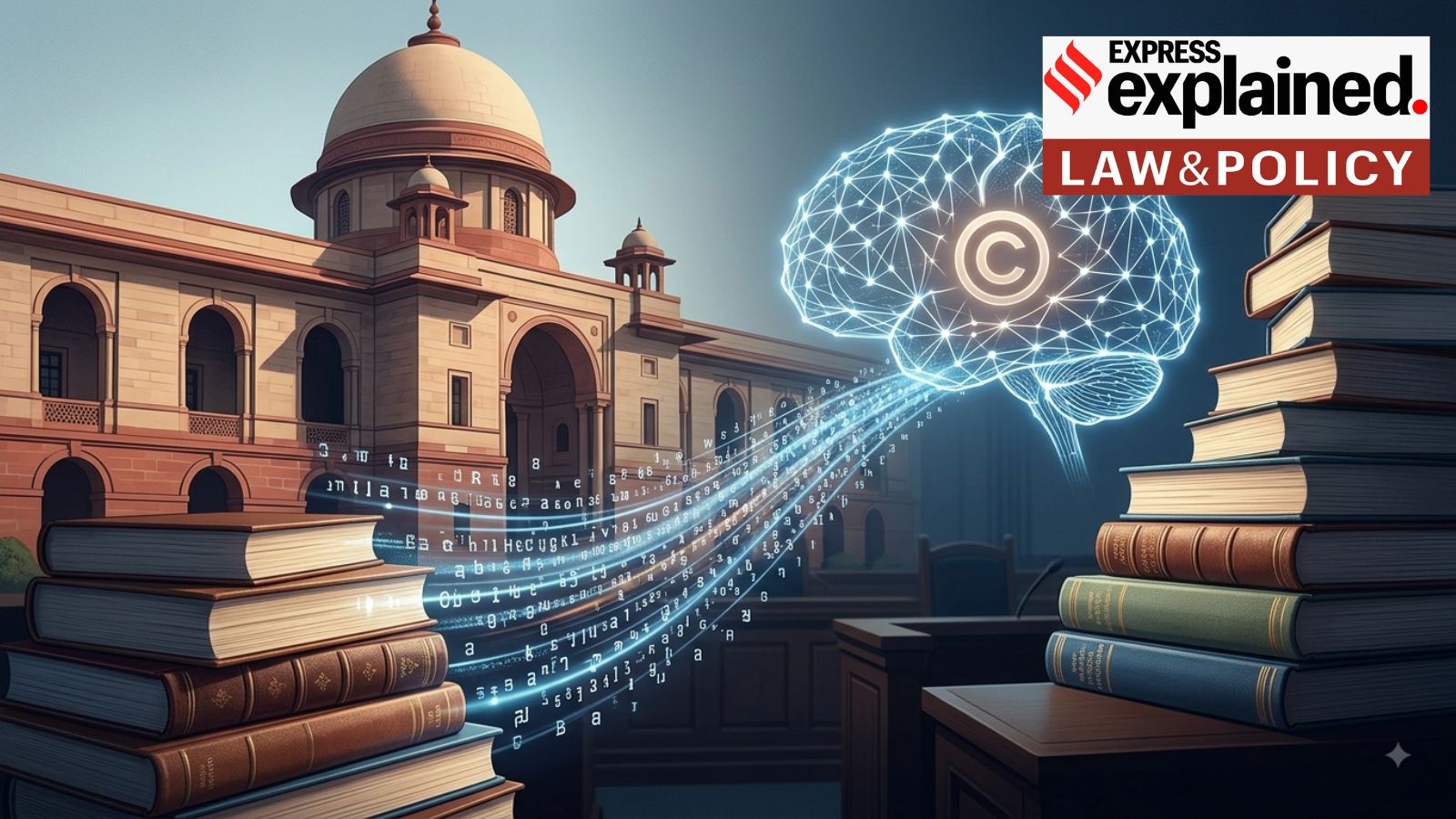
In recent months, news reports have covered European booksellers receiving bulk orders for second-hand books, presumably to train large language models (LLMs). Though subject to appeal, the ruling gives AI developers such as OpenAI a measure of legal cover to In recent months, news reports have covered European booksellers receiving bulk orders for second-hand books, presumably to train large language models (LLMs). Though subject to appeal, the ruling...
In recent months, news reports have covered European booksellers receiving bulk orders for second-hand books, presumably to train large language models (LLMs).
Though subject to appeal, the ruling gives AI developers such as OpenAI a measure of legal cover to train on Indian-origin content without licensing agreements.
In its interim order, the Delhi High Court has held that it is permissible for a machine to learn by training on copyrighted works, provided the final output is not an instance of memorisation and regurgitation of the original work. In doing so, it has taken the position that “data is the oil for LLMs to work efficiently”.
Imagine the reverse scenario: if the judgment ruled that using copyrighted materials to train LLMs was infringement, it would shut down all indigenous generative AI development.
One thing we must always remember is that different jurisdictions have very different approaches to protecting exclusive rights and crafting exceptions to those exclusive rights.
In the US context, courts have the “fair use” exception, a broad, open-ended exception based on a set of four factors to determine “fair use”: the purpose and character of use, nature of the copyrighted work, amount and substantiality of the portion taken, and the effect of the use upon the potential market. In the two US cases, both found that using copyrighted works for LLM training constitutes “fair use”, though there are nuances.
The framework in India is slightly different. We have the “fair dealing” exception, in which the analysis happens in two stages. First, the court looks at whether the use was for one of the specific purposes mentioned in the fair dealing exceptions. Second, the court engages in a “fairness analysis.”
The Delhi High Court has rejected the blind adoption of the US’ four-factor test for fair use because our fair dealing provision is much narrower. It would be terribly wrong to import those factors directly into the Indian analysis.
When ANI vs OpenAI was underway, many people doubted whether India could follow a fair use approach given our narrower “fair dealing” exception. Here, the ultimate purpose is learning, which is now covered under the exception of “private use, including research.” The Delhi High Court has taken a liberal and dynamic approach to defining these terms, because unless the first stage is cleared, we can’t move on to the next.
Equally important, the Delhi High Court has laid down a unique fairness test. It asks us to look at three factors, including whether there will be market harm for the plaintiff — in this case, ANI, a syndicating agency—and whether ANI’s customers will substitute their services with LLM responses—where the answer is clearly no.
Most importantly, the Delhi High Court noted that LLMs have a public interest dimension. Overall, the court concluded that training activity can fall within the ambit of the fair dealing exception.
Definitely yes. If an LLM circumvents technological protection measures, then there might be liability coming your way. In this case, the court noted that ANI didn’t use the “opt-out” options provided by OpenAI, like “robots.txt.”
In Elsevier vs Alexandra Elbakyan, I feel the court did not have the opportunity to hear the perspectives of the academic and research community. However, ANI vs OpenAI clarifies that “lawful access” is not a general requirement under our law, and under most laws. If you can prove as a user that your use comes under the fair dealing exception, the source shouldn’t matter. Wherever “lawful access” is intended, it is specifically mentioned in the statute.
Most jurisdictions don’t demand “lawful access” across the board because it would end fair use and its purpose. The best example is Google LLC vs. Oracle America, Inc: Oracle claimed that Google had copied copyrighted application programming interface code from the Java programming language to train its Android operating system. The US Supreme Court, in 2021, ruled in a 6–2 majority that Google’s use of the Java APIs was within fair use, and that Google copied everything without permission.