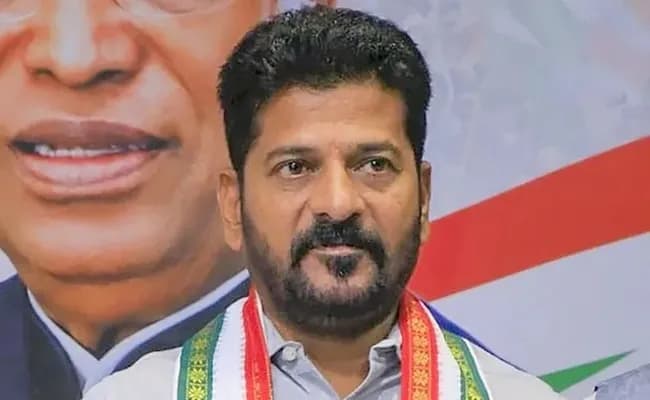
The Union Railway Board has rejected a proposal by the Telangana government, headed by Chief Minister A Revanth Reddy, seeking permission to provide free travel for women passengers on Hyderabad’s Multi-Modal Transport System (MMTS) trains, on the lines of the Mahalakshmi scheme being implemented for women in state-run RTC buses.
The Chief Minister had written a letter to the Union Railway Ministry seeking to extend the state’s free public transport initiative for women, already available on state-run buses for eligible passengers, to the MMTS rail network.
The proposal sought approval for free travel for women on MMTS trains operating within the Hyderabad metropolitan region.
However, in a communication sent to the state government, the Railway Board rejected Revanth Reddy’s proposal, citing pending dues and significant financial losses incurred by the service.
The Railway Board stated that the MMTS network is already operating under severe financial strain. Railway officials noted that the service suffered losses of nearly Rs 160 crore during the previous year alone.
The Board also highlighted that the Telangana government has outstanding dues of approximately Rs 490 crore related to the MMTS project.
Given the existing financial challenges, railway authorities argued that implementing free travel would further increase operational losses.
While rejecting the proposal for now, the Railway Board clarified that it would be willing to examine the request if the Telangana government formally commits to bearing the entire financial burden arising from the free-travel scheme.
“Until such a guarantee is provided, the proposal cannot be approved,” railway officials said.
Railway authorities emphasised that maintaining the sustainability and continued operation of MMTS services remains their top priority.
They added that any policy decision likely to reduce revenue must be accompanied by adequate financial support from the state government to ensure the network’s long-term viability.