News
Virat Kohli Distal Semimembranosus Tendon Tear Rare Hamstring Injury Expert
Indian Express
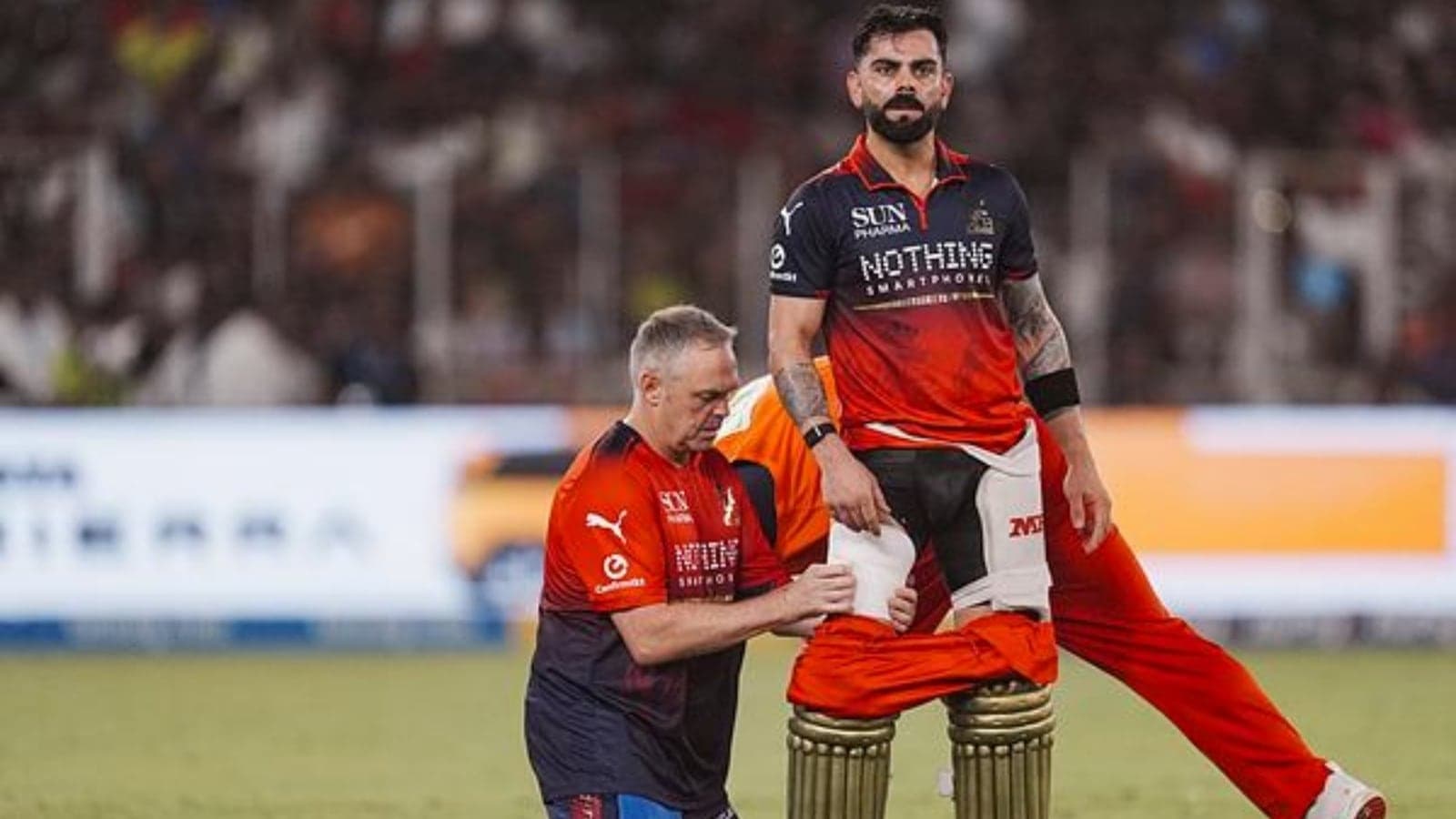
Indian batting sensation Virat Kohli has been ruled out of the upcoming ODI series against Afghanistan due to a hamstring injury that he sustained during the recently concluded IPL. He is out of the
Indian batting sensation Virat Kohli has been ruled out of the upcoming ODI series against Afghanistan due to a hamstring injury that he sustained during the recently concluded IPL. “He is out of the ODI series due to a hamstring injury. He got injured during the final. Scans have revealed a distal semimembranosus tendon tear,” a BCCI source told PTI.
While hamstring injuries are common in professional sport, the specific injury Kohli has reportedly suffered is considered rare. According to Dr Bharat Bahre, Senior Consultant & Associate Director, Orthopaedics & Joint Replacement, Aakash Healthcare, a distal semimembranosus tear is a rare hamstring injury that sports medicine specialists rarely encounter, even among elite athletes.
DISCLAIMER: This article is based on information from the public domain and/or the experts we spoke to.
“A distal semimembranosus tear is a rare injury to one of the three hamstring muscles at the back of the thigh,” explains Dr Bahre.
Unlike a conventional hamstring strain, which typically occurs higher up in the muscle or tendon near the hip, this injury affects the semimembranosus tendon near its attachment on the inner side of the shinbone, just below the knee.
“This injury differs from a typical hamstring strain, which usually occurs in the belly of the muscle or the tendon closer to the hip. This injury involves the thick tendon of the semimembranosus muscle near its attachment on the inside of the shinbone just below the knee,” he says.
The distal semimembranosus tendon is a particularly strong and robust structure, and therefore this injury is considered rare by sports medicine specialists, says Dr Bahre.
“Most hamstring injuries occur higher up in the muscle-tendon unit where the tissues are subjected to greater stretching forces during running, sprinting, and sudden acceleration. The lower tendon close to the knee is not as often subjected to the kind of excessive load that causes tearing.”
According to Dr Bahre, a complete tear often occurs due to a combination of factors rather than a single incident. “Often a complete tear is caused by a combination of factors including explosive movement, sudden deceleration, fatigue, and the cumulative workload and age-related changes in tendon elasticity.”
This is why the condition is frequently described as unusual, even in professional sport. “The distal semimembranosus tear is a rare form of hamstring injury compared with the common standard hamstring strains in elite athletes. That is why the condition is described as unusual by medical experts, even in professional sport.”
Kohli, now in his late 30s, is widely regarded as one of cricket’s fittest athletes. While age alone does not cause tendon ruptures, Dr Bahre says subtle biological changes can increase vulnerability under extreme physical demands.
“A tendon rupture is not an age-related phenomenon. Especially not in a man of Virat Kohli’s fitness levels,” he says.
However, tendons gradually undergo structural changes over time. “Tendons lose a little elasticity, hydration, and collagen quality over time as people age into their 30s and beyond. Recovery from repetitive micro-damage also slows down.”
As a result, an older athlete may be slightly less equipped to absorb repeated high-intensity loads. “The tendon in an athlete in his late 30s may be less able to absorb sudden high-force loads than an athlete in his 20s. This does not mean the tendon becomes weak, but it does mean that under extreme match conditions, such as repeated sprinting, turning and acceleration over a long season, the risk of a significant tendon injury is increased.”
The recovery timeline depends largely on the severity of the tear. “Small tendon injuries can heal in a few weeks, while larger partial tears can take six to twelve weeks of rehabilitation. A complete tear of the tendon may require surgery and several months of recovery,” says Dr Bahre.
According to reports, Kohli has been advised to rest for a minimum of two weeks, although the precise grade of the injury has not yet been revealed.