Review
Urvashi Comedy Roles Movies Achuvinte Amma Parimala And Co Legacy
Indian Express
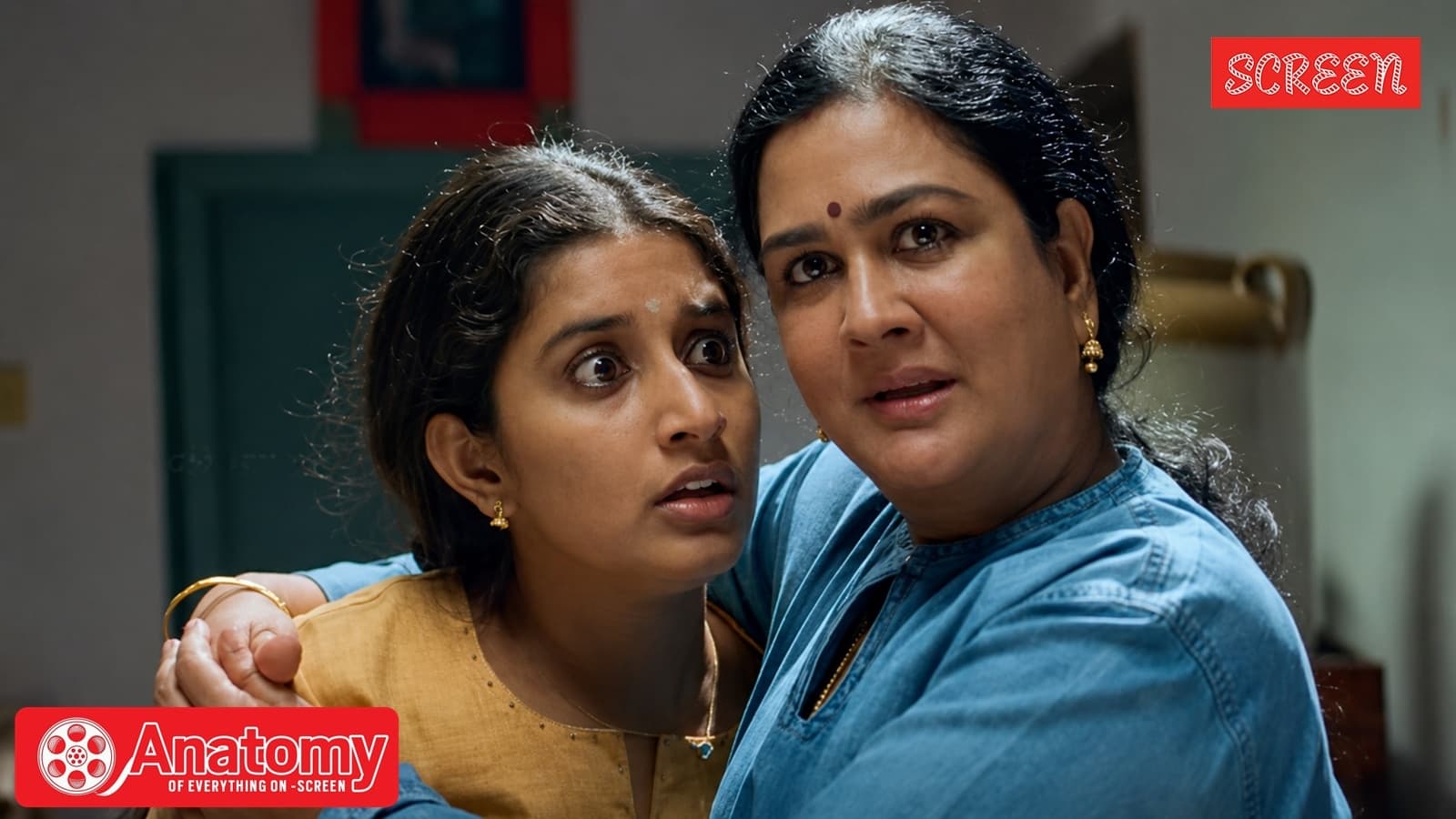
As an introductory note, let me say this: this article isn t penned with the aim of ascertaining if Urvashi is a GOAT. There s no debate there
As an introductory note, let me say this: this article isn’t penned with the aim of ascertaining if Urvashi is a GOAT. There’s no debate there. When discussing her, every tongue familiar with her work will avow that Urvashi is a GOAT; perhaps one of the very, very few GOATs among the GOATs in Indian cinema. This article is rather a panegyric — an ode, maybe — on her brilliance in comedic roles. Let’s go…
Second innings can be brutal, particularly for actors. Although there may be hype surrounding their comeback project, if they don’t knock it out of the park or at least maintain the same brilliance (if they ever had any) that they did right before taking a hiatus, the audience might write them off soon enough. What makes it even tougher for actors is that, during their time away, the art and craft of acting can undergo significant changes, and the audience might adapt to this new style and grow to like it. Thus, if they return with the same set of skills and style of acting — that may have helped them strike gold once — they risk being labelled outdated.
Don’t Miss | Kammatipaadam might be the unsung brutal history of every big city that ever existed
From Govinda, Vivek Oberoi, Madhuri Dixit, and Karisma Kapoor to Rahman, Preity Zinta, and Manju Warrier, there are quite a few actors who have failed to live up to the legacy they themselves created during the first leg of their careers in their respective second innings.
But when Urvashi returned after a six-year hiatus in director Sathyan Anthikad’s Achuvinte Amma (2005), it was as if she had never left. Even though her character, Vanaja, undergoes significant emotional shifts throughout the film, it was Urvashi’s mastery of humour that truly made jaws drop. Her comedic timing, dialogue delivery, gestures, and reactions seemed as if she had been constantly honing her skills all those years.
Cinema Anatomy | Beyond Drishyam: Mohanlal delivered a whole year of Lalism with 5 performances, a Best Actor award
Take, for instance, the scene where Vanaja tries to speak English with her daughter, Achu (Meera Jasmine). Divided into two lengthy single takes, this sequence stands as a testament to Urvashi’s comedic brilliance and acting mastery. As the moment unfolds, she effortlessly gels with the surroundings, making one feel as if she has known the place forever.
When the scene begins, she is cooking chapatis, and as Achu asks for one more, she starts talking in broken, funny English, telling Achu she’s determined to master the language this time. The entire scene is dialogue-heavy, and the comedy mainly stems from Vanaja’s mangled English, where she also slips in random Malayalam words. Remember, “Kadukuvara, kadukuvara, kadukuvara“?
Despite being two single takes, where she had to deliver lengthy, funny lines uninterrupted, Urvashi didn’t just stand in one place and deliver them as a monologue. Instead, Vanaja is busy with work at first, then moves around the house to wash her hands and complete chores, and ultimately even acts out what she’s saying for her daughter’s better understanding. When Achu begins replying in English, she is shocked and helpless, unable to follow what she’s saying, and her expressions and body language clearly communicate the awkwardness without going overboard or being overly caricatured.
What’s fascinating here is that Urvashi has maintained the same level of brilliance in comedy before and after Achuvinte Amma, and even when she ranked among the biggest heroines in South India, making her one of the very few leading actors in Indian cinema history to effortlessly shine in comedy. Achuvinte Amma earned her a National Film Award for Best Actress in a Supporting Role.
While her initial roles in Malayalam were mostly serious, the Tamil industry gave Urvashi the opportunity to handle comedy from the beginning, with one of the earliest examples being Mundhanai Mudichu (1983), her debut film in a lead role. Although much of the humour was situational and already present in the writing, Urvashi’s performance as the mischievous Parimalam stood out. Being a teen herself, she easily blended with the character and its actions, infusing Parimalam with an organic childishness.
In contrast, her proper foray into Malayalam comedy began after she started collaborating with Sathyan Anthikad. In movies such as Ponmuttayidunna Tharavu (1988) and Mazhavilkavadi (1989), despite not having the luxury of using her own voice, Urvashi brilliantly showcased her comedic excellence through her body language and expressions. In Ponmuttayidunna Tharavu, she particularly shone in moments of pettiness and selfishness, while Mazhavilkavadi highlighted her excellence in nuanced acting, giving significant focus to even the minutest details. Mazhavilkavadi earned Urvashi her first Kerala State Film Award for Best Actress.
Although her character in Thalayana Manthram (1990) was marred by misogyny and embodied the problematic stereotypes often associated with women, Urvashi immortalised Kanchana with absolute precision. By faking innocence and sorrow, Kanchana manages to command the people around her, and once she has them under her control, her petty, pompous nature come to light.
The actor’s sharpness lay in her ability to be fully present in every moment, using physical gestures to accentuate the essence of her lines. In moments of embarrassment, bragging, and being caught red-handed, Urvashi ensured razor-sharp portrayals, communicating even with her eyes. She won her second Kerala State Film Award for Best Actress for her performance in Thalayana Manthram.
Although both Kakkathollayiram’s (1991) Revathy and Kadinjool Kalyanam’s (1991) Hridayakumari had similarities, as both were grown-ups with the emotional maturity of children, Urvashi ensured that they bore no similarities with each other. While she often employed physical comedy for Revathy, she focused more on facial expressions for Hridayakumari, thereby creating a clear distinction between the two characters, earning her a third State Award.
Movies such as Yoddha (1992), My Dear Muthachan (1992) and Magalir Mattum (1994), along with her physical agility, also utilised her ability to infuse humour into her dialogue delivery, thus unlocking a new facet of her talent. The Malayalam film industry, in particular, realised quite late how brilliantly Urvashi elevated the comedy whenever they went with the lines she delivered, instead of dubbing them. Her ability to ensure chemistry and absolute sync with her co-stars also helped her tremendously in acing comedic moments.
In movies such as Pidakkozhi Koovunna Noottandu (1994), even when sharing the screen with comedic and acting legends such as her sister Kalpana, KPAC Lalitha, and Jagathy Sreekumar, Urvashi managed to crack up the audience with her performance, underscoring her brilliance.
Also, the song “Parumala Cheruvile” from Spadikam (1995), in which she engaged in several comedic shenanigans while drunk, further highlighted her ability to deliver a measured portrayal in even exaggerated comedic moments.
Aside from Sathyan Anthikad, Kamal Haasan is also a creator who understood Urvashi’s comedic brilliance well and employed it extensively in movies such as Michael Madana Kama Rajan (1990), Magalir Mattum (1994), Panchathantiram (2002), and Uttama Villain (2015), where she often outshone her co-stars, going beyond the written lines to inject organic humour into her performances.
If there’s one comedic performance of hers that seems artificial in retrospect, it’s Chandramathi in Madhuchandralekha (2006). Although it earned Urvashi her fourth State Award, the portrayal was not comparable to what she has accomplished over the years, particularly since the character was pointlessly cartoonish and problematic. Even the actor herself recently shared her dissatisfaction with her performance in that role.
One of the most recent Malayalam films to showcase her comedic brilliance was Aravindante Athidhikal (2018), where she used both her body and voice to extract humour from even the most mundane moments. Her quick actions and reactions, along with the effective pacing of her lines, further enhanced the hilarity of the scenes. In Tamil movies such as Magalir Mattum (2017) and Appatha (2023), she brilliantly demonstrated her ability to excel in comedy even at this age, proving that she is an actor par excellence.
The trailer for Urvashi’s upcoming movie, Parimala and Co, a comedy thriller helmed by Pandiraaj, indicates that she’s set to tickle our funny bones yet again, this time alongside her frequent co-star Jayaram. The movie will hit the screens on Friday, June 5.
Cinema cannot exist in a vacuum; it’s all about the discussions that follow. In the Cinema Anatomy column, we delve into the diverse layers and dimensions of films, aiming to uncover deeper meanings and foster continuous discourses.
Anandu Suresh is a distinguished Deputy Copy Editor at The Indian Express Online, where he serves as a leading voice in cinematic critique and industry analysis. With over six years of rigorous experience in the media landscape, he has established a reputation for incisive, long-form commentary that bridges the gap between commercial cinema and art-house narratives. Experience & Career Anandu’s professional journey is rooted in a deep academic and practical foundation in the humanities and communication. He holds a Bachelor's degree in English Language and Literature and a PG Diploma in Journalism and Communication. Before ascending to his current editorial leadership role at The Indian Express, he honed his skills on the news desk of The New Indian Express in Hyderabad. His career is marked by a transition from core news operations to specialized cultural journalism, allowing him to bring a structured, news-oriented rigor to the entertainment beat. Expertise & Focus Areas While Anandu’s portfolio spans the global cinematic landscape, he is widely regarded as an expert in Malayalam Cinema. His unique approach to film criticism is defined by: Cinema Anatomy: A dedicated column where he deconstructs the structural layers of films to uncover deeper sociopolitical meanings. Marginalized Narratives: A commitment on-ground and analytical reporting on how cinema represents or fails marginalized communities. Critiquing "Performative Wokeness": Rigorous analysis of modern filmmaking trends, identifying the difference between authentic representation and superficial social commentary. Multimedia Discourse: Actively fostering continuous public dialogue on cinema through digital platforms and archival research. Authoritativeness & Trust Anandu Suresh is a trusted authority in the film journalism circuit, frequently providing exclusive coverage from major international festivals like the International Film Festival of Kerala (IFFK). His work goes beyond standard reviews; he is known for holding the industry accountable, as seen in his extensive reporting on sensitive issues like the 2017 Kerala actress assault case and the legal complexities surrounding film credits. By prioritizing "Journalism of Courage," Anandu ensures his readers receive commentary that is not only intellectually stimulating but also ethically grounded and factually robust. ... Read More
Click here to follow Screen Digital on YouTube and stay updated with the latest from the world of cinema.