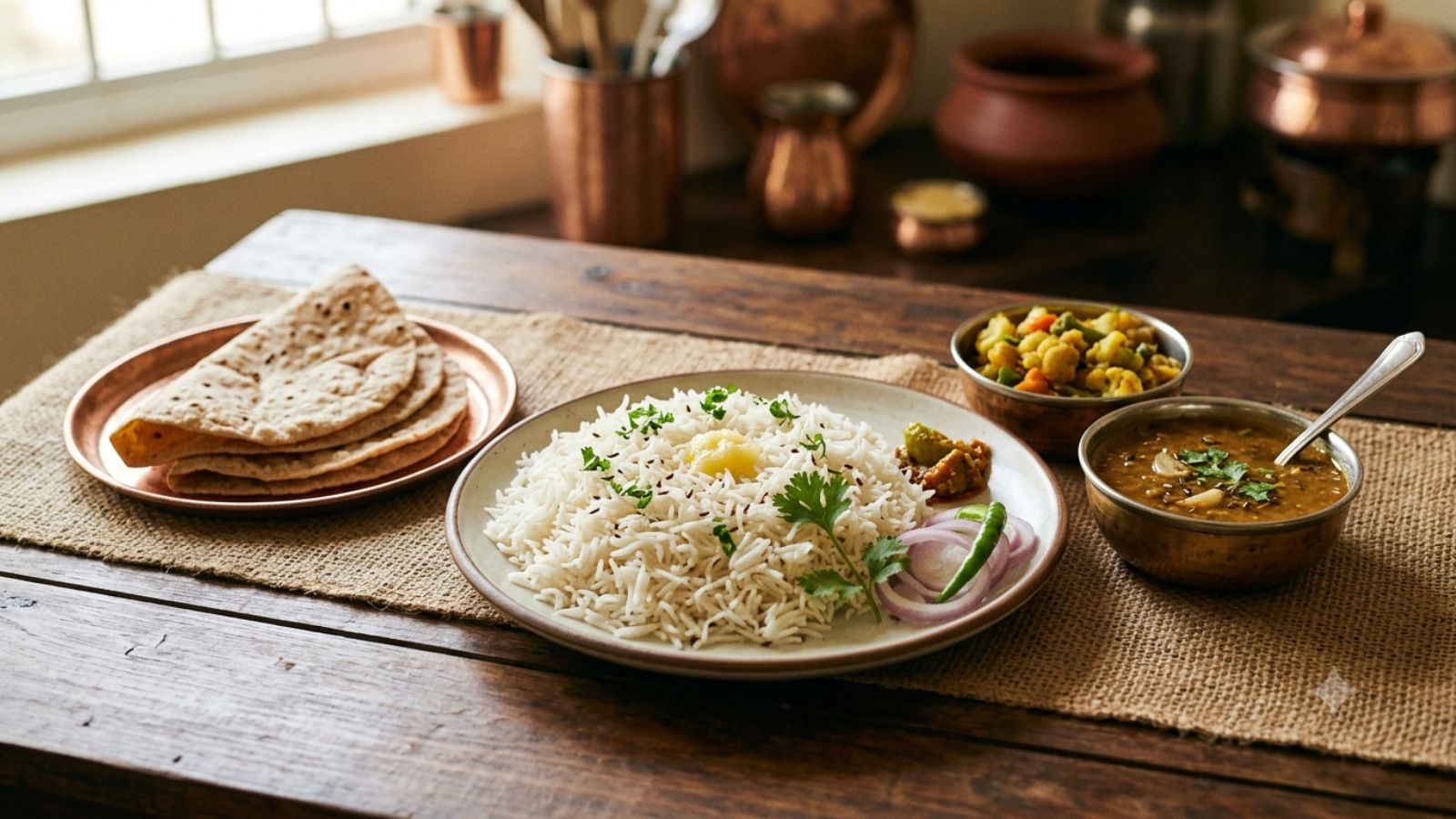
“Rice or roti—which one is making me gain weight?” Few questions can turn an Indian dining table into a nutrition debate so quickly, and it is one I hear almost Every day in my clinic. Someone brought up in Bengal may insist, “Rice cannot be the problem. We have eaten it for generations.” Someone from Punjab may make exactly the same argument for wheat. We tend to assume that a food eaten for generations must somehow suit our genes. Yet even within the same family, two people can share the same meals and live under the same roof, while one gains weight and develops diabetes and the other remains lean with normal blood glucose. So Why Do our bodies respond so differently to the same plate? There is no rice gene protecting people in Kolkata or Chennai , and no wheat gene shielding those in Delhi or Punjab. Our genes influence appetite, insulin secretion, muscle mass, fat distribution and the ability of pancreatic beta cells to respond to rising glucose. They do not make unlimited quantities of a familiar grain harmless. The foods eaten by previous generations were also consumed under different conditions. Portions were often smaller, cereals were less refined, and meals contained more pulses and seasonal vegetables. Daily life involved more walking and physical work and very limited screen time. Genetic background may not have changed much, but the environment around those genes has changed considerably. A generation ago, snacking opportunities were fewer, and sugary drinks, packaged foods and late-night deliveries were not part of the ordinary day. Today, the rice may be more highly polished and served in a larger quantity, with fewer pulses or vegetables. The roti may be bigger, made from finely milled flour and eaten with calorie-dense gravies. Biscuits, namkeen, sweetened tea and packaged snacks enter between meals. Physical work disappears, but the serving spoon remains generous. Whether starch comes from rice, wheat or millet, digestion ultimately breaks much of it down into glucose. The pancreas responds by releasing insulin, which helps move glucose into muscle and other tissues. Muscle is one of the main places where the body uses glucose. A person who has more muscle and moves regularly has greater capacity to handle the carbohydrate eaten. Another person of the same body weight may have less muscle, more fat around the liver and abdominal organs, and greater insulin resistance. The same meal then requires the pancreas to produce more insulin. This is particularly relevant to Indians. We often develop type 2 diabetes at a lower body mass index than Europeans. Someone may appear thin in clothes but have relatively little muscle and more internal fat. The weighing scale may appear reassuring while waist circumference, fatty liver and blood glucose tell a different story. For some years, the pancreas can compensate for insulin resistance by making additional insulin. But this reserve varies. A person with a strong family history or limited beta-cell capacity may develop diabetes early. Another may gain considerable weight without developing diabetes for years. These differences are partly genetic, but they do not follow a simple rice-versus-wheat divide. Rice is not a single food. Polishing removes the outer layers and much of the fibre. Some soft and sticky varieties are digested rapidly. Grain structure, processing, cooking and cooling can all influence the glucose response. A modest serving of rice eaten with dal, vegetables and protein is metabolically different from a large plate of polished rice with potatoes and little else. Whole wheat contains more fibre than refined flour, but atta is still milled. Once grain is reduced to fine particles, digestive enzymes can reach its starch more easily. A small home-cooked phulka is not equivalent to an oversized restaurant roti, butter naan or stuffed paratha. Biscuits do not become protective merely because the packet says “whole wheat”. Millets such as bajra, jowar and ragi can add fibre, micronutrients and variety, particularly when eaten in a coarse or minimally processed form. But millet is not a metabolic antidote. Different millets produce different glucose responses, and grinding, puffing or converting them into instant mixes can make their starch easier to digest. Millet biscuits, chips and sweetened ragi drinks remain processed foods. Millets also contain phytates, which can reduce the absorption of iron, zinc and calcium. Soaking, fermentation and appropriate cooking reduce much of this effect. The practical advantage of millet depends on its form, portion and place in the meal. The glycaemic index, or GI, describes how quickly a food containing a fixed amount of available carbohydrate raises blood glucose. Glycaemic load also considers how much carbohydrate is present in the portion actually eaten. Broadly, polished white rice tends to have a higher glycaemic index, while whole-wheat rotis usually fall in the moderate range. But quantity can overturn this apparent advantage: four large rotis may have a greater glycaemic load than a small serving of rice. Millets also range from low to High GI depending on the variety, processing and cooking method—and a large portion can still produce a high glycaemic load. Neither measure tells us the complete story. Adding fat can slow digestion and flatten the immediate glucose rise while increasing the meal’s calorie content. A paratha may produce a slower glucose rise than a plain roti because its fat content delays digestion, yet it usually provides considerably more calories. The glucose-sensor trace may, therefore, look reassuring, even as repeated calorie excess promotes Weight Gain and insulin resistance over time. Protein, fibre, vegetables, cooking method and the order in which foods are eaten can also modify the response. We notice the shared meal, but not necessarily the rest of the day. The leaner family member may eat less at the next meal, snack less, walk more or carry more muscle. Differences in sleep, stress, alcohol intake, age, menopause and medicines can influence appetite and energy expenditure.