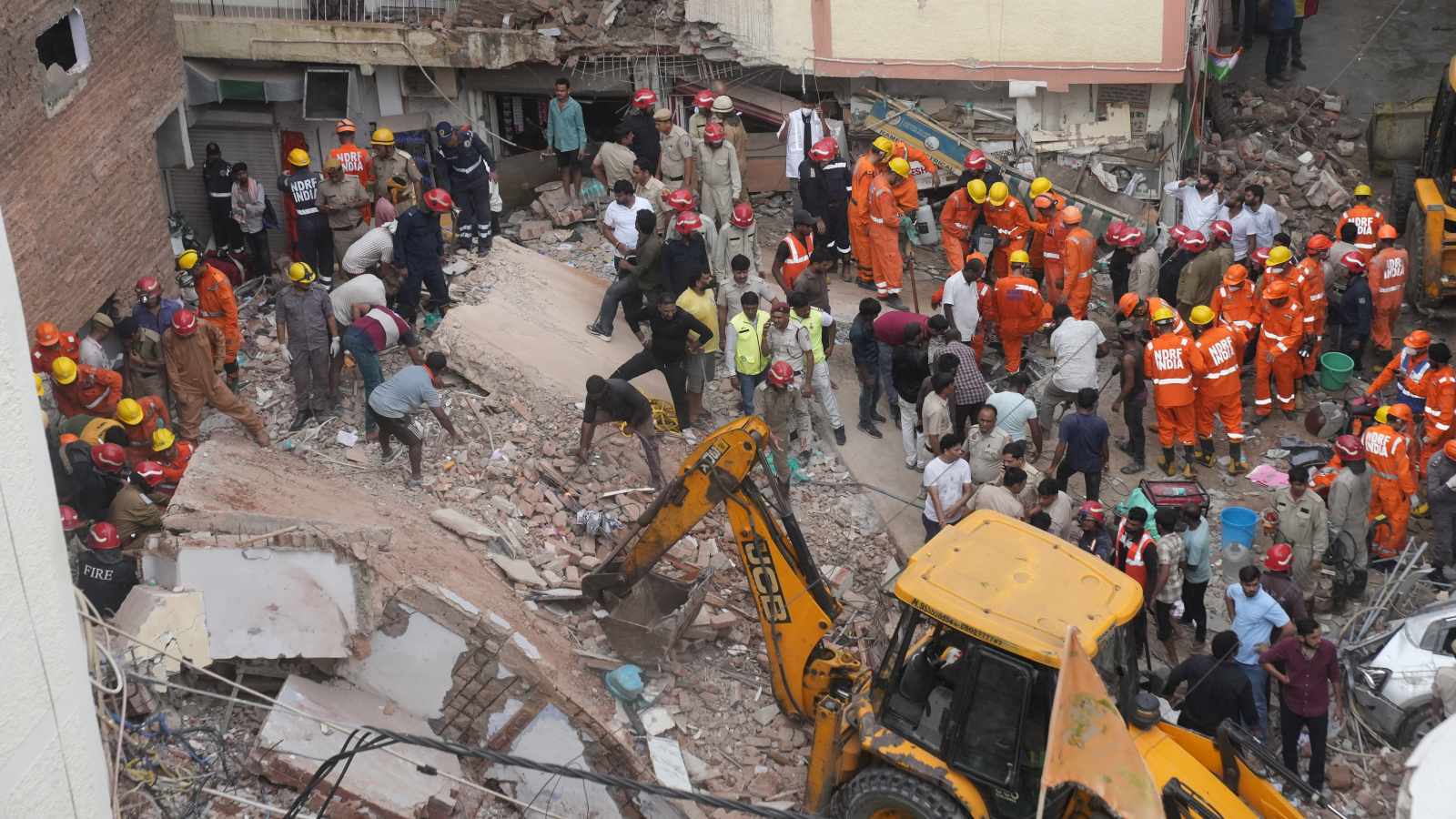
An ordinary Indian is increasingly becoming the casualty of collapsing governance. An ambulance cannot reach a hospital. A father cannot get his dying child to a dispensary. Students are crushed beneath the roofs of unsafe buildings. A minor is raped inside a moving bus. A mosque is demolished. A Muslim is lynched. A girl’s hijab is forcibly removed. All this goes on, and yet even selective outrage barely lasts beyond the news cycle. The collapse of a PG building in Delhi’s Satya Niketan claimed seven lives, including young students who had come to the capital with dreams of education and a better future. Their families believed they were safe. Instead, their children were buried beneath tonnes of concrete. There was no sustained outrage and no protests. In Agra, a pregnant Woman being rushed to a health centre was reportedly stranded for nearly two hours after the ambulance carrying her became stuck in a huge pothole on a badly damaged road. Villagers eventually had to pull the ambulance out with a tractor. By the time she reached the health centre, doctors reportedly found that her unborn baby had died. Again, little outrage. In Pilibhit, a father was taking his six-year-old son, reportedly suffering from dengue, to a government health facility on a motorcycle. The motorcycle became stuck on a muddy and damaged road, delaying medical treatment. The child subsequently died. Again, silence. Then came the horrifying case of a minor girl travelling home from Greater Noida. She was raped inside a moving sleeper bus by its driver and conductor after they offered her a lift and then threw her down near Kashmere Gate. Compare this with the Delhi rape and murder in 2012. Her brutal gang rape and subsequent death shook the conscience of the entire nation. People poured onto the streets. The political establishment was brought to its knees. Today, when several rape cases are being reported Every hour, the country barely stirs. That should frighten us. The most dangerous consequence of the normalisation of violence is not merely that violence becomes frequent. It is that society stops being shocked by it. Deaths caused by collapsing buildings, broken roads, administrative negligence and violence against women become just another headline. Anyone who dares to speak out can be branded “anti-national or “anti-Hindu”. In some cases, dissent itself becomes a crime, and those who question authority are turned into social outcasts. This speaks volumes about the pathetic plight of the so-called 80 per cent majority, which has been driven towards the politics of religion, identity and manufactured confrontation. This brings us to the other 20 per cent and the recent demolition of a mosque in Saharanpur. It is not an isolated controversy. Under the Yogi Adityanath government, several mosques and Muslim religious structures have faced demolition, eviction or official scrutiny over allegations of unauthorised construction or encroachment. What is striking this time, however, is the response of the Muslim community. Instead of allowing anger to spill onto the streets, prominent Muslim organisations have emphasised constitutional remedies, legal recourse and communal peace. The Jamiat’s position is particularly significant. Its message has been to knock on every available door of the law rather than allow the issue to become a communal confrontation. That is a significant political shift. Muslims are becoming wiser and beginning to understand that even peaceful protests can be turned against them, providing an opportunity for arrests, police action and communal polarisation. The experience of recent years has taught them that being reactive can carry a heavy price. From arrests linked to public prayers to the prolonged incarceration of activists such as Umar Khalid and Sharjeel Imam, the lesson being absorbed is simple. Do not provide those seeking polarisation with the confrontation they need. The same maturity was visible in West Bengal when Muslim clerics and community organisations appealed to Muslims to avoid cow sacrifice during Eid ul Adha and opt for other animals instead. Some even called for a boycott of cow slaughter and suggested that the cow be declared India’s national animal. The irony was remarkable. Hindu cattle traders reportedly began protesting because the reduced demand was affecting their livelihoods. The political script had been reversed. Muslims were exercising restraint while Hindu traders were demanding the restoration of an economic activity.