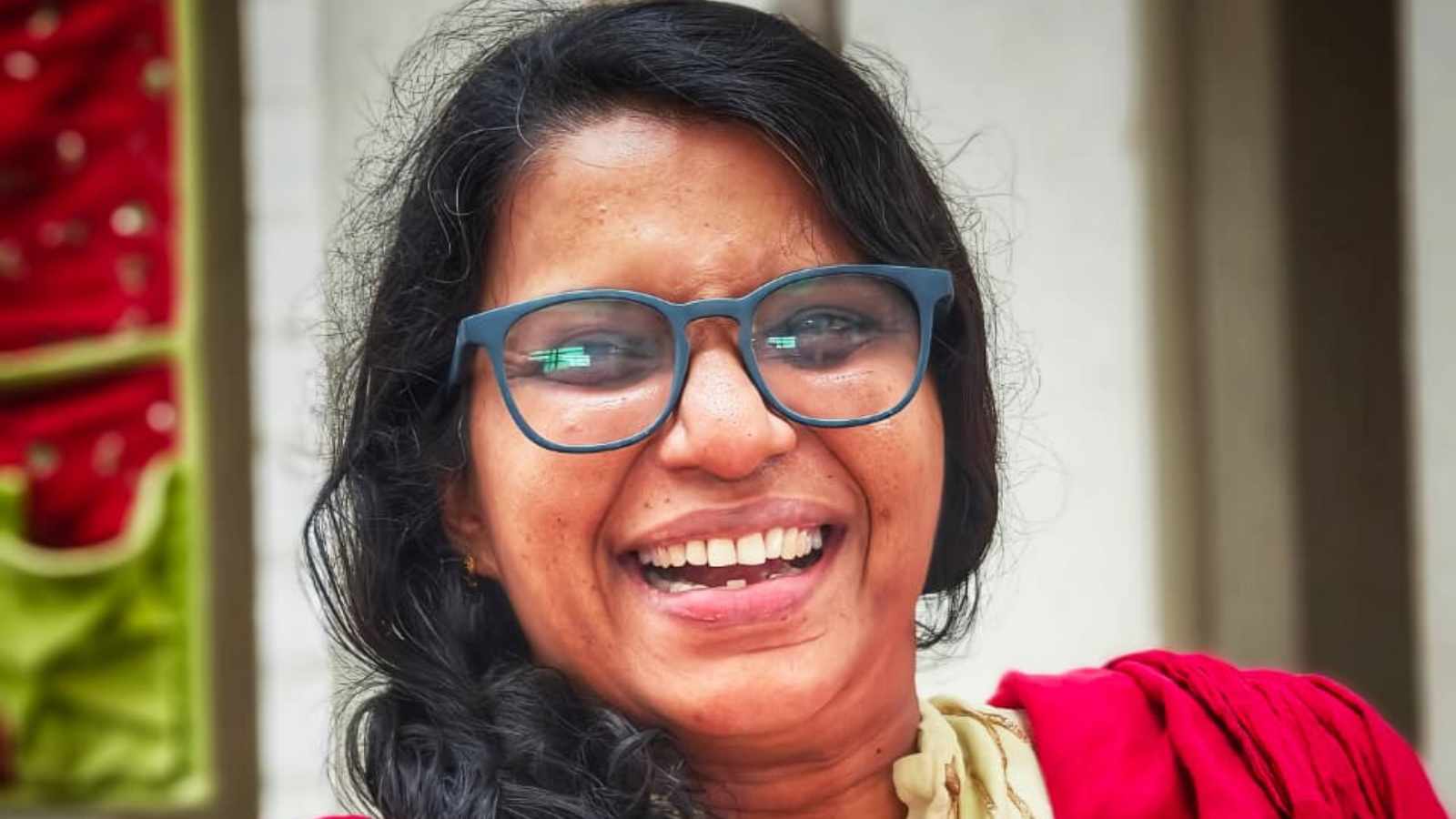
For nearly a year, 49-year-old Kerala lawyer Majida MA has started her mornings with a phone call from a friend. The call is a reminder to take the medicine that, in her words, is keeping her breast cancer at bay. After breakfast, Majida takes three tablets of the targeted therapy drug ribociclib, sold as Kryxana in India and Kisqali globally, and begins work from home. She has not been able to work from the office next to her house because it is not air-conditioned. The drug causes itching and mood swings, she says, making it difficult for her to work in the heat. “Other than that — and sometimes hair fall, body ache and some discolouration of the skin — I actually do not feel like a cancer patient at all,” she says. The tablets, however, come with a cost that is increasingly difficult to ignore. Each strip of 21 pills costs about ₹25,000. Majida needs three strips a month, taking her monthly drug bill to around ₹75,000–80,000 — a large part of her income as a practising lawyer. “How can I manage to spend ₹80,000 Every month just for the medicine?” she asks. “There are other expenses such as hospitalisation for chemotherapy, tests and doctor consultations. Then there are the fees for my two children — one in the first year of college and the other in sixth standard.” Her husband and both their parents also live with the family. Her elderly parents and in-laws have their own age-related illnesses and medication expenses. “All of this adds up,” she says. Initially, her health insurance covered the cost of the medicine. In recent months, however, her claims have been denied, leaving her to pay out of pocket. The fear is not simply financial. Majida knows what can happen when the cost of treatment becomes impossible to sustain. A relative with the same type of cancer had been prescribed the same medicine and took it for nearly a year before stopping because of the financial burden. She died later. “I do not want to stop taking this medicine,” Majida says, who has now become a petitioner in a case before the Kerala High Court seeking greater access to expensive cancer medicines. The case was originally filed in 2022 by a retired bank employee, who has since died. The Kerala High Court subsequently converted it into a Public Interest Litigation (PIL). Earlier this year, the Supreme Court registered a suo motu petition and directed the High Court to resolve the matter expeditiously. At the heart of the case is a question that is both legal and medical: How can patients gain access to an effective cancer treatment when the patented drug is prohibitively expensive? The petition seeks the use of provisions under the Patents Act that could allow the government to use the patented medicine or facilitate a compulsory licence for a generic manufacturer in circumstances such as a national emergency. Dr Arathi PM, faculty at the School of Indian Legal Thought at Mahatma Gandhi University, became interested in the case after her friend Majida joined it. “While patents are necessary to motivate companies to develop newer therapies, if you look at the turnover of companies holding the patent for this molecule, they are making huge profits while patients are unable to access it,” she says. The problem, she says, is not necessarily that a drug does not exist, but that its price can determine who gets the opportunity to receive it. The contrast became particularly stark when Arathi posted about the case online. An acquaintance in Oman contacted her to say she had the same type of cancer and was able to access the medicine through her husband’s government coverage. “But there were four other women undergoing treatment for the same type of cancer with her who were never even prescribed the medicine by the doctors because they knew they would not be able to afford it,” Arathi says. That raises another question: what happens when affordability begins to influence treatment choices? The current debate before the court includes whether patients such as Majida could instead be treated with palbociclib, another drug in the same class for which cheaper generic versions are available. Both ribociclib and palbociclib are CDK4/6 inhibitors. They block proteins called cyclin-dependent kinases 4 and 6, which play an important role in the growth and division of cancer cells. But being in the same drug class does not automatically make two medicines interchangeable. Dr R Ravi Kannan, director of Cachar Cancer Hospital and Research Centre in Assam, says the evidence for the two drugs differs depending on the setting in which they are used. Palbociclib has shown benefit in metastatic breast cancer, he says, but clinical trials have not demonstrated the same benefit when it has been used as adjuvant treatment after surgery for early-stage breast cancer. Ribociclib, along with another CDK4/6 inhibitor, abemaciclib, has shown gains in disease-free survival in selected patients with early-stage disease. “Early-stage breast cancer is treated with curative intent,” Kannan says. “The goal is to eliminate any microscopic disease that could later metastasise. Effective adjuvant therapy or treatment given after surgery to reduce the risk of the cancer returning can drastically improve long-term survival,” he adds.