Work From Home Advisory In Gurugram After Heavy Rain Gridlocks Roads Expressways
H
Hindustan TimesVerified Publisher
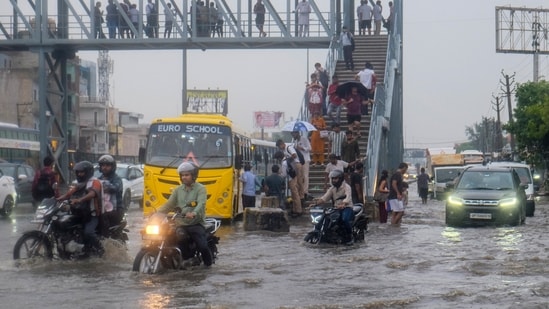
The combination of a low-pressure system and a western disturbance brought about Delhi-NCR s first spell of heavy rainfall on Tuesday, plunging several localities of the Capital under water for a short spell and bringing Gurugram to its knees, as usual, with t The combination of a low-pressure system and a western disturbance brought about Delhi-NCR s first spell of heavy rainfall on Tuesday, plunging several localities of the Capital under water for a...
The combination of a low-pressure system and a western disturbance brought about Delhi-NCR’s first spell of heavy rainfall on Tuesday, plunging several localities of the Capital under water for a short spell and bringing Gurugram to its knees, as usual, with the Delhi-Gurgaon Expressway severely gridlocked until late Tuesday.
Cars went under water on main roads and a road cave-in disrupted traffic in Gurugram. Heavy traffic was reported on roads connecting Delhi and Noida due to the sudden downpour. There were also instances of trees falling on cars in Delhi.
The rainfall followed a sudden escalation of a yellow alert to a red alert on Tuesday afternoon, bringing much-awaited relief from searing above-normal temperatures, according to India Meteorological Department (IMD) data.
While Delhi’s base weather station at Safdarjung recorded only 11.9mm of rainfall, classified as “light rain”, multiple stations across the city recorded moderate to heavy spells. Until 5.30pm on Tuesday, Najafgarh recorded 76mm of rainfall, Ridge recorded 50.1mm, and Pusa and Chhattarpur recorded 41.5mm each. Neighbouring Gurugram, meanwhile, recorded 69mm of rainfall.
Experts attributed the increased rainfall to the upward movement of a low-pressure area over central parts of the country. “Due to that, the monsoon trough is shitting northward. A western disturbance is also pulling the monsoon northward. There will be an increase in rainfall in the coming few days due to the monsoon axis moving north. After this week however, rainfall will decrease,” said Ashwary Tiwari, founder of Indianmetsky weather.
Delhi’s waterlogging hot spots of Minto Bridge, Zakhira Underpass and Kishanganj rail underbridge were relatively free of waterlogging, but Old Delhi roads were submerged in knee-deep water. Two complaints of waterlogging and two of tree felling were reported from Lutyens’ Delhi, while the MCD area recorded five complaints of falling trees. In East of Kailash, a eucalyptus tree damaged a Mercedes-Benz and a Toyota Rumion; four people inside the Rumion had a narrow escape.
Delhi recorded a maximum temperature of 37.2°C, but rainfall brought down the heat index (HI) or “real feel temperature”. An HI of 47.5°C at 11.30am fell to 32.3°C at 2.30pm and 25.6°C at 5.30pm. On the other hand, Tuesday’s minimum temperature of 30°C was the highest minimum recorded in July since 2024, when it was 30.4°C on July 31. It is likely to dip to 21°C to 23°C.