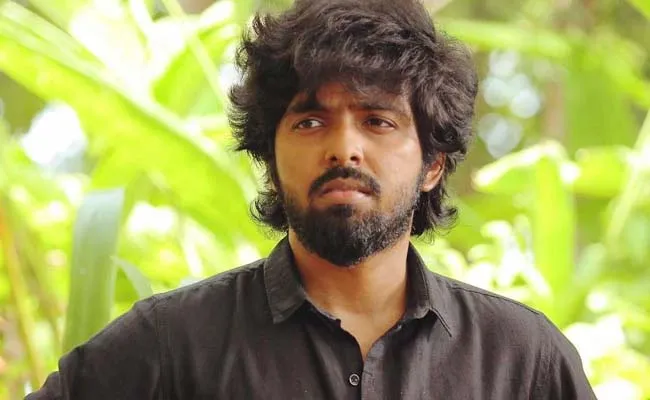
It is undoubtedly S. Thaman, Anirudh Ravichander, and Devi Sri Prasad who command the highest remunerations in the South Indian music. However, GV Prakash, who initially became a preferred choice for mid-range budget films, has gradually emerged as one of the top choices for big-ticket Telugu projects as well. Well, why is GV Prakash emerging as one of the busiest and most sought-after music composers in Tollywood? The composer is reportedly working on 10–15 films a year across Telugu and Tamil, and despite not every album turning into a blockbuster,
.
However, GV Prakash, who initially became a preferred choice for mid-range budget films, has gradually emerged as one of the top choices for big-ticket Telugu projects as well.
Well, why is GV Prakash emerging as one of the busiest and most sought-after music composers in Tollywood?
The composer is reportedly working on 10–15 films a year across Telugu and Tamil, and despite not every album turning into a blockbuster, he continues to remain a preferred choice for several directors.
One of the major reasons appears to be his professionalism. While his remuneration in the Tamil industry is reportedly around Rs 1 crore, Telugu filmmakers are said to be paying him anywhere between Rs 3 crore and Rs 4 crore, according to industry sources. So, what makes him worth the premium?
Sources point to one quality above all; GV Prakash does not delay work and consistently meets deadlines, even under pressure, without complaining.
Venky Atluri highlighted this quality at the success meet of Vishwanath & Sons in Chennai. He recalled an instance where a song had already been composed, written and recorded.
However, after listening to it in the context of the film, the director felt that the song did not fit the flow as well as he had expected. Reluctantly, he conveyed his concern to GV Prakash.
According to Venky Atluri, GV Prakash did not hesitate or try to defend the existing work. Instead, he immediately suggested composing and recording another song until the director was completely satisfied.
That kind of attitude is considered rare in the industry. Rather than saying “no” or trying to avoid additional effort, GV Prakash is said to approach such situations with a solution-oriented mindset.
His growing list of projects, therefore, may not be driven by hit songs alone. His ability to deliver on time, adapt to a director’s requirements, work under pressure and maintain a good rapport with filmmakers appears to be playing an equally important role.
With his combination of hard work, professionalism and strong relationships with directors, GV Prakash is steadily earning more opportunities in both Telugu and Tamil cinema, and that could explain why filmmakers continue to line up for him despite his increasingly premium remuneration.
A group may say that NTR was trolled by the Korean Kanakaraju team over a scene with Satya in which he imitates an old NTR…
The actor has been struggling with a series of flops, but he still has good craze among young audiences. Expectations on his next film also…
A young actress recently opened up about her past relationship with a rising actor and made some serious allegations about their time together. The actress,…
Its always a cycle. Tamil and Telugu industries take turns producing star music directors who rule both the industries. In 80s and 90s we got Ilayaraja, KV Mahadevan, and AR Rahman from Tamil being the star music directors in both Telugu and Tamil. In 2000s and 2010s we had DSP and Thaman from Telugu become the stars in both industries. Now Anirudh, GV, and Sai Abhyankar are becoming hot commodities. We can expect this to last another 10-15 years as we don’t have any new music talent in Telugu right now and Vivek Sagar mainly appeals to urban crowd.
It’s a cycle. In 80s and 90s we had Tamil music directors like Ilayaraja, KV Mahadevan, and later AR Rahman become the hottest commodities in both Tamil and Telugu. In 2000s and 2010s we had DSP and Thaman from Telugu rule the roost in both industries. Now Tamil is back with Anirudh, GV, and Sai Abhyankar taking over. This will last another 10 years before Telugu produces newer crop of musical talent.
It’s a cycle. In 80s and 90s we had Tamil music directors like Ilayaraja, KV Mahadevan, and later AR Rahman become the star music directors in both Tamil and Telugu. In 2000s and 2010s we had DSP and Thaman from Telugu rule the roost in both industries. Now Tamil is back with Anirudh, GV, and Sai Abhyankar taking over. This will last another 10 years before Telugu produces newer crop of musical talent.