Who Gets To Write Adivasi History Joseph Bara Anjana Singh Threads Of Indigeneity In Central India
I
Indian ExpressVerified Publisher
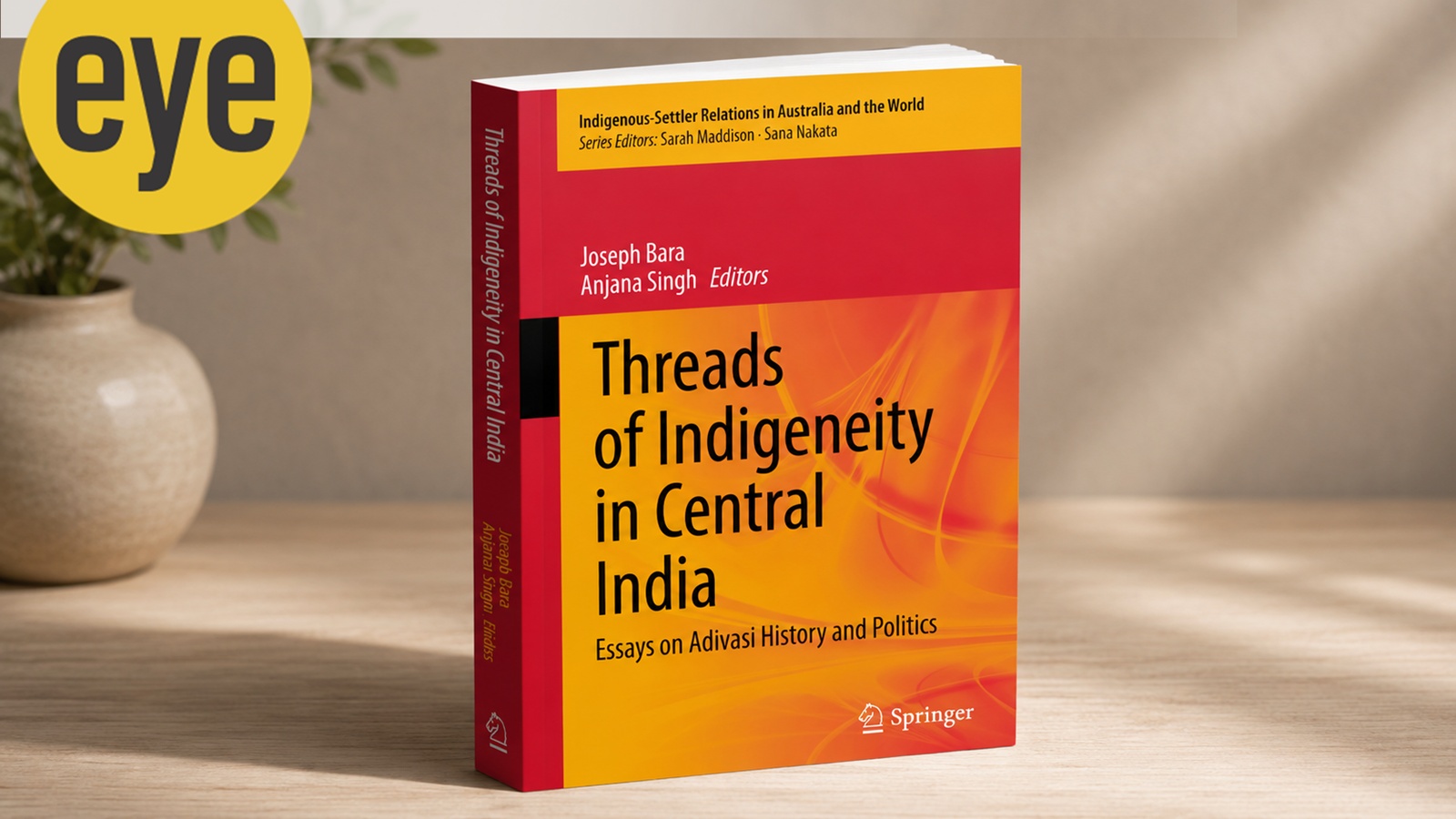
(Written by Aditi Athreya) Appropriation, Exclusion and exoticisation. Since colonial days, the studies on Adivasis have mostly been confined within these three registers. In the last few decades, Adivasi scholars and academics have challenged this Orientalist and myopic view. Yet, our political discourse(s) continue to reproduce these presumptions, often using words like vanvasi, meaning “forest dwellers,” that deny Adivasis the right to claim “adi” ness or the first nationhood. The latest movement for separate religious recognition of Adivasis across central India also dismantles the premises of assimilative imaginations. Against this
. In the last few decades, Adivasi scholars and academics have challenged this Orientalist and myopic view. Yet, our political discourse(s) continue to reproduce these presumptions, often using words like vanvasi, meaning “forest dwellers,” that deny Adivasis the right to claim “adi” ness or the first nationhood. The latest movement for separate religious recognition of Adivasis across central India also dismantles the premises of assimilative imaginations. Against this backdrop, Joseph Bara and Anjana Singh’s new anthology, Threads of Indigeneity in Central India, is a necessary intervention. Divided into four sections — Land, forest and customary rights; Adivasi struggle for survival; Adivasi idea and identity; and Art, religion, language and culture of Adivasis — and 16 chapters, this anthology “acts to be in dialogue with the facts of the past and its interpretation of the present.” It is a significant contribution towards the studies of the marginalised in India, precisely for three reasons. First, it challenges the recognition of Adivasis as “backward Hindus”, a term used by sociologist G S Ghurye, regarded as the father of Indian Sociology. Drawing on archival sources and theoretical critique, Bara, in his introductory chapter, ‘Adivasi in history and history on Adivasis’, points out that “Adivasis have long been self-aware communities actively resisting assimilation.” Tribal scholar Virginius Xaxa, in his paper, reminds us of India’s rationale for not being a signatory to the United Nations Declaration on the Rights of Indigenous Peoples: Adivasis do not qualify to be termed indigenous people because they have always belonged to the broader Hindu Pantheon. This inherent logic of assimilation, Bara notes, led to the colonial and postcolonial policies that have mischaracterised Adivasis as “lesser people.” Second, amidst the Hindutva groups’ demands for denotification (removal of Christian Adivasis from the reserved category) and a campaign against the alleged conversion of Adivasis to Christianity, this book offers a nuanced perspective. Mary Girard’s chapter, ‘Revitalisation of Adivasi language and culture: Grammars of Christian Missionaries’, highlights how Christian missionaries inadvertently became custodians of Adivasi languages and cultural practices. Through the production of grammars, dictionaries and scriptural translations, they documented oral traditions and linguistic structures that might otherwise have disappeared. Girard argues that despite the colonial entanglements of missionary work, Adivasi communities benefited from these linguistic projects, using them to preserve and revitalise their traditions and heritage. Third, it is telling that the editors devoted an entire chapter not only to narrate the revolutionary life of Birsa Munda but also to interrogate why he was never unanimously embraced as a “freedom fighter” within the nationalist canon. This hesitation itself exposes how Adivasi resistance has been systematically marginalised and muted in the grand narrative of India’s Independence. It reminds us that the subcontinent’s historical memory has long been curated to privilege elite actors, while figures like Birsa Munda who embodied a radically different vision of liberation are either contested or erased. The book foregrounds Adivasi voices, but its scope remains uneven. Its heavy concentration on eastern India — Jharkhand, Odisha and Chhattisgarh — portrays a partial picture of indigeneity in the subcontinent. By privileging this geography, the book risks reproducing the very silencing it seeks to challenge, leaving out the lived realities of Adivasis in southern India. Moreover, the absence of the hill tribes of the Northeast, particularly in Nagaland, Mizoram, Meghalaya, and Arunachal Pradesh, feels particularly glaring. Their histories of resistance complicate any singular narrative of “tribal” identity. The editors’ regional focus thus narrows the conceptual reach of indigeneity, inadvertently reinforcing the idea that Adivasi experience is homogeneous and primarily eastern. A more expansive lens would have enriched the project and challenged the tendency of mainstream scholarship to compartmentalise tribal histories. In this sense, the book opens an important conversation but leaves critical geographies and voices waiting to be heard. (Athreya is an assistant professor at Symbiosis School for Liberal Arts, Symbiosis International University)