What Is The History Of Jaipurs Blue Pottery
I
Indian ExpressVerified Publisher
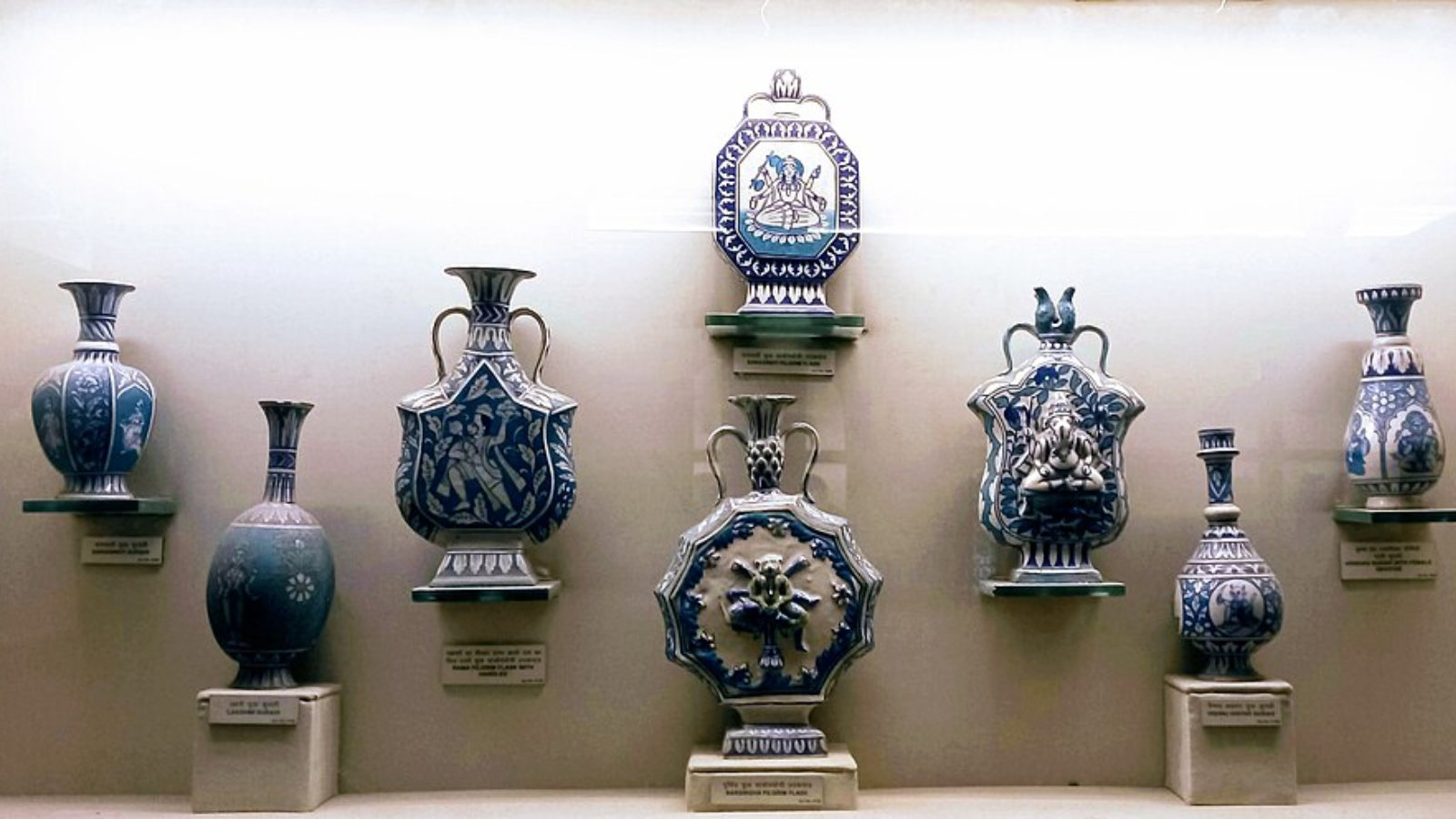
With its striking cobalt blue designs and glossy finish, Jaipur Blue Pottery is one of Rajasthan's most iconic crafts. Surprisingly, it isn't made from clay at all. Its journey spans centuries, traveling from Persia and Central Asia to the Pink City, where it evolved into a unique art form that continues to captivate the world. (wikimedia commons) It Began Far From Jaipur: Blue pottery traces its origins to Persian and Central Asian ceramic traditions. Mongol artisans combined Chinese glazing techniques with Persian decorative styles, creating the distinctive blue glazed pottery
. Its journey spans centuries, traveling from Persia and Central Asia to the Pink City, where it evolved into a unique art form that continues to captivate the world. (wikimedia commons)
It Began Far From Jaipur: Blue pottery traces its origins to Persian and Central Asian ceramic traditions. Mongol artisans combined Chinese glazing techniques with Persian decorative styles, creating the distinctive blue glazed pottery that later spread across Asia. (wikimedia commons)
The Mughals Brought the Craft to India: The technique arrived in India through the Mughal courts, where blue-glazed tiles were used to decorate mosques, tombs, and palaces. Over time, the craft expanded beyond architecture and became a decorative pottery tradition. (amazon.in)
Jaipur's Royals Helped It Flourish: In the 19th century, Maharaja Sawai Ram Singh II encouraged local artisans to learn the craft from potters in Delhi. Under royal patronage, Jaipur developed its own distinctive style, and blue pottery soon became associated with the city. (wikimedia commons)
It's Not Actually Made From Clay: One of the most unusual features of Jaipur Blue Pottery is that it uses quartz powder, powdered glass, multani mitti, borax, and gum instead of traditional clay. This gives the pottery its smooth texture and unique translucent quality. (wikimedia commons)
Jaipur Added Its Own Artistic Touch: While Persian influences remained visible, Jaipur artisans introduced Indian motifs such as flowers, birds, animals, palace designs, and local themes. These adaptations helped create a distinctly Rajasthani identity for the craft. (wikimedia commons)
A near lost Craft was Revived: By the 1950s, blue pottery had nearly disappeared. The craft was revived through the efforts of artist Kripal Singh Shekhawat, with support from Rajmata Gayatri Devi and Kamaladevi Chattopadhyay. Today, Jaipur Blue Pottery is one of Rajasthan's most celebrated handicrafts. (wikimedia commons)