What Easter Islands Fallen Moai Can Teach Us About Environmental Destruction
I
Indian ExpressVerified Publisher
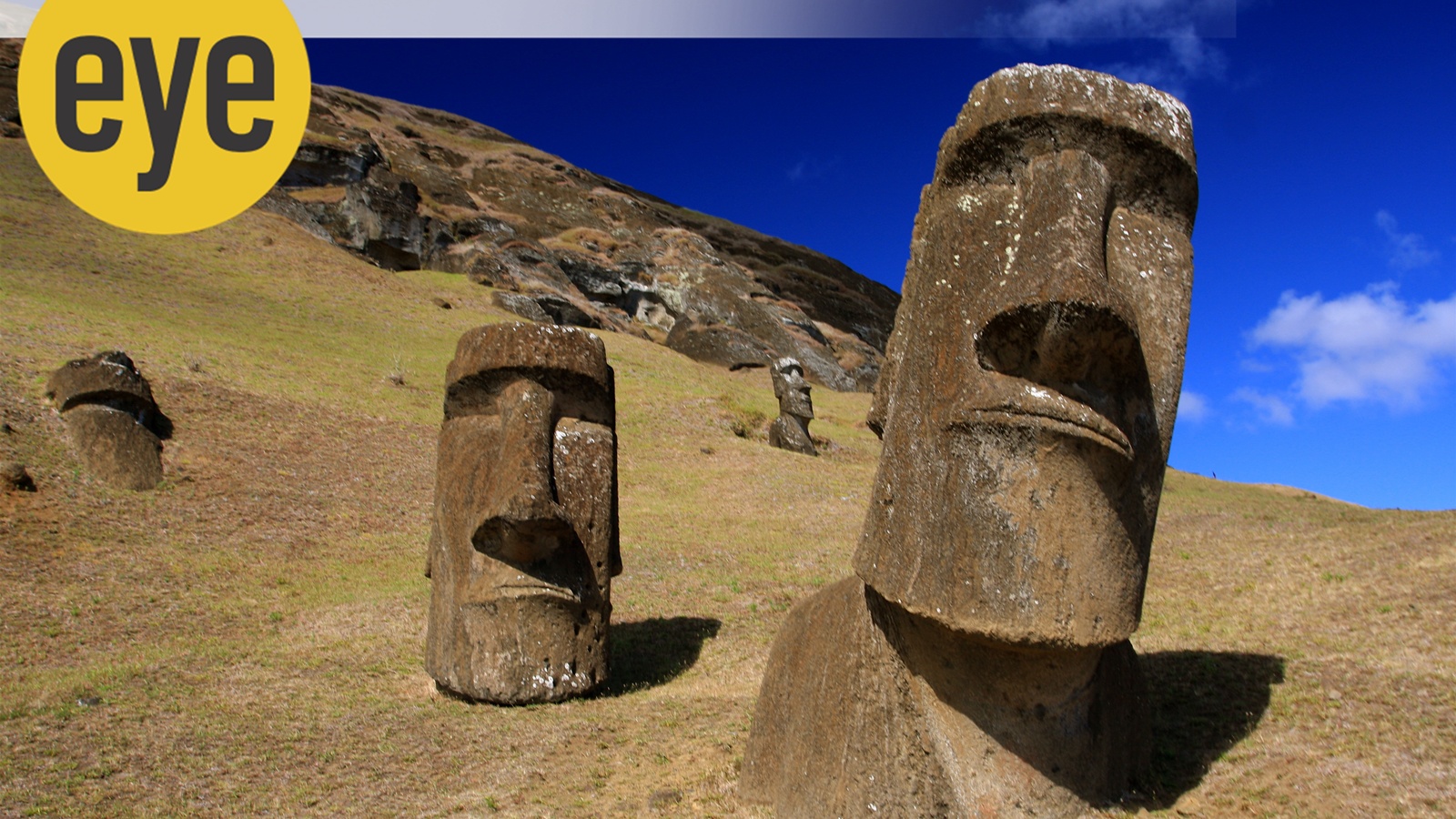
This remote volcanic island in the south-east Pacific, 3,500 km off the western coast of Chile, also known as Rapa Nui, is world famous for its nearly 1,000 massive stone figurines called moai, carved from volcanic ash, featuring outsized human heads standing This remote volcanic island in the south-east Pacific, 3,500 km off the western coast of Chile, also known as Rapa Nui, is world famous for its nearly 1,000 massive stone figurines called moai,...
This remote volcanic island in the south-east Pacific, 3,500 km off the western coast of Chile, also known as Rapa Nui, is world famous for its nearly 1,000 massive stone figurines called moai, carved from volcanic ash, featuring outsized human heads standing on a plinth and facing inland, most of which are now ‘knocked over’. The island was first settled by the Polynesians around the first millennium, and at the time had a wide variety of trees and birds, especially seabird life. The massive statues were believed to serve as a connection between the dead and the living, and faced inwards to keep out the evil spirits harboured by the ocean. The natives prospered, but as their population grew, so did the competition for resources. Two main tribes emerged, at each other’s throats and populations plummeted as their societies went into collapse. There are several reasons given to, and theories floated as to exactly what happened and when, but all relate to major changes in environmental factors – something we would do well to heed.
According to one controversial hypothesis, floated by the American scientist Jared Diamond, called the Ecocide Hypothesis, the natives even resorted to cannibalism. According to him, in order to get the stone figurines to their locations, they had to be put on huge wooden rollers, which resulted in massive deforestation. This, in turn, led to soil erosion and crop loss, apart from the extinction of all the trees and birds. With no more wood to build their boats, the natives were unable to harvest fish from the sea or hunt seabirds. In addition, the introduction of Polynesian rats destroyed what little else remained, and overhunting and overfishing devastated the ecology. The tribes had their own statues and believed that the knocking down of their rivals’ statues would render them vulnerable. It is conjectured that between the mid-1600s and 1772 (when the first European settlers arrived), the population had plummeted from a high of 15,000 to between 2,000 and 3,000.
Then, in the 1770s, came the European settlers bringing with them hundreds of diseases which the Polynesians had no immunity to and later the slave trade, (‘blackbirding’) in which thousands of men, women and children were taken away. On the island ‘statue toppling’ between the tribes continued, to eradicate the ‘socio-spiritual’ power of the rival, and between 1862 and 1888, 94% of the population perished.
Fierce controversy rages around the Ecocide Theory, with subsequent studies attempting to prove that ecocide did not, in fact, take place. There is apparently no conclusive evidence (including genetic) to show that mass death occurred. One counter argument suggested that while deforestation did take place, it was replaced by agriculture, which increased the food production on the island to the benefit of the population. (There seems to be no counter to the erosion argument though.)
Wherever the truth really lies, the messages come through loud and clear and are relevant to so many societies and ecosystems today. Overpopulate and overexploit your resource base at an unsustainable level and there will be trouble. Allow superstition to dictate your moves and there will be trouble. Thus, we have baby and child genocide in Gaza (how far removed is this from cannibalism really?), wars over oil and gas and precious metals, the deep wounding of wilderness areas and the systematic destruction of ancient rainforests. In our blind greed for money and power, we blunder on rampantly destroying the very resources we need to keep our living planet alive. Ecocide by a thousand cuts, if you like.
Thus, we have condemned 170,000 hectares of tropical forests in Hasdeo Arand in Central India, where tendu patta collection – and other minor forest produce – is a major income source for the Gond tribe and 2 million people; all because it sits on huge store of coal, which will now be mined by a big-shot industrialist who will ship the coal off to Rajasthan. The idyllic Nicobar Islands, where we probably still don’t have the complete list of life forms, has been condemned in the name of national security and development against which no one can argue. The same holds true for the wholesale destruction of and tunnelling through mountains for the building of wide and smooth roads down which I’m sure an enemy will be delighted to drive his tanks.
I’ve always felt that a sludgy, gloopy mosquito-riddled, disease-ridden mangrove forest, miles wide, will do more to discourage an enemy than a nice deep-sea port, which they can blithely sail into. (It was mosquitoes which prevented the rapacious white man from accessing several rainforest areas in Africa and South America, and remember what happened in Vietnam, where in spite of Agent Orange, the Vietcong, fighting tooth-and-nail won) thus saving them from exploitation. High Mountain passes, forever ice-bound and sheer cliff faces, are as equal an impediment to any attacking army as they are to a defending one.
Oh yes, we say piously, of course, we care for wildlife and trees, we’ll increase the area under ‘tree cover’ and replant 15 million tropical rainforest trees in arid Haryana, which god knows needs more green cover. We’re mixing petrol with whisky to save on fossil fuels, even if it means we might have a few more 93-octane drunk drivers.
Then, when the forest fires go stir crazy and the storms and floods flatten us, and lethal viral infections turn into pandemics, we shake our heads and say, ‘What can we do? These are acts of God!’