West Bengal Sir Appeal Tribunals No Sc Timeline
I
Indian ExpressVerified Publisher
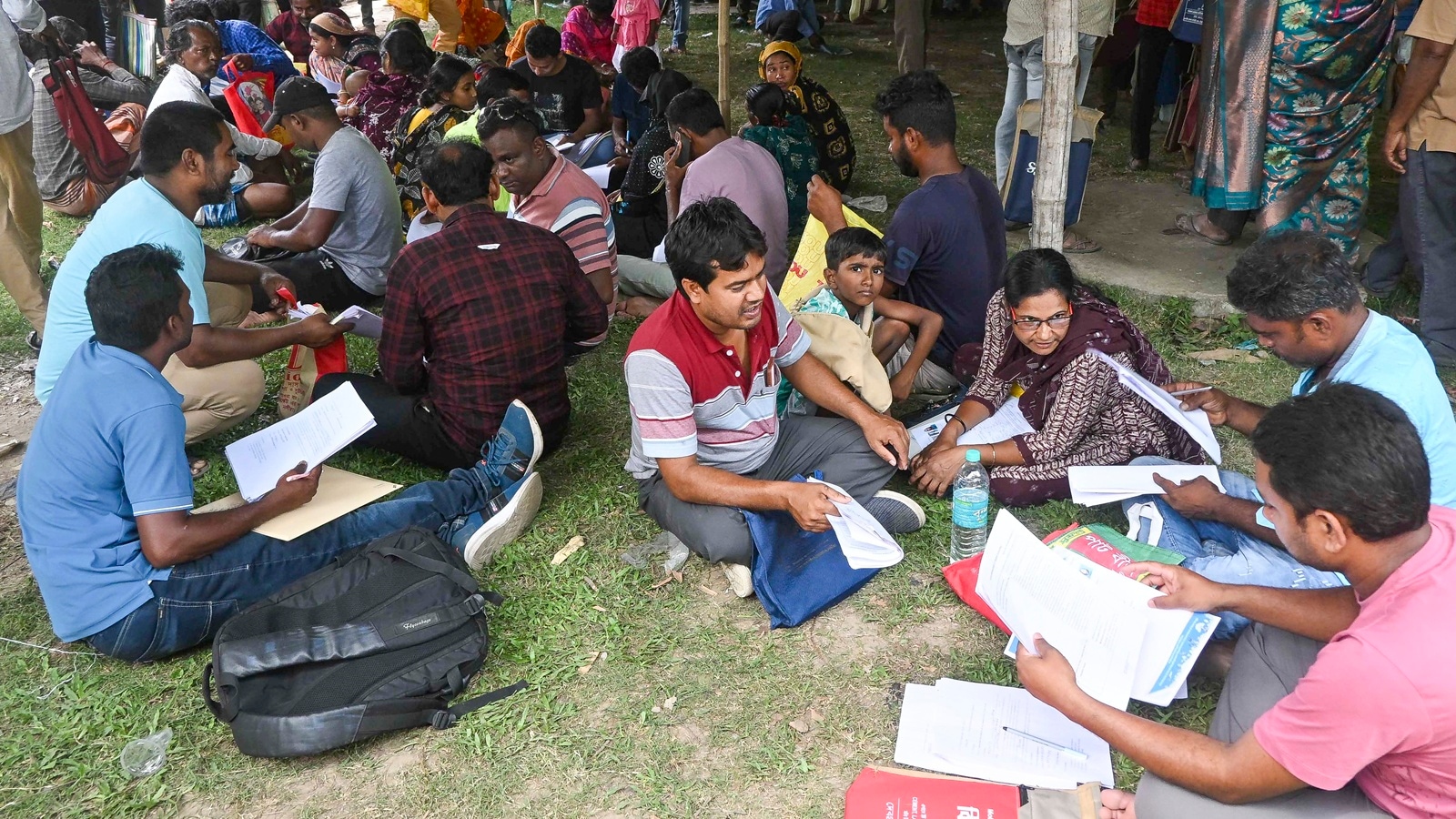
The Supreme Court said Tuesday that it cannot fix a timeline for the tribunals formed to hear appeals against the exclusion of names from the voters list following the Special Intensive Revision (SIR) in West Bengal but said it would look into the quantum of d The Supreme Court said Tuesday that it cannot fix a timeline for the tribunals formed to hear appeals against the exclusion of names from the voters list following the Special Intensive Revision...
The Supreme Court said Tuesday that it cannot fix a timeline for the tribunals formed to hear appeals against the exclusion of names from the voters’ list following the Special Intensive Revision (SIR) in West Bengal but said it would look into the quantum of disposal and sort out logistical issues.
A three-judge bench presided over by Chief Justice of India Surya Kant asked the Election Commission of India (ECI) to submit data on the appeals decided by tribunals so far. “Let the Election Commission of India furnish details on the quantum of disposals of appeals by the appellate tribunals,” the bench also comprising Justices Joymalya Bagchi and V Mohana said.
The court was hearing a plea filed by Congress leader Adhir Ranjan Chowdhury seeking expeditious disposal of SIR-related appeals by the tribunals. Senior advocate Rauf Rahim, appearing for him, submitted that the tribunals had not decided even 1 per cent of the appeals.
‘Restructure the architecture of disposal if necessary’
Justice Bagchi recalled that the tribunals were set up following Supreme Court orders and told ECI counsel senior advocate D S Naidu, “They have a role to play in the due process. So we need to see their performance. Nothing else. If the performance appears to be wanting with regard to the volume and time taken, then to request you to revisit and restructure the architecture of disposal. If there can be online access of the judge concerned, like you have in arbitration…”
The judge said that given that substantial time has lapsed, the immediate concern is the quantum of case disposal by the tribunals. “We are not concerned with the result itself, but the quantum. The output…” he added.
Naidu then said, “If there is a logistical delay, we will address that. Will get the details”.
Justice Bagchi responded, “You may not address us. But we, as creators of the tribunals, also need to see how we can ensure an outcome of the due process. Just to file an appeal may not satisfy a litigant”.
When Chowdhury’s counsel urged the court to fix a timeline for the tribunals’ decisions, Justice Bagchi said, “timeline we cannot fix.”
The counsel also pointed out that the state was denying ration and other benefits to those deleted from the rolls and whose appeals were pending, but the court said the matter has a different cause of action and advised Chowdhury to raise it before the Calcutta High Court.
The Supreme Court agreed to look into any logistical issues after another counsel pointed out that people from distant and outlying areas found it difficult to access the tribunals.
The Congress leader’s plea sought directions for the tribunals to publish daily cause lists, orders, notifications, notices, and guidelines on an official website or digital platform. It also sought an increase in the number of tribunals for more affected districts like Murshidabad and Malda and wanted the state government restrained from denying benefits to people till the tribunals decide their appeals.
The court will hear the matter next on August 25.