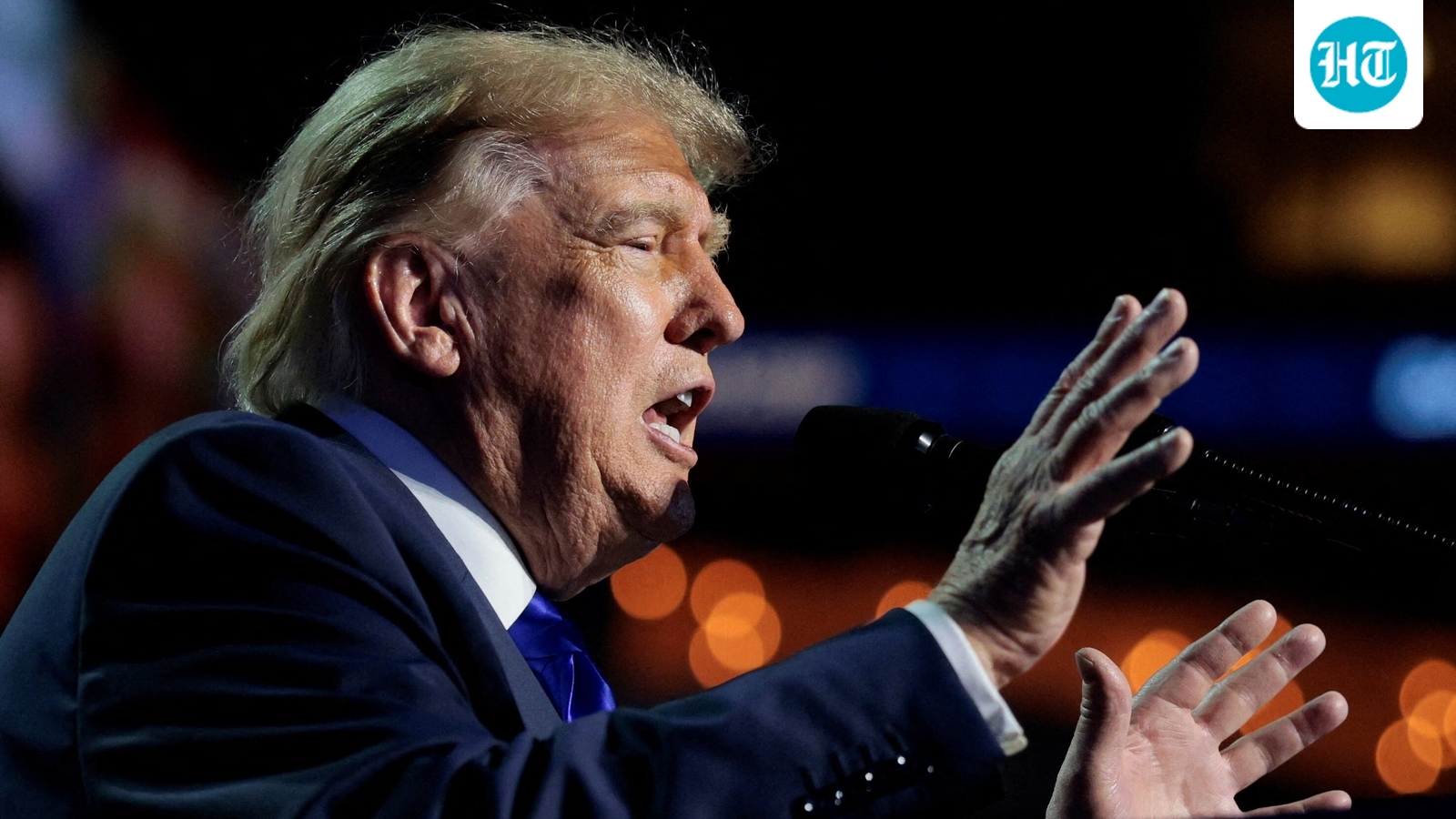

President Donald Trump has promised a $5,000 payment to Every American adult if Republicans keep control of both houses of Congress in the 2026 midterm elections. Trump made the promise on September 9 at a Republican midterm convention rally in Dallas, Texas.
Trump said that if Republicans win the November 3 elections, Americans would also “win” and receive $5,000, which he called the “Trump dividend.” The proposed payment is aimed at American adults, but Trump has not provided full Details about who would qualify. Trump said the money would have to be spent in the United States, according to USA Today.
Trump said the payment would be possible because of what he described as the “tremendous strength and success” of the US economy. However, Trump did not explain exactly where the money for the $5,000 payments would come from. He also did not say exactly how much the full program would cost the US government.
The white house , in a statement released the following day, said the plan could be supported by trillions of dollars in new private investment and cuts to government waste. Experts estimate that sending $5,000 to American adults could cost about $1.2 trillion. Because of the huge cost, Congress would need to approve the payments before the government could send the money, according to experts cited by USA Today.
This means Trump cannot simply order the $5,000 payments to be sent to Americans without congressional action. Ohio Republican Sen. Bernie Moreno said he would prepare legislation for the proposed Trump dividend. The biggest question now is whether Congress would have enough votes to approve the plan.
Senate Majority Leader John Thune said getting enough votes would be a “good question” when asked about the proposal by Fox News on Thursday. Thune said lawmakers would deal with the issue if and when they reach that stage. Democrats have strongly criticized Trump's $5,000 proposal.
Also read: Trump $500 Obamacare payment: Who will get refunds starting in October?
Rep. Jamie Raskin, a Maryland Democrat and the top Democrat on the House Judiciary Committee, called the proposal a “political bribe.” Rep. Dan Goldman, a New York Democrat, called Trump's pledge “corrupt and blatantly illegal.” The proposal has also faced criticism from some Republicans.
The 2026 midterm elections are scheduled for November 3. Trump has tied the $5,000 payment directly to the election outcome, saying Americans would receive it if Republicans win control of both chambers of Congress. But there is currently no approved federal program sending the $5,000 payments.
The proposal would need legislation and congressional approval before payments could be made. That makes it uncertain whether Americans would receive the money before the November election.
In fact, the proposal faces Major questions about its cost, funding, congressional support and possible economic impact. Economists have warned that sending such a large amount of money into the economy could increase inflation and interest rates.
Garrett Watson, vice president of federal tax policy at the nonpartisan Tax Foundation , said the possible economic effects make the proposal difficult to justify. Watson told USA Today that Trump was promising something that almost certainly could not be done from both a policy and political point of view. This means Americans should not assume that the $5,000 payment is guaranteed simply because Trump announced it.
Florida Gov. Ron DeSantis warned that the payments could lead to more government debt and higher inflation. Former Rep. Bob Good, a Virginia Republican, described the plan as a “socialist vote-buying scheme,” The Hill reported.
Republican Sen. Susan Collins of Maine also raised concerns about the proposal. Collins said that, based on the limited details available, the proposed $5,000 payment appeared to have no income limit and could be extremely expensive.
Collins said decisions about taxes and government spending should be based on what Americans need and the condition of the economy, rather than appearing to be connected to election results.